DesMoines Register: Gas in Iowa costs $1 more per gallon than last year: Who’s to blame?

http://www.desmoinesregister.com/article/20110527/BUSINESS/105270339/Gas-in-Iowa-costs-1-more-per-gallon-than-last-year-Who-s-to-blame-?odyssey=tab%7Ctopnews%7Ctext%7CFrontpage

10:13 PM, May. 26, 2011 |

Written by DAN PILLER

The price impact?
Gasoline costs amount to no more than about 5 percent of a typical family’s spending, well below food (13 percent) and shelter (40 percent). So economists believe that the impact of higher gas prices tends to be at the margins, such as holiday driving and attendance at special events.

The auto club AAA reports that 30.9 million Americans are expected to travel more than 50 miles by car this weekend, a slight decline from the 31 million a year ago.

The AAA survey said that of those who will travel, six of 10 said rising gas prices won’t affect their plans. Of the remaining four out of 10, 70 percent said they’ll simply economize other areas of their travel budget, according to AAA.

Airfares, hotel rates and car rental rates are also up along with gas prices. The number of travelers flying this weekend is expected to be up about 11.5 percent from last year’s 2.63 million. Memorial Day weekend airfares are projected to be about 14 percent more expensive than last year.

Recreational vehicle and camper owners haven’t been deterred by the higher gas prices.

“We have good reservations for Memorial Day weekend and, frankly, we expect the higher gas prices to help us because many of our members live within 50 miles,” said Nocona Mollendor, manager of Cutty’s Des Moines Camping Club Inc.

“What we’ve seen is that when gas prices rise, people take shorter trips, but they still travel,” she said.

Rich Teeters, retired from a trucking job for the city of Phoenix, Ariz., and his wife, Jean, brought their fifth-wheeler pulled by a pickup to Cutty’s this week. As he readied his vehicle for the next leg of his journey, to Wisconsin, Teeters said “some people adjust by traveling fewer miles or maybe staying longer at a campground.”

Teeters has hedged his spending on energy. He uses diesel fuel, which has become more expensive than gasoline in the dozen years since he became a near year-round traveler. But he also owns stock in Exxon Mobil, the energy giant.

“I couldn’t do this if I didn’t invest well,” said Teeters.

Another campground visitor from the Sun Belt, Ed Mutney, stayed at Cutty’s this week midway through a trip from his home in Silver Spring, Fla., to Alaska.

“I’m going to meet some friends on I-80 and we’ll caravan the rest of the way,” said Mutney, retired from the U.S. Air Force.

“It got a little scary when the price of gasoline got to $4 a few weeks ago, but it has slipped back,” Mutney said.
– Dan Piller

Lance Bauer of Winterset, who works for Keck Energy, fills an underground storage tank with unleaded gasoline in Des Moines on Thursday morning. / RODNEY WHITE/THE REGISTER

Ashley Brown of Des Moines has welcomed the recent drop in gas prices. “I am staying home over the holiday but it is still nice to know I can leave if I want to and that $10 will get me around town,” she said. / ANDREA MELENDEZ/THE REGISTER
How much more it costs to go to …
The difference in the cost of a round-trip drive to each location on Memorial Day weekend 2010 and 2011 in a 25-mpg vehicle:

KANSAS CITY
2010: $40.81
2011: $56.21

MINNEAPOLIS
2010: $51.67
2011: $71.17

CHICAGO
2010: $70.75
2011: $95.45

Gasoline that costs $1 per gallon more than it did last Memorial Day will cause Iowans to wonder who is to blame as they fill up for the holiday weekend.

The never-ending gas price morality play has produced a new villain, the Wall Street speculator, who is succeeding Texas oilmen and OPEC ministers as the bad guy at the gas pump.

“There won’t be another drop in the price of gasoline this weekend, and it’s due to Goldman Sachs and Morgan Stanley,” said Mark Meyer, president of Keck Energy in Des Moines. On Tuesday, Goldman Sachs and Morgan Stanley, both major investors in crude oil markets, had issued forecasts of higher crude oil prices this summer.

Gas prices map: Find the best fuel deals in Iowa and around the country.

The price of oil promptly rose by more than $1 per barrel in the next two trading days on exchanges.

“What a crazy system we have,” he said. “People resist paying an extra 5 cents per gallon in gas tax to fix the highways, but we allow speculators to raise the price of gasoline by 50 cents a gallon.”

As crude oil and gasoline prices have risen 25 percent since Jan. 1, more charges of market manipulation are flying.

U.S. regulators on Tuesday launched one of the biggest-ever crackdowns on oil price manipulation, accusing traders and companies of artificially driving up crude oil prices in 2008.
Also this month, Rex Tillerson, chairman of Exxon Mobil, told a congressional committee that supplies of crude oil and refined gasoline were adequate and that the supply-and-demand price of crude probably should be around $70 per barrel.

Crude oil traded at $99 per barrel on the day of Tillerson’s comments.

But Big Oil isn’t among those calling for trading limits or other crackdowns on the crude oil markets. John Felmy, chief economist for the American Petroleum Institute, told The Des Moines Register in an interview this week: “Oil prices have risen for basic supply and demand reasons. Worldwide demand for oil, particularly from China and India, is up while production is flat.”
Felmy argues that all commodity markets, including crude oil, need speculators “to provide the liquidity that any functioning market requires” to attract investors.

Nevertheless, commodities watchers point blame toward Wall Street.

Stephen Schork of Villanova, Pa., a former oil trader on the New York Mercantile Exchange whose commodities newsletter makes the speculation argument, said: “The best way to predict the market is to create it.

“Goldman was giving a signal that the dumb money could come back into the oil market, and it worked,” Schork said.
Schork and others noted that a lot of money fled the oil markets May 5 after Goldman Sachs had warned clients that crude oil prices, then about $114 a barrel in New York and $124 a barrel in London, were too high.

Goldman and Morgan Stanley have declined to comment on their market forecasts.

Commodity trader Don Roose of U.S. Commodities in West Des Moines asked: “You tell me: Did the supply of crude oil suddenly increase enough in a single day to justify a $10 drop in the price of crude oil?”

Roose asserts that speculators, or investors who don’t take physical possession of crude oil, are a “major factor” in the wild swings in oil prices that taunt motorists from lighted signs at gas stations.

Dawn Carlson, president of the Petroleum Marketers Association of Iowa, has written letters to the Iowa congressional delegation urging a crackdown on speculators, through the Commodities Futures Trading Commission.

“We think speculation is a major factor in the volatility of oil and gasoline prices,” said Carlson, whose organization represents convenience stores and other gasoline retailers in Iowa.
Last week, U.S. attorneys filed lawsuits against two oil traders in Australia and California and three American and international firms, alleging that in early 2008 they tried to hoard nearly two-thirds of the available supply of a crucial American market for crude oil, then abruptly dumped it and improperly pocketed $50 million.

That activity coincided with the rise in crude oil prices that year to $147 per barrel, still a record. Retail gasoline prices soared above $4 per gallon that summer, cutting demand by an unprecedented 5 percent during peak driving season in June and July and teaching the oil industry that $4 gasoline may be the point of price resistance.

That lesson was relearned last month when prices reached $3.90 per gallon in Iowa and climbed over $4 nationally. The American Petroleum Institute reported that demand for gasoline dropped by 2.2 percent during April from the same month a year earlier.

So the sudden drop in oil prices in early May, spurred by speculative selling, gave conspiracy theorists more ammunition. Market manipulators pulled the price back just at the point where demand is hurt, the speculator detractors said.

Schork said he isn’t sure that a market conspiracy could work that deeply, but he said: “Speculation tends to exaggerate prices. There’s no question that demand for gasoline seems to soften between $3.50 and $4 per gallon.

Special thanks to Richard Charter
Time: Greenpeace Activists Camp Out on Arctic Oil Drilling Rig

http://ecocentric.blogs.time.com/2011/05/31/activists-camp-out-on-arctic-oil-drilling-rig/#0_undefined,0_

Posted by KRISTA MAHR Tuesday, May 31, 2011 at 6:45 am

Oh Greenpeace. Only PETA outshines you in the shameless publicity stunt department, and yet here I am, falling for your tricks, because this week your eco-warriors have attached themselves – literally – to a topic I can’t resist: the quest to find oil in the Arctic.

At 3AM on May 29, a Greenpeace team left the Esperanza, the environmental group’s itinerant ship that makes officials ’round the world reach for their antacids, in a couple of inflatable boats. Under the cover of night, two Greenpeacers ensconced themselves in an ‘arctic survival pod’ that was then hung from an oil rig 100 miles off the coast of Greenland. The rig, named Leiv Eiriksson, is operated by Cairn Energy, a Scottish oil firm that started exploratory drilling in Greenland’s waters last year and plans to continue its search this summer when the northern seas are free of ice and conditions are manageable.

The Danish Navy, which is in charge of Greenland’s security, is not amused.

The Navy has been tailing two Greenpeace vessels for the last week. Now it has declared the activists are in violation of a 500-meter exclusion zone around the Leiv Eiriksson, from which all unauthorized persons are banned from entering. According to the Guardian, the Navy and the Greenlandic government in Nuuk, which has issued Cairn and several major oil companies licenses to drill in its waters, are considering legal action against Greenpeace.

Studies have shown that Greenland may hold billions of barrels of oil and gas, and the Danish territory is banking on that potential revenue to aid in its ongoing quest for independence from Denmark. Last year, Cairn started exploratory drilling off the coast with less than spectacular results. (Greenpeace protestors climbed onto a Cairn-operated rig last summer too, but had to evacuate shortly after due to bad weather.) This year, the Edinburgh-based company plans to drill up to four more exploratory wells in different locations. (Read more about Cairn’s 2011 drilling locations here.)

The environmental group says that Cairn, Greenland and Denmark are collectively selling out the Arctic environment by risking an oil spill in a pristine region where it would be difficult to respond quickly and effectively to an accident of Deepwater Horizon proportions. As Greenpeace campaigner Ben Ayliffe said via a statement released Monday from the Esperanza:

The oil rig I am looking at now and that our activists are preventing from drilling represents the crazy thinking that is bringing us to the brink of runaway climate change. Instead of seeing a warming arctic as an ominous warning they treat it as an invitation to drill for more climate changing fossil fuels, threatening the arctic environment in the process.

Greenland has refuted the claim that the drilling is unsafe or that they are unprepared for an emergency, saying that the government has a thorough emergency response plan in place, including the presence of another rig at all times to drill a relief well there is a blow out and regular supervision and inspection of all drilling activity.

Meanwhile… what does one do in an arctic survival pod? Sounds more fun than being at non-eco-warrior work. The two activists, which hope to prevent Cairn from commencing drilling, say they have enough food and water to keep them hanging there 10 days. Here an excerpt from the blog that Hannah, the female pod dweller, posted this morning: “For Luke and I the day’s activities include the following: Drinking tea, reading, tweeting, uploading photos, knitting, eating, sleeping, stretching, radio communications, perhaps some calls with media and then another spot of tea before bed. It’s a busy life here in the pod!”

Read more: http://ecocentric.blogs.time.com/2011/05/31/activists-camp-out-on-arctic-oil-drilling-rig/#ixzz1NwRvs3cj

Special thanks to Richard Charter

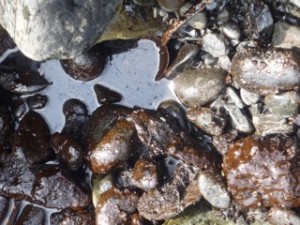
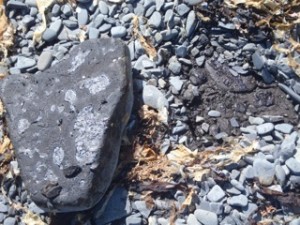
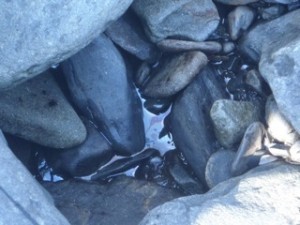
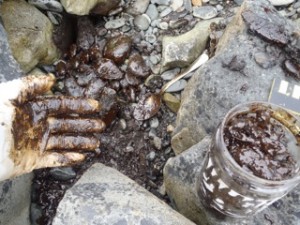
Exxon Valdez spill is not over….images by David Janka

Lingering ’89 Exxon Valdez oil in gravel beach sediments #1 on east shore of Latouche Is. in Pr. Wm. Sound on 5-28-2011 by DJanka

Lingering ’89 Exxon Valdez oil in gravel beach sediments with sheen on east shore of Latouche Is. in Pr. Wm. Sound on 5-28-2011 by DJanka

Lingering ’89 Exxon Valdez oil under surface rock on east shore of Latouche Is. in Pr. Wm. Sound on 5-29-2011 by DJanka

Active sheening on shoreline surface from ’89 Exxon Valdez oil on east shore of Latouche Is. in Pr. Wm. Sound on 5-29-2011 by DJanka

————————————————
Auklet Charter Services est. 1995
Natural history cruises and research support.
Custom multi-day boat charters
throughout Prince William Sound.
Whittier-Cordova-Valdez
David and Annette Janka
P.O. Box 498
Cordova, AK 99574-0498
voice/message: 907-424-3428
cell phone: 907.253.3428
email:
web: http://www.auklet.com/
———————————————-
Special thanks to Richard Charter

The Hill: House Foreign Affairs chair floats bill to deter Cuban offshore drilling

http://thehill.com/blogs/e2-wire/677-e2-wire/163755-house-foreign-affairs-chair-floats-bill-to-deter-cuban-offshore-drilling

Good on you Ileana–we don’t want drilling near Key West and Florida’s coral reefs. Let’s hope we open dialog to try to minimize any dangerous practices and increase safety measures if they do drill. –DV

By Andrew Restuccia – 05/27/11 03:43 PM ET

House Foreign Affairs Committee Chairwoman Ileana Ros-Lehtinen (R-Fla.) floated legislation Friday aimed at deterring oil-and-gas development off the coast of Cuba.

The legislation, which Ros-Lehtinen introduced in the last Congress, comes as public officials are growing increasingly wary of Cuba’s intentions to drill off of its coast, which is less than 100 miles away from the United States.

Spanish oil company Repsol is planning to drill off Cuba’s coast, and others are hoping to follow suit. Repsol is set to bring an oil rig to Cuban waters later this year, according to Reuters.

Ros-Lehtinen’s legislation, which is co-sponsored by two Democrats and five Republicans, makes it illegal for any U.S. citizen to assist the Cuban government in bolstering its offshore drilling industry. It would also deny U.S. visas to anybody who invests more than $1 million in Cuban offshore drilling.

“Desperate for new channels of funding, the Cuban tyranny will say and do anything to persuade others to invest in its oil sector in order to stay afloat,” Ros-Lehtinen said in a statement Friday. “It is in our national security interests to deter others from participating in these reckless schemes.”

The Obama administration says it is monitoring closely Cuba’s attempts to expand its domestic oil production.

“For us it is an issue of concern. We’re watching it closely,” Salazar said last month. “It’s an issue that we’re monitoring carefully.”

A State Department spokesman told The Hill last month that the administration “will pursue activities within our legal authority in order to minimize risk to U.S. territory.”

But the spokesman said administration officials have “not held discussions with the Cuban government on Cuba’s oil exploration.” In fact, the United States has not had diplomatic relations with Cuba for about 50 years.

While the administration has not been in communication with the Cuban government, Interior Department officials have met with Repsol to discuss their plans to drill in the Gulf, Bureau of Ocean Energy Management, Regulation and Enforcement (BOEMRE) Director Michael Bromwich has said.

“[W]e expect any company operating in Cuba’s oil and gas sector to adhere to industry environmental, health, and safety standards and have adequate prevention, mitigation, and remediation systems in place in the event of an incident,” the State Department spokesman said.

The United States is working closely with Mexico to ensure that there is a common set of safety and environmental offshore drilling standards. But the Cuban government did not participate in an April forum in Washington in which officials from a dozen countries and the European Union discussed drilling safety.

National oil-spill commission co-chairman William Reilly has called on the Obama administration to negotiate an agreement with Cuba that would lay out uniform safety standards for offshore drilling in the Gulf of Mexico.

But Reilly said earlier this month that the administration isn’t pleased with his comments.
“That’s something that’s very important to us, I think, given that they’re drilling 50 miles off Key West, so I’ve asked to be invited to Cuba to talk about the report and have had my wrist slapped by the administration for raising the sensitive Cuban issue,” Reilly said, according to E&E News. “I had to say, ‘I don’t work for you.’ ”

Special thanks to Richard Charter

Huffington Post: Chevron Banks on Profitable Political Agenda

http://www.huffingtonpost.com/tyson-slocum/chevron-banks-on-profitab_b_867408.html

No wonder conservationists have a hard time getting ocean-friendly legislation through. DV

Tyson Slocum, Energy program director, Public Citizen
Posted: 05/26/11 10:40 AM ET

With 43 lobbyists and a federal influence-peddling budget of at least $35 million this past election cycle, Chevron must have an ambitious agenda for the politicians in Washington, DC.

The company just paid $4.3 billion to acquire Atlas Energy and its extensive holdings in Pennsylvania’s Marcellus Shale so first and foremost on the company’s agenda will be fighting any efforts to have the federal government regulate hydraulic fracturing. Second, Chevron produced 260,000 barrels of oil and natural gas per day from the Gulf of Mexico, so preventing Congress from reforming offshore drilling rules in the wake of the BP disaster will be key. Third, Chevron will join forces with the U.S. Chamber of Commerce and others to demonize pending Environmental Protection Agency (EPA) rules limiting greenhouse gas emissions, and continue opposing efforts for the U.S. to lead the way in battling climate change. Fourth, look to Chevron to help lead the chant of “Drill Baby Drill!” as the company seeks to exploit the presidential race to open new areas to oil and natural gas drilling. Fifth, expect the company to take evasive action against efforts to revoke billions of dollars in oil company tax breaks and royalty relief.

Finally, Chevron will probably seek to protect investments overseas from meddlesome foreign government actions on prioritizing the environment and workers’ rights by getting the U.S. to enact favorable trade agreements.

Chevron’s lobbyists are a Who’s Who of former government officials. DC’s rule of thumb: corporations ensure better access to lawmakers when they put their former colleagues from government on their payroll. Chevron pays the Breaux Lott Leadership Group of the law firm Patton Boggs $135,000 every three months to lobby members of Congress. That means former Senators John Breaux and Trent Lott hobnob with their Senate contemporaries, and ask whatever Chevron tells them to ask for. Chevron has lobbyist Richard Hohlt on retainer, close friend of Karl Rove, and the kingmaker of a monthly gathering of GOP leaders inside DC called the “Off the Record Club.” Chevron pays the law firm Akin Gump $90,000 every three months to take advantage of the firm’s Democratic stars, including Al From, and former top staffers to Senator Max Baucus and Rahm Emanuel.

Chevron hires the bipartisan Dow Lohnes Government Strategies for $80,000 every quarter, with Stephen Sayle (former Counsel to Representative Joe Barton) and Rick Kessler (former chief of staff to Representative John Dingell) the revolving door highlights. The lobbying firm TwinLogic Strategies is retained at a price of $40,000 every three months to take advantage of two former senior staff members for Representative Bob Goodlatte and former Representative Rich Boucher. Timothy J. Keeler — Chief of Staff in the office of U.S. Trade Representative under President George W. Bush and now a lobbyist with the law firm Mayer Brown — is paid by Chevron to work on trade agreements. The lobbying firm Ogilvy Government Relations features GOP heavyweight Wayne Berman, former Tom DeLay staffer Drew Maloney, and former Dick Gephardt staffer Moses Mercado.

Chevron was the fourth largest federal campaign contributor from the oil and gas sector during 2009-10, giving 82 percent of its nearly $940,000 in contributions to Republican candidates.

In addition to direct contributions to politicians, Chevron funds groups empowered by the Citizens United Supreme Court decision (see www.democracyisforpeople.org) to spend unlimited amounts of money on federal elections. In 2010, Chevron gave $500,000 to the U.S. Chamber of Commerce, which is leading the fight to demonize pending EPA rules to reduce greenhouse gas emissions.

So why does Chevron bother spending this kind of money on the political system? Because, dollar for dollar, nothing provides a better financial return than investing in politicians. With environmentalists pushing to hold oil companies accountable for their pollution, corporations like Chevron would be forced to spend millions of dollars to make their oil and natural gas drilling operations and oil refineries cleaner and safer.

Sure, doing so would improve the standard of living for millions of Americans and help ensure we all have access to cleaner air and water — but Chevron’s political activities clearly show the company’s priority is profit — not saving the planet.

Read the entire True Cost of Chevron report where this essay is featured.

Tyson Slocum is the director of Public Citizen’s energy program. You can follow him on Twitter @TysonSlocum.

Special thanks to Richard Charter