Category Archives: Uncategorized

MSNBC.com: ‘Slime highway’ of BP oil suspected on Gulf floor

http://www.msnbc.msn.com/id/39150640/ns/us_news-environment
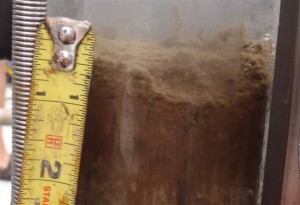

Arney Diercks / University of Georgia
A chunk of “oil aggregate snow” is seen in this close-up photograph of fluffy oil residue found on the Gulf’s seafloor.

Fluffy residue found at sites both far off and near wellhead

Special thanks to Richard Charter

Samantha Boye / University of Georgia
A layer of fluffy oil residue sits atop a sediment core taken from a site northeast of the blown-out BP wellhead.
msnbc.com staff and news service reports
updated 9/13/2010 5:44:16 PM ET

Samples taken from the seafloor near BP’s blown-out wellhead indicate miles of murky, oily residue sitting atop hard sediment. Moreover, inside that residue are dead shrimp, zooplankton, worms and other invertebrates.

“I expected to find oil on the sea floor,” Samantha Joye, a University of Georgia marine sciences professor, said Monday morning in a ship-to-shore telephone interview. “I did not expect to find this much. I didn’t expect to find layers two inches thick.”

The scientists aboard the research vessel Oceanus suspect it’s all from the BP spill, but will have to wait until they return to shore this week to confirm it’s the same oil source.

“It has to be a recent event,” Joye said. “There’s still pieces of warm bodies there.”

If it is BP oil, it could undermine the federal government’s estimate that 75 percent of the spill either evaporated, was cleaned up or was consumed by natural microbes.

What the scientists do already know is that the oil is not coming naturally from below the surface.
“What we found today is not a natural seep,” Joye wrote in her blog on Sept. 5 when the first surprise sediment was found.

“The near shore sediments contained grayish muddy clay and a thin layer of orange-brown oil at the surface,” she added. Oil seeping naturally would create an oily stain throughout the sediment cores, but these samples only had oil at the top.

“The oil obviously came from the top (down from the water column) not the bottom (up from a deep reservoir),” Joye wrote.

‘Slime highway’

The researchers also have a name for it: a slime highway.

That’s because they’re confident much of the oil was trapped by mucus coming from microbes that feast on oil in a natural process that helps break up the contaminant. Those microbes are well documented, but not that their mucus was sinking along with oil to the seafloor.

“The organisms that break down oil excrete mucus – copious amounts of mucus,” Joye told National Public Radio. “So it’s kind of like a slime highway from the surface to the bottom. Because eventually the slime gets heavy and it sinks.”

Another factor that could be trapping the oil was the earlier use of chemical dispersants, which might have made the oil so small that it wasn’t buoyant enough to rise.

Joye wrote that the scientists call the substance “‘oil aggregate snow’ – because it settled down the water column to the seafloor just like snow falls from the sky to the ground.”

“If you take a close look at the snow layer, oil aggregates are clearly visible,” she added. “Also visible are pteropod shells (which must have been recently deposited because the shells dissolve rapidly) and remnants of zooplankton (skeletons) and benthic infauna (dead worms and their tubes).”
The researchers took new samples on Monday and Sunday, and hope to take several more, especially closer to the wellhead, before they return.

“It’s weird the stuff we found last night,” Joye said. “Some of it was really dense and thick.”

The samples have come from seafloors at depths ranging from 300 to 4,000 feet deep.
Since the well was capped on July 15, and after some 200 million gallons flowed into the Gulf, there have been signs of resilience on the surface and the shore. Sheens have disappeared, while some marshlands have shoots of green. This seeming recovery is likely a result of massive amounts of chemical dispersants, warm waters and a Gulf that is used to degrading massive amounts of oil, scientists say.
Times-Picayune: Louisiana authorities report oil sightings from Gulf of Mexico spill

http://www.nola.com/news/gulf-oil-spill/index.ssf/2010/09/louisiana_authorities_report_o_30.html

nola.com

Published: Monday, September 13, 2010, 7:25 PM Updated: Monday, September 13, 2010, 8:56 PM
Times-Picayune Staff

Here is a list, released by Louisiana emergency officials, of areas where oil was sighted recently. The list is not a comprehensive tally of areas affected by the Gulf of Mexico oil spill.
View full sizeU.S. Army photo, Louisiana National Guard Public Affairs OfficeOil-soaked boom washed up on the marsh in Bay Jimmy near Venice on Wednesday.
Plaquemines Parish

Wednesday
* Submerged oil stirred up by boat 4.6 miles northwest of the Grand Gosier Islands.
* Submerged oil stirred up by boat 7.6 miles east of the Breton Islands.
* Oil sheen 1.75 miles northeast of the mouth of the Kimbel Pass.
* Oil sheen 2.4 miles east of the southern mouth of Pass a Loutre.
* Oil, tar balls, and sheen in water and cane grass on the east jetty of the Southeast Pass.
* Oil, tar balls, and sheen in water and cane grass on the west jetty of the Southeast Pass.
Thursday
* Heavy tar found 6 to 8 inches under the sand 0.95 mile west of the entrance to Chaland Pass.
* Heavy tar 30 yards long by 6 feet found 4 inches under the sand 3.2 miles east of the entrance to Chaland Pass.
View full sizeU.S. Army photo, Louisiana National Guard Public Affairs OfficeA barrel of oil and water collected with a Shaffer vacuum from the marsh in Bay Jimmy near Venice on Wednesday.
Friday
* Half mile of oil on an unnamed marsh island on the southwest side of Bay Jimmy.
* Tar balls on the beach on the east side of the Scofield Bayou south entrance.
* Tar patties in an area 1 mile long by 20 yards wide in West Bay 2.15 miles northwest of Outlet W-2.
* Tar balls, 6 feet to 12 feet in diameter, in a large area of Scott Bay, 08 mile north-northwest of Double Bayou.
* Oil droplets, 3 inches in diameter, with some slightly submerged oil 1 mile west-southwest of the Southwest Pass Lighthouse.
* Heavy oil sheen with surface oil droplets and submerged oil in an area 2,500 feet long and 300 feet wide, 0.85 mile west of the Southwest Pass East Jetty.
* Dark oil and tar balls by the South Pass West Jetty.
Monday
* Oil with the consistency of peanut butter, 10 feet long and 2 feet wide, 1.46 miles east of Bay La Mer.
* Oil on the beach, in an area 2 feet wide and 25 feet long, 1.76 miles east of Bay La Mer.
* Oil patty, 4 feet in diameter and 4 inches thick, 0.95 miles west of Chaland Pass.

St Bernard Parish
Friday

* Small, light brown tar balls, in an area 2 yards wide and 200 yards long, in Drum Bay 1.25 miles east of Anderson Point.
Lafourche Parish
Friday
* Emulsified oil with sheen and brown and red particulates 9 miles south-southeast of the east end of Timbalier Island.
* Fresh tar balls on the northwest side of East Timbalier Island.

_________________________________

Comments Feed

View: Oldest first | Newest first

outthebox2 September 13, 2010 at 8:05PM
Follow

Seems like their not reporting all the sightings. I personally reported Sunday sighting oil sheen throughout Bakers canal on Saturday. From what I understand individuals went out Sunday and spotted more but yet BP is scaling back it’s response down in Hopedale, La. We are just beginning to reap the repercusions of this spill on our wetlands.

Inappropriate? Alert us.
Reply Post new

keysfish September 13, 2010 at 8:12PM
Follow

Even the New York Times is saying it’s over and wasn’t so bad, especially in Louisiana. “Gulf May Avoid Direst Predictions After Oil Spill– Preliminary scientific reports suggest the damage may be significantly less than was feared.”
But was it really the shrimpers who killed the sea turtles?

Inappropriate? Alert us.
Reply Post new

0000000000 September 13, 2010 at 8:57PM
Follow

BP and the Government thought they had this thing well covered up. Looks like they even screwed that up. Let’s play some soft music and talk about how BP will do everything in it’s power to make things right. They even have people working for them that have lived here all their lives, and will see that things are done right. Brings a tear to my eye, and indigestion to the belly.

Inappropriate? Alert us.
Reply Post new

nowino59 September 13, 2010 at 9:24PM
Follow
I’m on a beach east of Destin this week and have a collection of tarballs already after 1 day. And there are NO remediation crews patrolling the beaches anymore.

Special thanks to Richard Charter

ABC News: Oil From the BP Spill Found at Bottom of Gulf (video)

see video at:
http://abcnews.go.com/WN/oil-bp-spill-found-bottom-gulf/story?id=11618039

University of Georgia Researcher Says Samples Are Showing Oil From the Spill

By MATT GUTMAN and KEVIN DOLAK
Sept. 12, 2010

Oil from the BP spill has not been completely cleared, but miles of it is sitting at the bottom of the Gulf of Mexico, according to a study currently under way.

Professor Samantha Joye of the Department of Marine Sciences at the University of Georgia, who is conducting a study on a research vessel just two miles from the spill zone, said the oil has not disappeared, but is on the sea floor in a layer of scum.

“We’re finding it everywhere that we’ve looked. The oil is not gone,” Joye said. “It’s in places where nobody has looked for it.”

All 13 of the core samples Joye and her UGA team have collected from the bottom of the gulf are showing oil from the spill, she said.

In an interview with ABC News from her vessel, Joye said the oil cannot be natural seepage into the gulf, because the cores they’ve tested are showing oil only at the top. With natural seepage, the oil would spread from the top to the bottom of the core, she said.

“It looks like you just took a strip of very sticky material and just passed it through the water column and all the stuff from the water column got stuck to it, and got transported to the bottom,” Joye said. “I know what a natural seep looks like — this is not natural seepage.”

Special thanks to Richard Charter

Oceana hosts Key West meeting Thursday Sept 16th

I encourage Keys residents to get involved with Oceana–an effective organization! DV

RSVP to: http://oceanakeys.eventbrite.com/

What: Oceana Florida Keys Orientation & Meet Up
When: Thursday Sept 16th 6–7pm
Where: Sippin Cafe, 424 Eaton Street, Key West, FL 33040

The oil disaster in the Gulf may be capped, but the drilling continues. We need to protect our oceans from this happening again. Join us in our effort to put an end to offshore drilling.

On Thursday, September 16th, we’ll be hosting an Oceana volunteer orientation and meet-up. Come meet one another and learn about Oceana’s campaign to End Offshore Oil Drilling and Protect Ocean Health for future generations to come.

Share your perspective in thoughtful conversation about Ocean welfare and the legacy we’re leaving our kids. We are going to brainstorm actions that we can take in days ahead and talk about how we can take a strong stand against offshore drilling and support offshore wind.

We will be meeting Thursday, September 16th 6-7 pm, at Sippin Cafe, 424 Eaton Street downtown Key West.

This is a great opportunity to connect with other folks interested in making a difference! Hope to see you there.

Special thanks to: Amanda Gambill, Climate and Energy Campaign, Oceana
www.oceana.org

New York Times: The Oil Spill’s Money Squeeze


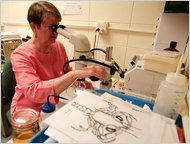
Lee Celano for The New York Times
Harriet M. Perry of the Gulf Coast Research Laboratory in Ocean Springs, Miss., has found oil in larvae samplings, but her testing money has run out.


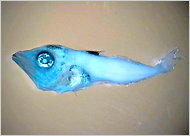
Lee Celano for The New York Times
The image of a larval blue tuna that scientists tested for evidence of oil from the gulf spill.

In May, Harriet M. Perry, the director of the fisheries program at the Gulf Coast Research Laboratory, was asked to examine some mysterious droplets found on blue crab larvae by scientists at Tulane University. An early test indicated that the droplets were oil, and she has continued to find similar droplets on fresh larvae samples taken all along the northern Gulf of Mexico.

Despite the potential significance of the discovery, Dr. Perry does not have research money to cover further tests. And like other scientists across the Gulf Coast who are racing to sketch out the contours of the BP oil spill’s effects, she has few places to turn for help.

The only federal agency to distribute any significant grant money for oil spill research, the National Science Foundation, is out of money until the next fiscal year begins Oct. 1. The Environmental Protection Agency, which has only $2 million to give out, is still gearing up its program. A $500 million initiative for independent research promised by BP, which was to be awarded by an international panel of scientists, has become mired in a political fight over control. State agencies, too, are stymied.

“We have met with every possible person we can regarding this issue, built the templates, sent in the requests, and we are waiting to see,” said Hank M. Bounds, the Mississippi commissioner of higher education, speaking of the needs of Ms. Perry and other scientists.

There is plenty of science being done on the spill, but most of it is in the service of either the response effort, the federal Natural Damage Resource Assessment that will determine BP’s liability, or BP’s legal defense. Scientists who participate in those efforts may face restrictions on how they can use or publish their data. More important, they do not have a free hand in determining the scope of their studies.

“Independent research is being squeezed by federal agencies on one side and BP on the other,” said Dr. Perry, whose only offer of help has come from BP (she declined). “It’s difficult for the fishing community and the environmentalists to understand why we are not receiving the money that we need.”

Scientists view the situation as urgent because the environmental picture in the gulf region changes daily, as the plume of undersea oil disperses and degrades, fish eggs hatch and crabs molt.

“Time is of the essence,” said Lisa Suatoni, a senior scientist at the Natural Resources Defense Council, an environmental group. “Knowing the answers to basic questions like how much oil is below the surface, where is it going and what is its fate – those are answers that are slipping through our fingers.”

John H. Paul, a biological oceanographer at the University of South Florida, has found evidence of stress and even genetic damage in plankton exposed to the spill. “Everything that I’ve done, I’ve not had funding for,” he said. “I’ve had to pull people off my other projects and say, ‘Here, let’s do this for two weeks.’ ”

Ralph Portier, an environmental scientist at Louisiana State University, said earlier grants would have meant earlier answers to key questions like how long it will take for the oil in the marshes to break down. “We could have had a much better answer to that by now if we had started in the summer,” he said.

But, Dr. Portier said, there was no mechanism set up to provide research money in the event of an oil spill. “We always seem to be reacting and reacting and reacting, rather than being proactive,” he said.

Dr. Suatoni said the federal agencies that scientists normally looked to might not get significant allotments from Congress for spill research. “The government is afraid it’s going to look like we’re asking taxpayers to pay to study a spill that was a result of BP’s actions,” she said.

Right after the spill, gulf research institutions exhausted their budgets, spending hundreds of thousands of dollars to pay for sea voyages and sampling. Scientists used their personal credit cards to begin research projects.

After complaints about the scarcity of research dollars, BP announced that it would spend $500 million over 10 years in a program it called the Gulf Research Initiative. The original structure of the initiative, with an international panel of scientists appointed to review proposals, was applauded by many scientists, who were persuaded that BP genuinely intended to distance itself from the choice of projects and would set no limits on the publication of results.

But gulf scientists and state officials expressed fears that the process would take too long and that the money would go to large, well-financed research institutions outside the gulf region.

So BP wrote checks for $30 million to research centers in the region for “high-priority studies” – $10 million to the Florida Institute of Oceanography, $10 million to the Northern Gulf Institute, and $5 million to the Dauphin Island Sea Lab in Alabama, all university consortiums, and another $5 million to Louisiana State University. Last week, BP announced that $10 million of the initiative money had been awarded to the National Institutes of Health.

The money was in high demand – the Florida Institute of Oceanography, for example, received 233 proposals and gave awards to only 27.

BP promised that guidelines for disbursing the rest of the money were imminent, but politics intervened. Governors of the Gulf States still wanted more local control of the money, and in mid-June the White House backed them up, announcing, “As a part of this initiative, BP will work with governors, and state and local environmental and health authorities to design the long-term monitoring program to assure the environmental and public health of the gulf region.”

A White House spokesman said that statement was never intended to delay the financing process, but the announcement forced BP to rethink its plans and caused anxiety among scientists. Some feared that the delay would extend indefinitely, and that as the spill receded from the public eye, the money would never materialize. Others divined a money grab by governors for their own cash-starved environmental departments. BP has said little, other than that it is following the “White House directive” to consult with the states.

At least three of the governors have signed on to a proposal that a group called the Gulf of Mexico Alliance, a partnership led by state natural resource and environmental agencies, administer the money. Under the plan now being worked out, BP would appoint 10 members of the peer review board and each governor would appoint two members, said William W. Walker, the director of the Mississippi Department of Marine Resources and the co-chairman of the alliance. In Mississippi’s case, he said, there would most likely be one appointee from a state agency and one from a research institution.

But scientists are skeptical of the gulf alliance, in part because it is controlled by agencies rather than universities, and the public silence surrounding the negotiations has raised suspicions.

“It looks like maybe BP caved,” said Gary M. King, a microbial ecologist at Louisiana State University. “There’s no sense of trust that a group of governors are actually going to do the right thing and ensure that there will be good science.”