http://dirtyenergymoney.org/index.php
Check this out……so sad, but true. DV
http://dirtyenergymoney.org/index.php
Check this out……so sad, but true. DV
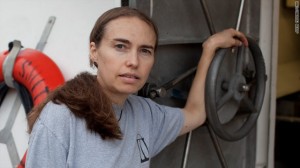
Samantha Joye, an oceanographer at the University of Georgia, has emerged as a spokeswoman for the deep ocean.
By John D. Sutter,
August 24, 2010 — Updated 1356 GMT (2156 HKT)
STORY HIGHLIGHTS
* Samantha Joye is an oceanographer who speaks out in defense of the deep ocean
* She says we know little about what the Gulf oil spill is doing to the deep parts
* has been largely ignored as part of the disaster, she says
The 45-year-old grew up on a farm; she walked on to the UNC basketball team
Athens, Georgia (CNN) — Samantha Joye’s office is littered with otherworldly artifacts from the deep ocean: a mussel the size of a football; a vase filled with tube worms, which look like grissini breadsticks; a photo of the world’s biggest bacteria.
Above her cabinets, the University of Georgia oceanographer has posted two images of lunar landscapes. They’re bizarrely similar, she says, to the topography on the floor of the Gulf of Mexico, the body of water that has captivated her attention for 15 years.
Joye doesn’t just work in the Gulf. She lives for it. She stays up at night thinking about what makes it tick. And, like a close friend, she’s become fiercely protective of it.
Four months after the BP oil spill, the wiry 45-year-old — who looks like the librarian version of Angelina Jolie — has been thrust into the uncomfortable position of defending this battered ocean against the perception that the environmental disaster is over.
Based on available evidence, she says, that’s simply not true.
“I’m not trying to be a ‘doom and gloom’ pusher, but I am trying to be realistic — and we don’t have all the answers,” she said. “We’re trying to pretend we do, but we don’t.”
Last week, Joye and another scientist published a memo saying that three-quarters of the oil spilled into the Gulf — about 3 million barrels — remains in the ecosystem. It’s out of sight and perhaps out of mind, she says, but it’s not gone.
This contradicts an earlier report from the National Oceanic and Atmospheric Administration. The government’s “oil budget,” which was based on observations and calculated estimates, was interpreted as saying as much as three-quarters of the oil is essentially gone.
“The vast majority of the oil from the BP oil spill has either evaporated or been burned, skimmed, recovered from the wellhead or dispersed using chemicals — much of which is in the process of being degraded,” said a government news release on August 4.
Joye’s defense of lingering questions about the oil spill has inspired hate as well as praise.
Her phones have been ringing nonstop. Last Tuesday, her office voicemail filled up three times before she yanked the plug on the phone in frustration.
The e-mails rolled in, too, many hitting on this theme:
“You WANTED an ecological disaster and when it didn’t happen you are literally willing to do or say anything to make it look like there was,” one person wrote.
Joye tries not to let these comments bother her, but they do.
Still, she says she can’t back down. It’s not in her nature.
The “shrimp” fights back
Growing up on a tobacco farm in North Carolina, Joye was a self-described “shrimp” — she was short, shy, scrawny as a tube worm and hopelessly nerdy.
She was the type of kid who read the encyclopedia for fun.
But there was an intensity to her, too.
She was so competitive in basketball, for instance, that she walked on to the University of North Carolina-Chapel Hill team her freshman year.
“I could shoot the lights out,” she said.
As a young girl, she found herself the butt of many jokes, in part, she said, because she had no problem telling teachers about the transgressions of her peers. On several occasions, Joye recalls ratting out classmates for picking on each other or fighting.
In one such incident in middle school, Joye confronted one of her male classmates who she thought was harassing another girl.
It backfired. Joye found herself backed into a corner, both the bully and the victim now yelling at her for meddling in their business.
That incident had a curious effect on Joye: It helped bring her out of her shell.
The shy, nervous girl stopped caring as much about what people thought.
She would stand up for what she believed in.
Hooked by the deep ocean
In 1994, when Joye took her first voyage to the bottom of the Gulf, she fell in love.
“The [submersible] dive was about three or four hours long, and I spent the entire time with my jaw on the floor, my eyes bugging out of my head and just going, ‘Wow!’ ” she said.
Partly because of the wow factor and partly because it was so scientifically perplexing, Joye started to develop an emotional attachment to the deep ocean in the Gulf.
That attachment made it all the more painful for her to watch the oil disaster unfold.
“It is much more than an oil spill,” she said. “It’s kind of like an insult to your best friend, and you want to help her figure out how to make this insult go away.”
Called back to the sea
Joye rushed to the Gulf’s defense.
It wasn’t easy. She never had left her 2-year-old daughter, Sophie, at home without her. She considered staying behind, but decided in May that she had to go.
“I feel like I owe [the Gulf] a debt because it’s taught me so much,” she said. “I feel like I owe it to the system to be out there.”
The research trip made headlines and Joye became one of the first scientists to track an underwater “plume” of oil.
On Saturday, Joye left again for the Gulf — this time aboard the Oceanus on a monthlong research trip.
Again, the decision to leave was difficult. Sophie had been throwing fits in the days leading up to the trip, even though Joye had tried to hide it from her.
“I pack when she’s asleep, and I hide the suitcases in the car,” Joye said.
Christof Meile, Joye’s husband, also works in the marine sciences department at UGA. He stays home with Sophie while Joye is away. Meile supports Joye’s commitment to research, especially in such a rare circumstance as the Gulf oil disaster.
He celebrated his 40th birthday on Friday, the day Joye left home at 6 a.m. to fly to Gulfport, Mississippi, where she met the research ship. But he wasn’t bothered.
“I don’t think my life is defined by how I celebrate my birthdays,” he said.
Sophie also takes an interest in her mom’s research.
“She always asks me, ‘Did you fix the ocean yet?’ ” Joye recalled.
“And I say, ‘No, but I’m trying.’ ”
Defender of the deep
Joye won’t return from the ocean until late September.
On the voyage, she and a team of researchers are looking for answers to what Joye sees as a number of lingering questions about the oil’s effects.
Among the greatest unknowns, she says:
— What happened to the methane? It wasn’t just oil that spewed out of a pipe at the bottom of the Gulf after a BP-leased oil rig exploded and sank in April. As much as 30 to 40 percent of the fossil fuels released in the disaster were gases, Joye says, but they’ve largely been ignored in the accounting so far. Joye is interested in what liquid methane is doing to the deep ocean.
— How fast is the oil being degraded? Joye says scientists have not reported the rate at which the oil is being chewed up by micro-organisms. Without that key number, it’s difficult to say how much oil has left the system for sure, she said.
— What’s happening to the oxygen? Ocean microbes have emerged as heroes of the oil spill because they chew up and digest the oil. That’s a good thing, but they also use oxygen in the process, and that element is vital to life in the sea. Joye said not enough is known about how much oxygen has been depleted from the Gulf, particularly in the deep water, where it can take years or decades for the water to replenish its oxygen supply naturally.
Overall, Joye says federal officials have been too quick to jump to conclusions about what an unprecedented amount of oil will do to an ocean environment.
And they haven’t done enough to learn about what’s actually happening to the environment, she said.
“It’s being treated like ‘Oh, I scraped my knee and I need a Band-Aid,’ ” she said. “This needs much more than a Band-Aid.”
In a news conference on August 18, NOAA Administrator Jane Lubchenco said her agency is taking the situation seriously.
“NOAA, along with our partners in the academic and private research institutions and other federal agencies, remain vigilant in our efforts to track and monitor the oil from the marshes to the open ocean, from the surface to the bottom of the Gulf,” she said. “And we will remain in the Gulf for as long as it takes to assess the damage and restore the ecosystems.”
Joye said her biggest fear is that a lack of concern on the part of the public will mean we never devote the recourses necessary to study the oil disaster.
“It’s like truth by repetition,” she said. “You can paint a rosy picture, and that rosy picture is going to become a reality.”
Other scientists are more tempered in their observations.
Ed Overton, a professor of environmental sciences at Louisiana State University, said scientists such as Joye should be praised for their dedication to collecting as much data as possible about the oil spill and for fostering debate about how much is known about the long-term effects.
“In general, I think [Joye’s point of view] is a healthy part of the debate,” he said. “I don’t call it criticism; I call it discussion. I don’t know why people are taking such offense at this discussion. None of us are god, for god’s sake.”
But he said much of the early evidence shows damage in the Gulf is not nearly as bad as was initially thought.
“What we’ve got is a patient that’s been in a horrible accident,” he said of the environmental damage to the Gulf, adding: “As it looks right now, we don’t have a broken back; we might have some broken arms.”
Joye’s mother and sister said they are surprised by the attention she’s drawn, but not by her willingness to voice what may be an unpopular opinion.
“She was sort of blindsided by the attention,” said her sister, Jenn Epperson, a geologist in California. “It’s different. A lot of people who trumpet about things are doing it for the attention. She was doing it just because she is the way she is.
“She is fierce when it comes to something she cares about.”
Special thanks to Linda Young
August 25, 2010
http://www.chron.com/disp/story.mpl/business/7170050.html
He tells hearing he did good work but his ideas to cut risk were ignored
By BRETT CLANTON
Aug. 24, 2010, 9:31PM
The Halliburton Co. engineer who designed the cement job used in BP’s blown-out Macondo well defended his work Tuesday, saying if he had it to do over he would do it much the same way.
But in testimony at an investigative hearing, he also attempted to distance Halliburton from the accident, stressing that BP did not follow key recommendations of his that could have reduced the risk of a dangerous gas influx into the well.
Jesse Gagliano, a Halliburton technical sales adviser, testified that he first warned BP engineers in Houston five days before the April 20 explosion of potentially severe gas flow problems in the well if BP didn’t take corrective action.
The same warnings, he said, were in an April 18 report showing that the risks could be reduced if BP added 15 devices called centralizers to the six it had in the well to secure a section of pipe-like casing in the middle and ensure cement could be poured evenly around it.
“I never did change my recommendation of 21 centralizers,”îGagliano told a joint investigative panel of the Coast Guard and Bureau of Ocean Energy Management Regulation and Enforcement, which is holding public hearings in Houston this week.
Decisions about the centralizers and other aspects of the cement job have been cited as possible factors in the deadly blowout that killed 11 workers and launched the worst oil spill in U.S. history.
Gagliano stopped short of saying a faulty cement job was to blame for the blowout.
In a statement responding to the testimony, BP said Halliburton was aware of the key elements of the well’s design.
“If Halliburton had significant concerns about its ability to provide a safe and high-quality cement job in the Macondo well, then it had the responsibility and obligation to refuse to perform the job,” BP said. “To do otherwise would have been morally repugnant.”
Idea shot down
Tuesday’s session was the first time Halliburton officials with firsthand knowledge of the situation gave federal investigators their version of events. Gagliano was one of two Halliburton workers who testified Tuesday at the Coast Guard-BOEMRE hearings.
Gagliano said when he first raised alarms about the well on April 15, BP initially treated it with urgency. He and two BP engineers worked late into the night on possible solutions. BP even had a helicopter deliver the additional centralizers to the Deepwater Horizon the following day.
But Brian Morel, a BP drilling engineer, had by that point already shot down the idea.
“As far as changes, it’s too late to get any more product to the rig,”îhe wrote in an April 15 e-mail to Gagliano and several senior BP drilling officials. “Our only option is to rearrange placement of these centralizers.”
Morel, through his attorney, declined to testify at the hearing, invoking his Fifth Amendment right against self-incrimination.
Testimony challenged
Gagliano, however, was challenged by a BP attorney, Richard Godfrey, who accused Halliburton of overstating warnings it provided about the cement job prior to the accident.
Godfrey said nowhere in his April 18 report did Gagliano explicitly say the Macondo well should not have cement poured down it. He noted that a separate report the same day, prepared and signed by Gagliano, called for only seven centralizers.
“You sent BP a job recommendation that you thought would fail?” Godfrey asked.
Gagliano said that the recommendation was based on procedure decisions that came from officials on the rig, which included Halliburton engineers and BP officials.
“This was not my procedure. This procedure came from the rig,” Gagliano said. “My best engineering analysis would be to run 21 centralizers.”
But Godfrey noted that despite those apparent concerns, Gagliano sent a post-job report to BP three days after the accident saying that the cement job was performed as planned and again failed to bring up previous warnings about gas flow potential or other problems.
‘Some confusion’
Earlier Tuesday, Daun Winslow, a Transocean executive who was on board the Deepwater Horizon at the time of the blowout, testified he observed confusion among rig personnel about an important well test just hours before the accident. Transocean owned and operated the rig, under contract with BP.
Winslow, a performance division manager, said he overheard a conversation in the rig’s drill shack late in the afternoon about the results of a procedure called a negative pressure test.
“It appeared there was some confusion about some pressures or volumes circulated,” he said.
During a negative test, the fluid pressure inside the well is reduced and the well is observed to see whether any gas leaks into it through the cement or casing.
Winslow’s account lines up with information BP provided investigators about well tests before the blast at about 10 p.m. The company has said a first negative pressure test around 5 p.m. failed because it showed major pressure discrepancies. A later test also showed elevated pressures in the drill pipe, BP has said. The results could suggest gas had seeped into the well bore.
Sharon Hong contributed to this story.
brett.clanton@chron.com
xxxxxxxxxxxxxxxxxxxxx
http://www.chron.com/disp/story.mpl/business/7170114.html
Former top drilling regulator set to testify
She resigned under pressure in aftermath of April 20 blowout
By JENNIFER A. DLOUHY
Aug. 24, 2010, 10:25PM
WASHINGTON When the presidential commission investigating the Deepwater Horizon disaster convenes its second hearing today, the panel plans to examine regulatory lapses that may have paved the way for the Gulf of Mexico oil spill.
Witnesses before the seven-member panel include Elizabeth Birnbaum, formerly the nation’s top drilling regulator, who will be speaking publicly for the first time since she resigned under pressure five weeks after the April 20 blowout at BP’s Macondo well. Two other previous drilling overseers are scheduled to join Birnbaum in fielding questions about whether the government has been too lax in regulating the industry.
But the panel’s attention instead could be diverted to debate over the administration’s six-month moratorium on deep-water drilling, which has been challenged by oil industry leaders and Gulf Coast officials, who say the ban will devastate the region’s already hard-hit economy.
Environmentalists and the Obama administration contend that the ban – set to expire Nov. 30 – is a necessary timeout while the industry and government boost drilling safety standards, improve spill containment techniques, and ensure there is enough available cleanup equipment in case of another spill.
The drilling ban dominated the commission’s first round of meetings in New Orleans last month, as rig workers and offshore service industry representatives complained that the policy has idled roughly two dozen floating rigs in the Gulf of Mexico.
The commission’s co- chairmen, former Environmental Protection Agency head William Reilly, and former Florida Gov. Bob Graham, also have raised concerns about the ban and questioned whether the moratorium could be lifted for some operations that pass rigorous new safety inspections.
“We are particularly interested in whether individual rigs – or categories of rigs – subject to the moratorium are sufficiently safe to allow the moratorium to be lifted with respect to those rigs,” the commission’s executive director, Richard Lazarus, said in an Aug. 6 letter to Michael Bromwich, the head of the Bureau of Offshore Energy Management, Regulation and Enforcement.
Interior Secretary Ken Salazar created that bureau in June as part of a broad overhaul of the now-disbanded Mineral Management Service, the unit formerly headed by Birnbaum.
Low-risk operations
Although Bromwich opposes a rig-based approach to lifting the ban, he told the commission in a letter Monday that the moratorium could be partially lifted before its scheduled expiration for certain low-risk operations.
The national commission, which President Barack Obama authorized in May, is tasked with pinpointing the causes of the explosion at the Deepwater Horizon drilling rig and suggesting new regulations and other changes that could prevent a repeat. The panel is expected to detail its findings in January.
Its work dovetails with a series of other oil spill investigations under way – including a joint inquiry by the U.S. Coast Guard and Bromwich’s bureau that is conducting hearings this week in Houston.
Broader issues
So far, the national commission has dealt publicly with broader issues surrounding offshore drilling. For example, today’s hearing will include an 80-minute primer on the history of the industry by a Shell Exploration and Production manager, an energy consultant and the head of the World Wildlife Fund. The panel is also scheduled to hear from University of Houston business professor Tyler Priest, and officials with the American Petroleum Institute.
But the commission now is building the framework for a more focused examination about what went wrong on the Deepwater Horizon rig, spokesman Dave Cohen said. It has hired 40 researchers to investigate the disaster.
At the helm of the investigative team is Fred Bartlit, a trial lawyer who represented former President George W. Bush in the legal battles in Florida over the disputed 2000 election. Bartlit also is a veteran of another oil disaster investigation – he was chief counsel during a yearlong probe of the 1988 explosion of the Piper Alpha oil platform in the North Sea that killed 167.
Lacks subpoena power
So far, the panel has been operating without the power to subpoena documents and compel testimony from reluctant witnesses.
Lawmakers, led by Rep. Lois Capps, D-Calif., and Ed Markey, D-Mass., have pushed legislation to give subpoena power to the commission, but their proposal has stalled on Capitol Hill amid other disputes over energy policy and how to boost companies’ liability for oil spills.
The panel’s findings could dictate the future of oil and gas drilling off the nation’s shores for decades. Interior Department officials also have signaled the commission’s work could help influence whether the department will modify its deep-water drilling ban in coming months.
jennifer.dlouhy@chron.com
Special thanks to Richard Charter
http://www.washingtonpost.com/wp-dyn/content/article/2010/08/24/AR2010082406754_pf.html
IF we’re going to continue to allow offshore oil drilling while we fiddle around with becoming energy smart, then yes, more real regulatory oversight is a pressing need.
I’d rather put the money into alternative fuels and be done with fossil fuels. DV
By Juliet Eilperin and Scott Higham
Washington Post Staff Writers
Tuesday, August 24, 2010; 10:14 PM
Two weeks after BP’s Macondo well blew out in the Gulf of Mexico, the federal government’s Minerals Management Service finalized a regulation intended to control the undersea pressures that threaten deepwater drilling operations.
MMS did not write the rule. As it had dozens of times before, the agency adopted language provided by the oil industry’s trade group, the American Petroleum Institute, and incorporated it into the Federal Register.
MMS received two favorable public comments about the regulation: one from the Offshore Operators Committee, an industry group, and the other from BP. The regulation stated: “BP, a large oil and gas company, expressed the importance of this rule and how they have been involved with MMS and industry to develop the industry standard.”
The fact that BP – which has come under withering criticism for how it managed mounting pressure in the Macondo well – took partial credit for crafting the rule is not surprising. MMS has adopted at least 78 industry-generated standards as federal regulations, American Petroleum Institute records show.
MMS’s acquiescence stemmed from the unusual relationship it had cultivated with industry. Directed by law to “meet the nation’s energy needs,” the agency pursued that mission by declaring itself publicly and formally as industry’s partner.
Top officials and front-line workers routinely referred to the companies under their watch as “clients,” “customers” and especially “partners.” As the relationship became more intertwined, regulatory intensity subsided. MMS officials waived hundreds of environmental reviews and did not aggressively pursue companies for equipment failures. They also participated in studies financed and dominated by industry, more as collaborator than regulator. In the face of industry opposition, MMS abandoned proposals that would have increased costs but might have improved safety.
The story of how a little-known federal agency became an extension of the industry it oversaw spans three decades and four presidents. It began in 1982 with a major change in the way the nation managed its natural resources, picked up pace with initiatives to streamline bureaucracy in the Clinton and George W. Bush administrations, and ended after the April 20 BP blowout with the Obama administration’s abrupt decision to undo the partnership.
Few in positions of power in Washington paid close attention to MMS and the hard-to-understand world it was charged with regulating. When they did, it was often to pressure the agency to increase the money it earned from leases it sold and the production that followed. Over its 28-year history, MMS grew to become one the government’s largest revenue collectors, after the Internal Revenue Service.
As oil and gas companies took their drilling operations into deeper and riskier waters, MMS had to rely on its corporate partners’ expertise. Along the way were warning signs of the partnership’s imbalance, but the industry’s track record of no major accidents provided a comfort level that proved deceptive.
Industry innovation, as it often does, had outrun and overpowered the government’s regulatory prowess, with disastrous results. They were partners, but they were not equals.
On the fly
James G. Watt, the man who created MMS, came to Washington in 1982 with a mission: to alter the way the government managed its natural resources. Coming off the hostage crisis in oil-rich Iran and gas shortages on the home front, he vowed to “mine more” and “drill more.”
Nearly three decades later, the lawyer known for his sharp mind and oversized glasses says in an interview from his home in Jackson Hole, Wyo., that he “wouldn’t change one decision.”
As Ronald Reagan’s first interior secretary, Watt wasted little time pursuing his vision. The environment, he believed, contained valuable resources that should be exploited for the good of the nation, particularly at a time of tense relations with the Soviet Union and continuing instability in the Middle East.
“The Reagan administration was for everything,” Watt says. “We wanted nuclear, we wanted solar, we wanted conservation, we wanted wind, we wanted coal. We were just doing everything we could to re-arm America, dig us out of a huge financial mess. That required energy at every level.”
For years, the U.S. Geological Survey had handled the task of collecting royalties from companies, based on the amount of oil and gas they extracted from federal land and offshore reserves. But allegations of fraud had left the program in a shambles. A panel appointed to examine the problems recommended that a new agency take over those duties as its main mission.
Watt went one step further. The Minerals Management Service he created in 1982 would not only lease tracts for exploration and collect the government’s share of oil and gas revenue, it would regulate the industry, too. That built-in conflict would hamstring the agency for decades.
As an early director of MMS, William D. Bettenberg carried out many of Watt’s orders. He recalls that the agency was created on the fly.
Bettenberg left his office in Reston one Friday afternoon and returned Monday to learn that Watt was giving MMS oversight of drilling operations in the Outer Continental Shelf, a responsibility that had rested within another Interior Department division, the Bureau of Land Management. A co-worker found a copy of Watt’s draft order on a Xerox machine and relayed the news to Bettenberg in a phone call.
As he set up the agency, Bettenberg turned to industry for guidance. “Sometimes we applied industry standards,” he says. “Many of the standards are good.”
Bettenberg, who retired in 2005 after a 41-year career, wonders whether the agency could have done more to regulate deep-sea drilling.
“This recent spill has prompted me to conclude I didn’t ask enough questions,” he says. “I suspect people didn’t keep up with technology.”
Expansion
In the face of Watt’s push for more drilling, the Democratic-controlled Congress resisted.
Rep. Les AuCoin, an outspoken Oregon Democrat, had a vision of what an oil spill off California could mean for his state. After major storms, he said, dead cows would wash up on Oregon’s beaches, plucked from Northern California coast. Oil from a blown-out well, he reasoned, would be no different.
When Watt suggested opening up the Pacific Outer Continental Shelf and Georges Bank off Massachusetts to drilling in 1981, AuCoin and Republican Rep. Silvio O. Conte of Massachusetts used their posts on the powerful House Appropriations Committee to block him. They put language in a funding bill mandating that no money could be used to lease exploratory tracts in central and Northern California waters or the Georges Bank.
Leasing new tracts to oil and gas companies was MMS’s primary objective. Many agency employees spent their days determining which offshore areas would be most productive, and then auctioning those swaths to the highest bidders. Now, lawmakers were saying they had as much of a right to draw the map for drilling as MMS officials did.
Watt backed away from leasing off the California and Massachusetts coasts, but he moved to lease nearby areas, tracts that were even closer to shore. Congress responded with further restrictions, the beginning of what would become a drilling moratorium for certain regions.
The one exception: most of the Gulf of Mexico.
After Watt resigned in September 1983, lawmakers expanded the moratorium. >From 1982 to 1992, the territory declared off-limits grew from 700,000 acres off the California coast to more than 266 million acres off the Pacific and Atlantic coasts, Alaska’s Bering Sea and the gulf’s eastern portion .
Again, the rest of the gulf remained open.
Lawmakers who opposed drilling found an ally in George H.W. Bush. During his 1988 presidential bid, he said offshore areas needed protection “until technology moves forward.”
In his first year as president, he canceled a slew of lease sales by executive order and established a marine sanctuary in California’s Monterey Bay. The government also bought back leases for tracts off South Florida. The result: More offshore auctions were canceled than held between 1987 and 1992.
The gulf remained the primary place for deepwater ventures, becoming what environmentalists such as Peter Galvin of the Center for Biological Diversity called a “national sacrifice area.” Today, it is home to 99 percent of the nation’s offshore oil production. Of 911 new wells in the past two years, all but 13 were drilled in the gulf.
Reinvention
Since the BP blowout, Bruce Babbitt has been reevaluating what took place during his tenure as Bill Clinton’s interior secretary, and how the nation’s oil and gas policy went awry despite his best intentions.
He belongs to an exclusive club, one of four interior secretaries to serve for eight years. In that position, he focused much of his time on preserving the country’s wild spaces. Babbitt paid less attention to MMS.
Sitting in the sleek Dupont Circle headquarters of the Environmental Defense Fund, where he now serves as an adviser, Babbitt describes how a relentless drive to reduce the federal bureaucracy in the 1990s solidified the partnership between Washington and the offshore industry. The Interior Department began to emphasize “performance-based regulation” on the assumption that industry was better positioned than the government to determine what practices worked.
“That is a mistake for which I shoulder part of the blame,” he says. “It was not a good decision. My belief, with considerable hindsight, is there is no place for performance-based regulation because of the high risk.”
Political forces were pushing the department to scale back on regulatory dictates. Clinton was seeking to “reinvent” the government – and by extension, agencies such as MMS. He put Vice President Al Gore in charge of the initiative, which sought to slash the federal workforce, reduce regulation and form “partnerships” between Washington and industry. Profound changes would take place at MMS: It was ordered to do a better job of collecting royalties, while losing nearly 10 percent of its staff during the next five years.
Reinvention also became the agency’s mantra. In October 1993, an Interior panel issued findings aimed at future drilling policies. Titled “Moving Beyond Conflict to Consensus,” it represented a paradigm shift.
Chaired by an oil drilling company executive, the panel urged a reversal of restrictions championed during the previous decade by George H.W. Bush and many members of Congress. It recommended that Interior lift the moratoriums; share revenue with states whose water would be opened up for leasing; and create incentives to spur exploration, such as royalty relief for industry. The panel called large spills in the gulf “improbable,” citing relatively low reservoir pressure that required companies to retrieve the oil and gas through “artificial lifting” in 90 percent of the wells.
Today, Babbitt says he sees how policymakers came to focus more on revenue than on risks. “This kind of partnership stuff, in a way, is an inevitable part of a system in which you are producing the second-largest amount of revenue for the U.S. government,” he says.
It turned out that MMS was not capable of navigating its dual relationship as regulator and industry partner, he says.
It took time for him to see the inherent conflict. “The full realization of that came, frankly, after I left office, when I had a chance to think in a more abstract way, when I had a chance to sort this out. It’s not an easy sort.”
Going deep
Echoes of the Interior Department panel’s recommendations were being heard in the halls of Congress. Worried that leases were declining as opportunities in shallow water dwindled, Louisiana Democrat J. Bennett Johnston used his senior position on the Senate Energy and Natural Resources Committee to seek royalty relief for companies willing to explore deeper water.
“Offshore drilling had always been very key to our [state’s] economy, and the overall oil production,” he now says. “I thought we ought to make a way to make it easier to drill in deeper water. Because if you’re not going to get them to drill, that’s money you’re not going to get.”
The Deep Water Royalty Relief Act, written by Johnston and passed in 1995, exempted companies that drilled on certain leases from paying royalties. “It was not like these were a bunch of oilies getting together and deciding, ‘How can we rip off the government?’ ” says Johnston, who left Congress in 1997 and is now an American Petroleum Institute lobbyist. “These were serious policymakers figuring out how to benefit the nation.”
With the moratoriums in force, the Gulf of Mexico became a more important place to drill. The move into deeper water did not, however, prompt a discussion about greater oversight. “It was not a big focus of the Congress,” Johnston says. “There wasn’t any whistle-blower saying, ‘They’re being unsafe.’ ”
At the end of the Clinton administration, MMS itself issued a warning. In a little-noticed budget document, the agency reported in 2000 that the burgeoning number of deepwater wells had made overseeing operations in the gulf more complex. The number of companies working there had grown by 30 percent and many employees were new.
MMS cautioned: “The offshore industry significantly downsized in the 1980s. . . . The presence of workers without offshore experience is placing an added burden on the inspection and compliance program.”
If the agency was waving a red flag, few saw it.
Acceleration
After the Clinton administration set the table for the partnership, the George W. Bush administration let the industry run it.
On Jan. 29, 2001, nine days after taking office, Bush signed an executive order creating the National Energy Policy Development Group. Within weeks, Vice President Richard B. Cheney, as chairman of the task force, began holding closed-door meetings with industry officials.
Executives from BP, Exxon-Mobil, Conoco, Shell and other companies met with the vice president and his team. Jim Ford, then director of the American Petroleum Institute, sent the panel an e-mail on March 20 outlining the industry’s legislative and policy wishes. He called for limiting regulations, reducing the backlog of drilling permits, and making it easier for energy companies to access oil and gas leases.
In its report on May 16, the task force said that drilling in the Outer Continental Shelf had an “impressive environmental record” and that state and federal regulations were interfering with exploration and production. The panel urged Bush to direct Interior Secretary Gale A. Norton to “consider economic incentives” for oil and gas firms and reduce the amount of royalties they had to pay.
Soon after, Bush signed two executive orders that tracked many points in Ford’s e-mail and adopted many of the Cheney panel’s recommendations.
Norton, and her deputy, J. Steven Griles, embraced the task force’s endorsement of more drilling. A Griles memo to the White House’s Council on Environmental Quality on Aug. 22, 2001, said Interior was “fully committed to playing a role in this effort” and had a “special interest and expertise” in expanding production.
‘Gung ho’
Norton’s enthusiasm for industry’s desire to go into deeper water was on display at the dedication on Feb. 26, 2005, of BP’s Thunder Horse oil platform in the gulf, then the largest in the world.
Accompanied by MMS Director Johnnie Burton, Norton declared on the trip – underwritten by BP, according to government records – that the rig was “created to protect the blue waters that it stands in, no matter how great the storm.” With the rig looming behind her, she said, “Many people have an image of offshore oil production that is frozen in time. Thunder Horse is a dramatic embodiment of how far technology has progressed.”
Less than five months later, the 13-story structure nearly capsized, the result of equipment failures during Hurricane Dennis. The mishap delayed the start of production until 2008.
During Norton’s tenure, the department adopted regulations aimed at spurring deepwater drilling in the western and central Gulf of Mexico. A 2002 rule allowed oil and gas firms to apply for additional royalty relief; two years later, another rule reduced royalty payments for companies drilling for gas in deeper water.
At the time, MMS began receiving reports that raised concerns about underwater blowout preventers, which serve as the primary device for cutting off the flow of oil in an accident. The equipment relies on a brute-force component known as a blind-shear ram to sever and crimp the pipes of a runaway well. These hydraulic-powered rams are the last line of defense against the pressure rising from deepwater reservoirs, which had proved greater than the members of the 1993 Interior panel had stated.
One study suggested requiring a second blind-shear ram for backup, but in 2003, the agency decided against that. Another report questioned whether remotely operated underwater vehicles could generate enough pressure to cut the pipes. The agency did little to address the concern.
Norton declined an interview request, saying she had testified about her tenure last month before Congress.
In 2005, finalizing a policy from the end of the Clinton era, MMS told companies that they did not have to provide detailed blowout and response scenarios for each exploration plan. The agency said the plans were “purely speculative or generic.” MMS officials did request modest budget increases for regulation. But greater oversight was not a priority, as David Abraham at the Office of Management and Budget discovered.
Abraham served as OMB’s examiner for offshore programs from 2003 to 2005. When he asked MMS officials about their plans for keeping up with expanded drilling, he said they routinely gave the same answer.
“They said, ‘Our processes work,’ ” recalls Abraham, now a fellow at the Council on Foreign Relations. “I said, ‘It’s like an airplane – everyone always says the wheels will come down, but what happens when they don’t?’ They should have had people who could say, ‘This is what we do when the wheels don’t come down.’ What they said is, ‘Don’t worry. Our regulatory regime works. ”
Abraham recalls: “They were being pushed by Congress, and they were being pushed by the White House- ‘Let’s go into this area, let’s go into that area,’ Nobody asked: Did they have the technology” to handle this?
The pressure to increase production came from both ends of Pennsylvania Avenue, says Lynn Scarlett, who was Norton’s assistant secretary for policy, management and budget and then deputy secretary under Norton’s successor, Dirk Kempthorne.
Those in favor of more drilling, she says, were saying ” ‘let’s go ‘gung ho’ on deepwater. Lots of countries are doing it. There wasn’t a parallel focus at the same time of, ‘If we do this, let’s have a commensurate effort on regulations for safety.’ ”
Looking back, Scarlett sees the problem not so much as one of complacency but whether MMS “fully focused on the new challenges with deepwater.” She wonders: “Was there a failure of imagination of what could happen given the new conditions?”
Scarlett says that question never reached her desk.
“It just didn’t come up,” she says. “I honestly didn’t really think about it. I wish I had.”
Easing the way
Interior officials during the Clinton and George W. Bush years also eased the way for more drilling by relaxing one of the most significant safeguards – and obstacles – the agency could impose: an environmental impact statement under the National Environmental Policy Act, which became law in 1970.
The legislation, enacted after a Union Oil blowout that spilled 80,000 to 100,000 barrels of oil into the Santa Barbara Channel, remains one of the nation’s toughest environmental laws. Beloved by activists and loathed by industry, it requires an analysis of how regulated activities might affect the environment.
In the case of oil and gas drilling in the gulf, regulators became increasingly willing to give its industry partners exemptions.
The trend took root in 1978, when the White House’s Council on Environmental Quality informed agencies that they could make “categorical exclusions” from the law as long as the proposed activity did not have “a significant effect on the human environment.” These waivers were critical because they saved companies time and money.
The Interior Department soon made it clear that offshore drilling could qualify for these exemptions. In a letter dated Nov. 20, 1980, firms operating in the central and western gulf were told that they would not have to provide “complete” environmental assessments in some instances.
MMS officials later widened the exemption, seeking in part to avoid duplicate environmental assessments of similar areas. For years, the agency’s regional director, Gulf Coast governors or the head of the National Oceanic and Atmospheric Administration could ask for studies. The Bush administration modified the rule in 2005, limiting such requests to the MMS regional director.
Under Clinton, categorical exclusions granted in the central and western gulf rose from three in 1997 to 795 in 2000. During the Bush administration, MMS granted an average of 650 categorical exclusions a year in the region.
The number of categorical exclusions dipped to 220 during the Obama administration’s first year. One went to BP’s Macondo well.
Last week, Interior officials announced a temporary halt on categorical exclusions and vowed a tighter review before granting waivers in the future.
‘Working partners’
In July 2006, someone with knowledge of MMS’s inner workings contacted Interior’s inspector general with troubling allegations about the agency’s office in Lakewood, Colo., which managed the royalty-in-kind program. Under the program, MMS received a portion of the oil and gas collected by companies and sold it on the market. Industry officials preferred the program because it meant less red tape and avoided time-consuming audits.
The informant said MMS employees were accepting free ski trips, football tickets and other gifts from oil and gas firms. Some partied with industry officials and, in a few cases, female MMS employees engaged in sexual relationships with them.
Essentially, the allegations suggested that the partnership in Lakewood had gone beyond consensus. It had crossed into something closer to corruption.
Witness statements from the IG’s inquiry, as well as previously unpublished e-mails, provide a more complete portrait of MMS’s mindset. Employees said it was part of their job to “partner” with industry. Accepting free trips, meals and gifts was their “way of doing business.” Some said MMS employees should be exempted from certain ethics laws because of the agency’s unique role.
Industry officials used similar language in their interviews. A Shell oilman called MMS employees “working interest partners.” Another Shell representative said he saw the royalty-in-kind division as “just another oil exploration company.” He provided gifts for “relationship-building.”
Some industry officials built relationships that extended beyond the office. One MMS employee told the agents that she had sex with two oilmen who worked with the program. When IG agents asked whether she had sex with other industry officials, she asked if they had any e-mails to refresh her memory.
“I did date people,” she told them.
One Shell official e-mailed two female MMS employees to invite them to stay with him during a retreat in Keystone, Colo., a resort town in the Rockies. “Don’t worry about bringing a thing except yourselves,” he wrote. “Nobody will say a thing about you being here for the night. As far as I’m concerned, you were in a hotel.”
One of the women replied: “You are sooo wonderful. You know how much I totally adore you. I just want to see my best buddies for a few days and unwind in the hot tub.”
The investigators provided the basis for several criminal cases involving federal contracting rules and conflict-of-interest laws, resulting in two guilty pleas. Another MMS official resigned amid allegations that he had worked for a private engineering firm and had marketed the company to government clients.
The once-obscure agency had acquired an unwanted prominence when the report became public in September 2008. Barely a week after the Obama administration took office in January 2009, the new Interior secretary, Ken Salazar, burst into the White House press room.
MMS, he announced, would be one of his first targets.
He then flew to Colorado to address agency employees about the Lakewood findings. Wearing his trademark Western cowboy hat and bolo tie, he delivered his message with two symbols of Washington by his side: his chief of staff, Tom Strickland, and Interior’s IG, Earl Devaney.
“The public knows of what happened here in Lakewood,” Salazar told the quiet crowd. “The ‘anything goes’ will end. And this department, and the Minerals Management Service, will lead the way in ending it.”
Salazar promised a new code of conduct for the agency, and he announced the end of the royalty-in-kind program following evidence that millions of dollars in revenue had been lost.
In Washington, Strickland assigned his deputy to stay on top of the IG’s investigations. But as Salazar’s team pursued other items on its agenda, MMS’s problems became less prominent.
More than a year later, in May 2010, a second IG report on the MMS office in Lake Charles, La., which handles inspections in the gulf, showed that the Lakewood problems were not isolated.
The IG agents found that Lake Charles employees had taken industry-paid hunting and fishing trips. Two MMS officials and their families had traveled to Atlanta on a corporate jet to watch Louisiana State University play in the Peach Bowl. Thirteen employees had used government computers to receive or forward pornographic images or links to pornographic Web sites. An MMS inspector had written four evaluations of an offshore drilling company while negotiating for a job with the firm. Earlier, an inspector had pleaded guilty to making false statements about receiving gifts from industry.
One agency employee, who was dating an inspector, said her boyfriend told her that the time he and other inspectors spent on the platforms amounted to mini-vacations. She told the agents that they “eat like kings, they watch porn and they take naps.”
The IG agents questioned employees about their views of the industry’s generosity, according to interview transcripts that have not been publicly disclosed.
“What, though, do you think that the oil company or the operating company gets for that?” one agent asked a MMS supervisor.
“A relationship,” he replied.
“And is that important?” the agent asked
“Yes.”
“A relationship with who?”
“With MMS.”
Industry financed
For years before the blowout, MMS allowed the oil and gas industry to play a key role in the regulatory process, often accepting recommendations from the American Petroleum Institute. There was logic behind this: The industry had the know-how and the resources to keep abreast of changing technology.
MMS also participated in studies by outside consultants, some underwritten by industry. A recent study by West Engineering Services in Texas examined the reliability of blowout preventers. Among the central questions: Could the blind-shear rams be tested less often without compromising safety?
These tests require downtime of about eight hours, which means $300,000 in lost production and wages – more if complications arise. West Engineering noted on its Web site that the industry could save an estimated $193 million a year by reducing the time and production lost in testing blowout preventers.
The company invited industry members to join the study’s steering committee. The price: $100,000 per seat. Seven companies signed on: BP, Diamond, ENI, Marathon, Chevron, Nexen and Seadrill. The American Petroleum Institute also contributed $100,000. (Other firms did not make any payments, but still had a role in the study.)
At MMS, the project raised few concerns. Reflecting the agency’s status as an industry partner, three MMS officials participated. One served on the “leadership team” with five industry officials. On the West Engineering Web page for the study, the MMS logo appeared with those of the American Petroleum Institute, the Offshore Operators Committee and the International Association of Drilling Contractors.
West Engineering’s 119-page study came out in January, three months before a blind-shear ram failed to stop the BP blowout. One recommendation: extend the testing interval for blind-shear rams from 30 days to 77.
MMS did not act on the proposal before the accident; the blind-shear ram’s failure has guaranteed it won’t act now.
West Engineering said the industry’s financial contributions played no role in its scientific findings. “The results of our work are driven by the science, the data, and our professional interpretation of that data,” the company said in a statement.
The breakup
Two weeks after Interior’s IG released its report on the Lake Charles office, Michael Bromwich was working at his law firm. He received a call from a friend in the White House legal office.
“Have you been paying attention to what’s been happening with the Minerals Management Service?” his friend asked.
“Vaguely,” Bromwich replied.
“We’d like you to head that agency.”
“What?”
Bromwich, a former Justice Department official known for cleaning up troubled institutions, was eager, but soon had serious reservations. To win him over, the administration began an all-out lobbying campaign. Strickland, Salazar’s chief of staff, gave Bromwich a call. Salazar summoned him to his office for a 11/2-hour sit-down.
Bromwich remained unconvinced – until the phone rang in his beach house in Rehoboth, Del., that weekend. It was the White House operator. Was he available to take a call from the president?
“I really want you to do this job,” Obama said.
Bromwich told him that the job came with a 90 percent pay cut, and he hadn’t fully discussed it with his wife.
“If you want me to talk to her, let me know,” Obama said.
The next week, Bromwich began as the director of the newly renamed Bureau of Ocean Energy Management, Regulation and Enforcement. Salazar had already reorganized the agency, dividing oversight from collecting royalties. The House has passed a bill with a similar bent, but a stronger separation between regulation and revenue collection. The Senate will take up the matter this fall.
A presidential commission looking at the lessons of the BP oil spill has set its sights on MMS’s culture as well. It will hold a public hearing Wednesday.
As Bromwich has suggested, it will take more than a different name to give the agency a fresh start. “There’s a shadow of the past that people in this agency, including me, have to deal with, and we will,” he said.
Bromwich also knows it will take time and action to convince his employees and the oil companies that a new era has begun. In July, Marathon Oil chief executive Clarence P. Cazalot Jr. said he continues to think that Washington should defer to his industry.
“There’s a role for regulation,” he said, “but the regulators shouldn’t be out there telling you how to do things.”
Senior Interior officials who have spent the past four months trying to manage the ecological and public relations disaster in the gulf said they have run out patience with the partnership.
“That path didn’t work, and the public got let down in an enormous way,” Strickland says. “There is now agreement – whether everyone in the industry agrees or not, because it’s coming, it’s happening – we need more oversight, more regulation.”
eilperinj@washpost.com highams@washpost.com
Research editor Lucy Shackelford contributed to this report.
Special thanks to Richard Charter
 August 25, 2010
http://www.huffingtonpost.com/2010/08/25/the-sage-of-spills-rick-s_n_693812.html?view=print
First Posted: 08-25-10 11:56 AM | Updated: 08-25-10 12:04 PM
Dan Froomkin, reporting
I first spoke to Rick Steiner more than three months ago — about two weeks into the Deepwater Horizon disaster — after a source recommended I talk to him for a story I was writing about the spill as a teachable moment. Steiner is a marine conservationist and activist in Alaska who started studying oil spills when the Exxon Valdez ran aground in 1989, and never stopped.
What Steiner said to me during that first interview was blunt, depressing — and struck me as having the ring of truth. Little did I know how true.
“Government and industry will habitually understate the volume of the spill and the impact, and they will overstate the effectiveness of the cleanup and their response,” he told me at the time. “There’s no such thing as an effective response. There’s never been an effective response — ever — where more than 10 or 20 percent of the oil is ever recovered from the water.
“Most of the oil that goes into the water in a major spill stays there,” he said. “And once the oil is in the water, the damage is done.”
Steiner was also one of the first scientists to warn that much if not most of BP’s oil was remaining underwater, forming giant and potentially deadly toxic plumes.
I thought of Steiner last week, as I sat in a congressional hearing room listening to Massachusetts Democratic Rep. Ed Markey question Bill Lehr, a senior scientist at the National Oceanic and Atmospheric Administration.
Lehr was one of the authors of an increasingly controversial federal report about the fate of BP’s spilled oil that Obama administration officials misleadingly cited as evidence that the “vast majority” of the oil was essentially gone.
Markey’s persistent questioning eventually got Lehr to acknowledge that, contrary to the administration spin, most of the spill — including the oil that has been dispersed or dissolved into the water, or evaporated into the atmosphere — is still in the Gulf ecosystem. Then Markey got Lehr to recalculate what percentage of the spill BP had actually recovered, through skimming and burning.
That amount: About 10 percent.
In other words, Steiner was right.
The other part of Steiner’s prediction — that the government and BP would low-ball the volume of the spill — had already played out very publicly. BP and NOAA both opened with a 5,000 barrel a day estimate. NOAA officials stuck to that estimate for weeks, despite the fact that they had access to video feeds from the wellhead clearly showing how far off they were. More than two weeks after some of that video was made public, the government finally, grudgingly, upped its estimates to 12,000 to 19,000 barrels daily; then 20,000 to 40,000 barrels, then 35,000 to 60,000 barrels, before finalizing its estimate in early August at 62,000 barrels a day at the beginning of the spill, declining to 53,000 barrels a day toward the end.
So it wasn’t until early August, two weeks after the well was capped, that the public was officially clued in that BP’s blowout had — by the end of June — become the largest accidental offshore oil spill in history; totaling almost 16 times the Exxon Valdez.
I talked to Steiner again this week about where things stand now, what he expects will happen next, and what he hopes will come of it all.
The first thing we talked about was that NOAA report. Steiner said it was obviously full of guesswork — and bad guesswork at that. “They shouldn’t have even tried to issue these numbers right now,” he said. “I smell politics all over it. The only plausible explanation is they were in a rush to hang the ‘Mission Accomplished’ banner.”
And Steiner suspects the 10 percent recovery rate for BP is actually overstated. The report based its conclusions on operational reports
http://www.deepwaterhorizonresponse.com/go/doc/2931/876899/
showing that 11.1 million gallons of oil were burned and 34.7 million gallons of oily water were recovered through skimming.
But Steiner said the actual amount of oil recovered could be about half what the report claims. The oil-water mix, which officials evidently assumed was 20 percent oil, could well have been closer to 10 percent, he said. As for the burned oil figures, “they are simply coming from the BP contractors out there and then put into the Incident Command reports as gospel. As far as I know, there was no independent observation or estimation of those numbers.”
And there’s something else the government seems to have forgotten about when it comes to burning crude oil: “That’s not technically removing it from the environment.” Steiner said. “It either went into the air as atmospheric emissions, and some of that is pretty toxic stuff, or there’s a residue from burning crude that sinks to the ocean floor, sometimes in big thick mats.”
Steiner had even more critiques of the report — and the response — but his central point was one of the same he made when I first spoke with him, back in May: Once the oil is in the water, the damage is done. “You just can’t fix most of the damage caused in marine oil spills. You just can’t do it.”
That doesn’t mean there isn’t a lot that BP should do. Just as the company has set up a $20 billion fund to compensate people and businesses hurt by the spill, Steiner has asked BP to set up a $20 billion restoration fund as well.
http://big.assets.huffingtonpost.com/BPSteinerltr.pdf
The government’s Natural Resources Damage Assessment process will eventually result in a bill to BP to recover damages.
That money can do a lot of good. Say it turns out that this year’s bluefin tuna larvae have been wiped out. You can’t bring a year’s worth of tuna back to life, but you can take other steps to help the species — say, by paying fishermen not to kill them. Similarly, for the Gulf as a whole, you can’t take the oil out, but you can take some of the steps to heal it that were needed even before the spill. Those include reducing the massive amounts of fertilizer that flow out of the Mississippi River, forming a massive low-oxygen “Dead Zone” each year, or letting the river’s sediment and sand rebuild the marshes and barrier islands of the Delta .
“If you can’t fix directly the damage caused, do something positive for the net environmental benefit of the ecosystem that was ravaged by this event,” Steiner said.
What’s next? Some of the damage caused by BP will persist for a long, long time, Steiner said. “We’ll see injury from this for decades, in one form or another.” And the sea life that was killed outright is just the beginning. The question to ask is: “What is the immediate, sub-lethal, chronic injury that will manifest itself two, three, four years in the future?”
After the Exxon Valdez, for instance, scientists thought the Prince William Sound’s population of Pacific herring — crucial to both the food web and local fishermen — had survived the spill. But four years later, apparently due to compromised immune systems, the population crashed, never to return.
“I’m worried about the same sort of thing in the Gulf,” Steiner said.
Seabirds are also at long term risk, both because of possible nesting failures in the future, and because the oil has killed the vegetation that keeps some seabird islands from falling apart. “There’s certainly going to be some accelerated erosion on those islands,” he said.
And the plumes of underwater oil that some scientists now fear will not biodegrade rapidly may be around for some time, he said. That could have catastrophic effects on everything from plankton to sperm whales.
But ultimately, Steiner said, no one can predict what will happen with any certainty, because there are simply too many variables in complex ecosystems. The spill’s effects could reverberate up and down the food chain, if any given predator is removed, or if any given food source vanishes. “I think there’s going to be injuries that crop up in the next couple of years that are entirely unanticipated right now,” he said.
All of which leads to the same conclusion: “Our singular policy objective should be that we have to do everything possible to prevent this sort of thing ever happening again.”
Before the Obama administration lifts its deepwater-drilling moratorium — currently set to expire on Nov. 30 — Steiner said the government should do four things:
1. Complete a comprehensive risk assessment that establishes the “101 other ways” that deepwater blowouts can occur
2. Develop a much more effective risk mitigation system, i.e. better blowout preventers.
3. Develop better blowout response plans, such as the marine well containment system being developed by Chevron, ConocoPhillips, ExxonMobil and Shell.
4. Develop better oil spill response plan for worst-case scenarios — with equipment ready to go, precontracted responders trained and drilled, protocols established for dispersants and burning, and regional citizens advisory councils.
The first three are crucial, because they are about prevention. But the fourth is still important, Steiner said. “We need to disabuse ourselves of the notion that effective oil spill response is possible, because it isn’t. Yet they still need to prepare.”
*************************
One of the strangest things about our national discourse is that it doesn’t sufficiently respect people who get things right. Indeed, particularly inside the Washington Beltway, it sometimes seems like the wronger you are about things, the more seriously you get taken.
And Steiner is used to getting punished, rather than rewarded, for his warnings — even the ones that come true. He resigned from his tenured professorship at the Unversity of Alaska last year, to protest the university’s decision to strip him of a NOAA grant
http://www.peer.org/news/news_id.php?row_id=1269
because of his outspoken opposition to oil drilling in Alaska’s Bristol Bay.
“I feel sick that people don’t want to hear the truth about risk,” he told me.
The risk Steiner talks about the most these days is the one posed by our continued use of carbon — to the grave detriment of the planet. As Steiner told me for that first story I called him about, all that carbon spewed into the Gulf was headed into the planetary ecosystem anyway, through our tailpipes.
“Our lives have been one enormous, century-long oil spill, globally,” Steiner said.
The U.S. alone uses some 20 million barrels of oil a day. Simply adopting tougher efficiency standards for power plants, cars and trucks, and electricity transmission could cut that amount in half, Steiner said. “We’re wasting twice the amount of the entire Deepwater Horizon spill ever day.”
Indeed, Steiner’s biggest fear is not what will happen to the Gulf — or even that drilling will begin again without sufficient safeguards. It’s that this spill will fade into history without fundamentally changing the way people think about oil, and without accelerating the drive toward sustainable, low-carbon energy sources.
“We’re not getting anywhere with that. That’s the thing that really worries me,” he said.
“The transcendent, take-home lesson from all of this is that we need to hasten our transition to sustainable energy. Some of the costs of oil become very clear in oil spills, but the real costs also include climate change, wars to secure oil supplies, health impacts from breathing atmospheric emissions, and supporting petro-dictators.
“We know we need to transition to sustainable, clean, low-carbon energy, and we know how. We know that the chronic, day-to-day degradation of our biosphere caused by our oil addiction — global warming, ocean acidification, coral reef death, sea level rise, floods and droughts, crop failure, forest fires, ice melt, biodiversity loss — is cumulatively more devastating than all the oil spills we can throw at ourselves.”
The oil spill wasn’t the only warning sign this summer. Thousands of people have died from the record heat, forest fires have raged across Russia, floods have ravaged Asia.
“The only real way to atone for the Deepwater Horizon disaster is to kick our disastrous oil habit, and become better stewards of our endangered home planet,” Steiner said. “We’ll see if we learn that lesson this time around.”
A much smaller oil spill in Santa Barbara 40 years ago helped mobilize the Earth Day movement, which in turn led to most of the major environmental legislation of the 20th century. By contrast, Steiner said, “the only thing we got out of Exxon Valdez was safer tankers.”
So what will be the legacy of a spill of this immensity?
“The real tragedy of Deepwater Horizon would be if we look back on this in 10 years and say: all we got out of that was better response plans,” Steiner said. “That would be the real tragedy. Then all of the lives would have been lost for nothing — and that includes human and non-human lives.”
*************************
Dan Froomkin is senior Washington correspondent for the Huffington Post.
Special thanks to Richard Charter