Category Archives: Uncategorized

AP: Texas group will look at oil, natural gas drilling

http://www.google.com/hostednews/ap/article/ALeqM5j5k1tn_9yTMQTCny1MIeKSGBoP9gD9GPS7HG3

By JUAN A. LOZANO (AP) – 4 hours ago

HOUSTON – A new group will pool Texas’ brightest minds to come up with better and safer ways of drilling and producing oil and natural gas in the wake of the Gulf oil spill, Gov. Rick Perry announced Tuesday.

The Gulf Project will focus on developing and testing current equipment as well as new technologies for the next generation of oil and gas drilling, Perry said. The group also will look to develop better ways of monitoring the equipment once it’s in place and improve training for responding to oil spills.

“Texas must take the lead in this effort because Texas leads in energy,” Perry said at a news conference at Johnson Space Center, which he suggested could help in testing new equipment. “We are perfectly suited to lead the effort into improving safety and reliability in our continued quest for new and better sources of energy.”

Texas’ energy industry supplies 20 percent of the nation’s oil production, one-fourth of its natural gas production, a quarter of its refining capacity and nearly 60 percent of its chemical manufacturing.

The Gulf Project will be comprised of researchers, policy experts and state officials. But Perry also called on the oil and gas industry to join in its efforts.

“We must do better in preventing disasters of this kind,” he said of the spill, caused when BP’s Deepwater Horizon oil rig blew up April 20.

Tom “Smitty” Smith, director of the Texas office of the activist group Public Citizen, said while his organization appreciates Perry’s efforts to improve drilling technologies to prevent another oil spill, endeavors such as the Gulf Project will only work if regulatory agencies can do their jobs.

“In Rick Perry’s Texas, they are underfunded, underpaid and told to hurry up and permit whatever kind of plant comes their way. That is a recipe for the kind of disaster we are seeing in the Gulf.”

Smith also said that he doesn’t believe any recommendations from the Gulf Project will ever be implemented.

But Perry said the group wasn’t created to only come up with a study.

“There will come clear directives and technologies and an action plan that will make our industry safer and protect our environment,” he said.

Meanwhile, Perry cautioned against stopping offshore oil drilling because of the spill, criticizing the Obama administration’s effort to implement a six-month moratorium on deepwater drilling.

“That response … is neither appropriate nor is it likely to solve the actual problem in the Gulf,” Perry said. “Considering our growing energy needs, it is not realistic either.”
Federal lawmakers and officials from drilling companies who attended a round-table discussion Tuesday at the University of Houston echoed Perry’s criticism of the moratorium.

“We can’t just shut down natural gas and crude oil production,” said Rep. Gene Green, D-Houston. “The country as a whole needs domestic production.”

A federal judge in New Orleans last month struck down the moratorium. The federal government has appealed the ruling.

Associated Press Writer Elida S. Perez contributed to this report.
Special thanks to Richard Charter
McClatchy: BP wasted no time preparing for oil spill lawsuits

http://www.mcclatchydc.com/2010/07/03/96989/bp-wasted-no-time-preparing-for.html
|
By Marc Caputo | McClatchy Newspapers
TALLAHASSEE — In the immediate aftermath of the Deepwater Horizon disaster, BP publicly touted its expert oil clean-up response, but it quietly girded for a legal fight that could soon embroil hundreds of attorneys, span five states and last more than a decade.

BP swiftly signed up experts who otherwise would work for plaintiffs. It shopped for top-notch legal teams. It presented volunteers, fishermen and potential workers with waivers, hoping they would sign away some of their right to sue.

Recently, BP announced it would create a $20 billion victim-assistance fund, which could reduce court challenges.

Robert J. McKee, an attorney with the Fort Lauderdale firm of Krupnick Campbell Malone, was surprised by how quickly BP hired scientists and laboratories specializing in the collection and analysis of air, sea, marsh and beach samples — evidence that’s crucial to proving damages in pollution cases.

Five days after the April 20 blowout, McKee said, he tried to hire a scientist who’s assisted him in an ongoing 16-year environmental lawsuit in Ecuador involving Dupont.

“It was too late. He’d already been hired by the other side,” McKee said. “If you aren’t fast enough, you get beat to the punch.”

At the same time it was bolstering its legal team, BP was downplaying how much oil was spewing from the Deepwater Horizon well — something that lawyers say is likely to be a critical factor in both court decisions and government fines.

“The rate we’re seeing today is considerably lower, considerably lower, than what was occurring when you saw the rig on fire,” BP America’s chief operating officer, Doug Suttles, told NBC Nightly News on April 25, three days after the Deepwater Horizon sank.

BP would stick to low estimates of how much oil was leaking — first, 1,000 barrels a day, then 5,000 barrels a day — until the Obama administration stepped in under congressional pressure nearly a month later and set up an independent commission of scientists to determine the flow.

In mid June, the so-called Flow Rate Technical Group said the well is gushing 35,000 to 60,000 barrels a day — but the delay and imprecision of that estimate will make how much oil escaped into the gulf a matter of debate for years.

In the early days after the spill, BP also included a liability waiver in the paperwork it gave fishermen and prospective workers. That prompted Florida Attorney General Bill McCollum, among other Gulf coast officials, to warn citizens: “Do not sign waivers.”

A BP spokesman said the company doesn’t comment on lawsuits and “won’t be giving running commentaries” on the number of court actions it’s facing.

In Florida, however, the company has hired Akerman Senterfitt, the state’s largest law firm and a major player in the state’s capital. It’s a strategy the company is likely to follow throughout the Gulf. When President Barack Obama met with BP executives last month to set up the $20 billion fund, BP was represented by Jamie Gorelick, who was deputy attorney general under President Bill Clinton.

The grounds for the suits and potential suits run the gamut: federal pollution and environmental laws, general maritime law, international treaties, public-nuisance codes and even state and federal racketeering laws.

Under the federal Oil Pollution Act, state and local governments can sue to collect lost tax revenues and the cost of increased governmental services as a result of a spill. That can include lost sales and hotel room taxes in tourist-dependent towns all across the Gulf coast.

So far, an estimated 250 court suits have been filed against BP, and more come each day. Florida Gov. Charlie Crist has tapped Steve Yerrid, one of the so-called “dream team” of lawyers that won Florida $11.3 billion in a landmark tobacco suit, to assemble a new legal crew to provide advice. Counties and cities are hiring lawyers as well.

Brian O’Neill, a lead attorney in the 1989 Exxon Valdez oil spill case, said the Gulf Coast states and residents should realize it will take years to clean the waters, the marshes and the beaches. Three years after the Alaska spill, salmon stocks started to return, he said, but the herring population was “exterminated” in Prince William Sound.

Exxon spent $2 billion and cleaned up just 8 percent of the oil, he said. And the oil never left.

“You’re going to have to wait years to figure out what happened and what is happening,” O’Neill said. “The oil goes where you don’t expect it. You will clean a beach and the oil will just come back in a few months or a year. The beaches could be oiled and oiled again.”

The fight against the oil company is likely to take decades.

“Exxon has shown you can stiff those you hurt and tie them up in court for 21 years and nothing bad happens to you,” he said. “You hope BP won’t do that.”

St. Petersburg crabber Howard Curd is expecting a long battle. His blue- and stone-crab fishing grounds in Tampa Bay were killed off when Hurricane Frances blew out a retaining wall at a phosphate pit that spewed acidic water into the bay.

The fertilizer company, Mosaic, persuaded a trial court and an appeals court that Curd and other fishermen couldn’t sue because they didn’t own the seafood that was potentially killed, so they weren’t technically damaged.

Finally, six years later, the state Supreme Court on June 17 reversed lower-court opinions and said Curd and other fishermen could sue. Curd now has to prove damages in court. The ruling in his favor arrived just in time for Florida’s 23,422 commercial and charter fishermen who could use the new ruling to press pollution claims against BP.

Curd said crabbing in the bay is bouncing back, but the BP spill is depressing seafood sales even though the oil is nowhere near the western coast of Florida.

He’s prepared to sue BP, but harbors no illusions about facing a big corporation in court.

“They’ve got all the money, and all the attorneys and all the experts on retainer. It really doesn’t cost them anything,” Curd said. “It’s like it’s cheaper to pay their attorneys and fight in court than paying the money to people they hurt and doing the right thing.”

(Caputo reports for the Miami Herald.)

Special thanks to Ashley Hotz

FL: Governor’s Call for Special Session – July 20, 2010 through July 23, 2010

Sent: Thursday, July 08, 2010 3:24 PM

Subject: MEMORANDUM: Governor’s Call for Special Session – July 20, 2010 through July 23, 2010

Memorandum
DATE: July 8, 2010
TO: Interested Media
FROM: Sterling Ivey, Governor’s Press Secretary
RE: Governor’s Call for Special Session – July 20, 2010 through July 23, 2010

Continuing his commitment to recovery efforts in the Gulf of Mexico, Governor Charlie Crist today called a Special Session of the Florida Legislature from July 20, 2010 through July 23, 2010, to address a constitutional amendment banning offshore drilling in Florida waters.

If you have any questions or need additional information, please call Governor Crist’s press office at (850) 488-5394.
# # #

Special thanks to Richard Charter

Yubanet.com: Gulf oil spill could widen, worsen ‘dead zone’

http://yubanet.com/usa/Gulf-oil-spill-could-widen-worsen-dead-zone.php

Published on Jul 6, 2010 – 7:20:58 AM
By: Michigan State University

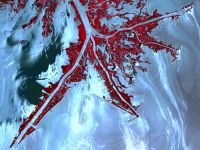
A NASA satellite image recorded May 24 showing areas of oil approaching the Mississippi River delta, shown in false color to improve contrast.

EAST LANSING, Mich. June 4, 2010 – While an out-of-control gusher deep in the Gulf of Mexico fouls beaches and chokes marshland habitat, another threat could be growing below the oil-slicked surface.

The nation’s worst oil spill could worsen and expand the oxygen-starved region of the Gulf labeled “the dead zone” for its inhospitability to marine life, suggests Michigan State University professor Nathaniel Ostrom. It could already be feeding microbes that thrive around natural undersea oil seeps, he says, tiny critters that break down the oil but also consume precious oxygen.

“At the moment, we are seeing some indication that the oil spill is enhancing hypoxia,” or oxygen depletion, Ostrom said. “It’s a good hint that we’re on the right track, and it’s just another insult to the ecosystem – people have been worried about the size of the hypoxic zone for many years.”

The dead zone is believed to stem from urban runoff and nitrogen-based fertilizers from farmland swept into the Gulf by the Mississippi River. Higher springtime flows carry a heavier surge each year, nourishing algae blooms that soon die and sink. Those decay and are eaten by bacteria that consume more oxygen, driving out marine life and killing that which can’t move, such as coral. The dead zone can grow to the size of a small state.

With the spill overlapping a section of the dead zone, the impact on that region is unknown. As it happened, Ostrom earlier had tapped zoology major Ben Kamphuis to be on the Gulf in late May for a research cruise focused on nitrogen cycling. When the British Petroleum Deepwater Horizon offshore drilling rig blew out and sank April 20, Ostrom and collaborator Zhanfei Liu from the University of Texas at Austin quickly landed federal support to expand their inquiry.

Kamphuis, a junior from Holland, Michigan, learned far more than water sampling techniques during his week aboard the research vessel Pelican.

“Down there, (the oil spill) really affects a ton of people. I really didn’t realize it before going, but after going on the trip I realized how much we can help the people in that area.”

With dozens of water samples now returned to the lab, Ostrom, Kamphuis and food science sophomore Sam DeCamp, another undergraduate research associate, are setting up equipment to analyze them in the coming months. They want to know whether the oil in the water will promote oxygen starvation, and if so, how.

Oil-hungry microbes can be expected to consume more oxygen from the water as they feast on hydrocarbons, Ostrom says. But the oil slick and chemical dispersants also could reduce the flow of oxygen from the atmosphere to the ocean, and possibly reduce the sunlight available to nourish oxygen-producing marine plant life.

Financial support for the project came from the National Science Foundation and the MSU College of Natural Science.

A jack of many science trades, Ostrom is on faculty in the MSU Department of Zoology and the MSU Environmental Science and Policy Program. He is a biogeochemist who focuses his studies on the interaction of organisms with their chemical and physical environments.

Michigan State researchers were in the right place at the right time to contribute to our understanding of the effects of such a massive oil spill, he says, pointing to the oil-eating microbes as likely the biggest, if unrecognized, players in the drama.

“We’re fortunate to have them,” he said. “They’re doing the cleanup – not BP.”

Special thanks to Richard Charter

E&E: Large Enviro Groups turn up pressure on Obama

07/06/2010

Robin Bravender, E&E reporter

A coalition of major environmental groups is urging the White House to take a bigger stake in Senate climate and energy negotiations.

As the Senate prepares to begin a floor debate on climate and energy legislation later this month, nine major advocacy groups sent a letter to President Obama, urging him to get personally involved to “produce a bill, in conjunction with key Senators, that responds to the catastrophe in the Gulf, cuts oil use, and limits carbon pollution while maintaining current health and other key legal protections.”

The Alliance for Climate Protection, the BlueGreen Alliance, the Center for American Progress Action Fund, Environment America, the Environmental Defense Fund, the League of Conservation Voters, the National Wildlife Federation, the Natural Resources Defense Council and the Union of Concerned Scientists signed on to the letter.

The groups said a growing number of their millions of active members are “deeply frustrated at the inability of the Senate and your Administration to act in the face of an overwhelming disaster in the Gulf, and the danger to our nation and the world.”

They urged the president to work with the Senate to bring the bill to the floor before the August recess.

“White House leadership is the only path we see to success, just as your direct leadership was critical in the passage of the recovery plan, health care reform, and other administration successes,” they said.

Special thanks to Richard Charter

Here’s the letter:

The President
The White House
Washington, D.C. 20500

July 2, 2010

Dear Mr. President:
Thank you for your forceful and eloquent expression of the absolute necessity for bold action to accelerate America’s transition to clean energy. Time and again you have described to Americans the benefits of clean energy reform. Your administration has taken important actions by making unprecedented investments in clean energy technology, setting more efficient fuel economy standards, and adopting many other measures. Now is the time to take the next essential steps.

Even as Americans see heartbreaking and infuriating images of damage to the Gulf coast, well-funded and powerful special interests have been working furiously to defeat progress and maintain the status quo. They have recruited their allies to help paralyze the Senate’s deliberations over whether and how to reduce oil use and cut global warming pollution, using tactics that have derailed efforts by Presidents for the last 40 years to curtail our ever-growing dependence on oil. A rapidly growing number of our millions of active members are deeply frustrated at the inability of the Senate and your Administration to act in the face of an overwhelming disaster in the Gulf, and the danger to our nation and world.

The Senate needs your help to end this paralysis. With the window of opportunity quickly closing, nothing less than your direct personal involvement, and that of senior administration officials, can secure America’s clean energy future. We strongly urge you to produce a bill, in conjunction with key Senators, that responds to the catastrophe in the Gulf, cuts oil use, and limits carbon pollution while maintaining current health and other key legal protections. We further urge you to work with the Senate to bring that bill to the floor for passage before the August recess. White House leadership is the only path we see to success, just as your direct leadership was critical in the passage of the recovery plan, health care reform, and other administration successes.

Two weeks ago, in an address to the nation from the Oval Office, you laid out the issue in stark terms: “The consequences of our inaction are now in plain sight. We cannot consign our children to this future… Now is the moment for this generation to embark on a national mission to unleash American innovation and seize control of our own destiny.” We emphatically agree. America’s future prosperity, the health of our environment, our ability to create good quality clean-energy jobs and to meet our international commitments, and our national security rest on the action you take in the days ahead.

Sincerely,

Maggie Fox, President and CEO
Alliance for Climate Protection

David Foster, Executive Director
BlueGreen Alliance

John Podesta, President and CEO
Center for American Progress Action Fund

Margie Alt, Executive Director
Environment America

Fred Krupp, President
Environmental Defense Fund

Gene Karpinski, President
League of Conservation Voters

Larry Schweiger, President
National Wildlife Federation

Peter Lehner, Executive Director
Natural Resources Defense Council

Kevin Knobloch, President
Union of Concerned Scientists