Category Archives: Uncategorized

Florida Oil Spill Law: Crist appoints former BP lobbyist to spearhead Florida’s legal response to BP oil spill

http://www.floridaoilspilllaw.com/crist-appoints-former-bp-lobbyist-to-spearhead-floridas-legal-response-to-bp-oil-spill

Jim Smith 

With Louisiana’s shoreline turning blacker by the day, an elite team of two former attorneys general is cautiously laying the groundwork for Florida’s legal response to BP’s Deepwater Horizon oil spill.

Gov. Charlie Crist appointed the political odd couple – Democrat Bob Butterworth and Republican Jim Smith – almost two weeks ago to spearhead what could be the biggest and most complex lawsuit ever attempted by the state. So far, the beaches remain clear and a state lawsuit, if there ever is one, is nowhere in sight.

BP has paid out more than $2 million to Floridians for individual lost-income claims, and kept most of the cases open for future payment. That’s on top of the $50 million it gave the state for emergency preparations and a tourism promotion campaign.

So far, that’s good enough for Smith.

“At this point, I’m satisfied that BP is trying to do the right thing,” Smith said. “My sense is that this thing is still unfolding. Nobody could really even assess damages at this point.”

That’s not good enough for environmentalists who see only foot-dragging and politics as usual. They complain that Smith wasn’t a good choice to direct the legal charge because he was a registered BP lobbyist on and off between 2001 and 2005.

Smith acknowledges that his lobbying firm, one of the largest and most influential in the state, represented BP, but that he had no personal involvement with that client and has no loyalty to it today. He said he only registered as a BP lobbyist out of an abundance of caution.

The environmentalists want the state to haul BP into court now, and force it to pay for more booms and skimmers so Florida will be better prepared than Louisiana if and when the devastation rolls ashore.

The $25 million BP paid to help local governments prepare area contingency plans is a drop in the bucket, the critics charge. They also point out that last week, when BP CEO Tony Hayward traveled to Louisiana, he acknowledged that the company didn’t do enough to protect the beaches.

Special thanks to Progress Florida

CNN: Fisherman files restraining order against BP; BP says fishermen illness due to food poisoning

http://readersupportednews.com/off-site-news-section/49-49/2085-fisherman-files-restraining-order-against-bp

By Elizabeth Cohen, CNN
May 31, 2010 11:32 a.m. EDT

New Orleans, Louisiana (CNN) — A fisherman who was hospitalized after becoming ill while cleaning up oil in the Gulf of Mexico has filed a temporary restraining order in federal court against oil company BP.

John Wunstell Jr., is asking BP to give the workers masks and not harass workers who publicly voice their health concerns.

Wunstell, a shrimper, said he was paid by BP to use his boat, Ramie’s Wish, to clean up oil that has been gushing into the Gulf since an oil rig sank about 40 miles off the Louisiana coast, gushing an estimated 19,000 barrels (798, 000 gallons) of crude a day.

In an affidavit, Wunstell wrote he started experiencing severe headaches and nasal irritation on May 24. Over the next few days, he also developed nosebleeds, an upset stomach, and aches.

On Friday, Wunstell was airlifted to West Jefferson Medical Center in Marrero, Louisiana, where he remained hospitalized Sunday.

Eight other workers were brought to the hospital this week and were all released.

“We need to start protecting these guys,” said Jim Klick, Wunstell’s lawyer.

In his affidavit, Wunstell described his experience at the hospital.

“At West Jefferson, there were tents set up outside the hospital, where I was stripped of my clothing, washed with water and several showers, before I was allowed into the hospital,” Wunstell said. “When I asked for my clothing, I was told that BP had confiscated all of my clothing and it would not be returned.”

The restraining order requests that BP refrain from “altering, testing or destroying clothing or any other evidence or potential evidence” when workers become ill.

Graham MacEwen, a spokesman for BP, said he could not comment on the restraining order, or on allegations that BP confiscated clothing.

He denied accusations from Clint Guidry, president of the Louisiana Shrimpers Association, that BP has been threatening workers who speak out about health concerns.

Fishermen contacted by CNN have declined to speak publicly.

Some, who are making as much as $3,000 a day cleaning up the oil, have said they fear losing their jobs with BP.

“The BP oil spill wiped out their professions and their jobs this year and possibly years down the road,” Klick said. “The only work they can get right now is with BP.”

The BP spokesman said there have been no threats against workers for speaking out.

“If they have any concerns, they should raise them with their supervisors,” MacEwen said. “They can also call the joint information center and make complaints anonymously.”

Wunstell is one of nine clean-up workers who were sent to the hospital with symptoms such as shortness of breath, nose and throat irritation, headaches, and dizziness.

The restraining order requests that BP stop using dispersants without providing “appropriate personal protective equipment” to workers.

Corexit, a dispersant, is being sprayed into the Gulf to break down the oil. The safety data information sheet from the manufacturer states that people should “avoid breathing in vapor” from Corexit, and that masks should be work when Corexit is present in certain concentrations in the air.
BP has not supplied workers with masks when they work near the oil and dispersants.

“We’re been carrying out very extensive air quality since early on in this exercise, to make sure that we have working safe conditions, and thus far not found situations where there are air quality concerns that would require face masks,” MacEwen said.

He added that workers who want to wear masks are “free to do so” as long as they receive instructions from their supervisors on how to use them.

According to Guidry from the shrimpers’ association, BP told workers they were not allowed to wear masks.

“Some of our men asked, and they were told they’d be fired if they wore masks,” he said.

Tony Hayward, the chief executive officer of BP, offered another explanation for the fishermen’s illness: spoiled food.

“Food poisoning is clearly a big issue,” Hayward said Sunday. “It’s something we’ve got to be very mindful of. It’s one of the big issues of keeping the Army operating. You know, the Army marches on their stomachs.”

An expert on foodborne illness cast doubt on Hayward’s theory.

“Headaches, shortness of breath, nosebleeds — there’s nothing there that suggests foodborne illness,” said Dr. Michael Osterholm, a professor at the University of Minnesota School of Public Health. “I don’t know what these people have, but it sounds more like a respiratory illness.”

— CNN’s Jennifer Bixler contributed to this report

Special thanks to Richard Charter

Florida News Service: FL Groups Demand Full EPA Disclosure of Chemicals In Dispersants

http://www.publicnewsservice.org/index.php?/content/article/14260-1
              
June 1, 2010
TALLAHASSEE, Fla. – Conservation groups want to get to the bottom of the chemicals being poured into the Gulf of Mexico in an effort to break up the oil gushing from the Deepwater Horizon spill. Earthjustice, the Florida Wildlife Federation, and the Gulf Restoration Network are demanding disclosure under the Freedom of Information Act from the U.S. Environmental Protection Agency (EPA) of the actual formula of the 800,000 gallons of dispersants that have been pumped into the Gulf in the last month.

David Guest, managing attorney for Earthjustice, says they’ve also requested proof of effectiveness and toxicity reports for the dispersant, called Corexet, because they’re concerned about its threat to people, wildlife, and the environment.

“It’s so toxic that you can’t touch it with your bare skin, and if it’s something that is that powerful, we should have our eyes open about putting hundreds of thousands of gallons of it into the sea.”

Guest says the spill, which now has spread over 10,000 square miles, will have long-term economic and ecological effects on Florida and the entire Gulf region. He says once the EPA discloses the ingredients used in the dispersants, researchers can begin studying the impact of the chemicals.

“You need to know things like: If a school of fish swims through a plume of Corexet do they all die? Does it sink to the sea bottom and kill all the shrimp eggs so you wipe out the shrimp fisheries for many years? Those are the things you need to know.”

The groups are calling on the EPA to make this information public, in spite of the objections of the oil company BP and the dispersant manufacturers. Guest says the chemicals are being dumped into the Gulf in unprecedented amounts, and more knowledge is critical to protecting the Gulf from further damage.

Special thanks to Richard Charter

San Francisco Chronicle: BP Ready for Spill 10 Times Gulf Disaster, Plan Says

 http://www.sfgate.com/cgi-bin/article.cgi?f=/g/a/2010/05/30/bloomberg1376-L3AKFD0UQVI9-1.DTL

May 31 (Bloomberg) — BP Plc said in permit applications for drilling in the Gulf of Mexico that it was prepared to handle an oil spill more than ten times larger than the one now spewing crude into the waters off the southern United States.

“Proper execution of the procedures detailed in this manual will help to limit environmental and ecological damage to sensitive areas as well as minimizing loss or damage to BP facilities in the event of a petroleum release,” the company said in its oil-spill response plan, filed with the U.S. Minerals Management Service in 2008.

The company listed as its worst-case scenario a blowout in an exploratory well 57 miles west of the disaster, in a valley on the seafloor known as Mississippi Canyon. It’s about 33 miles off the coast of Louisiana. Such a blowout could have spewed 250,000 barrels a day, according to the 582-page plan.

The representations show that BP overestimated its ability to control an oil spill in waters where it’s the biggest player in a Gulf energy extraction industry worth $52 billion a year, said Bob Deans, a spokesman with the Natural Resources Defense Council in Washington.

“BP has obviously overpromised and underdelivered,” Deans said. “They told us they had a plan that could deal with the consequences of a worst-case scenario. They don’t.”

The plan was posted on the Minerals Management Service website and was incorporated by reference into BP’s application with the agency for a permit to drill the Macondo well. The company said in that application that a worst-case blowout from that well could spew at most 162,000 barrels a day.

BP’s ‘Plan in Place’

On April 20, a blowout there caused the drilling rig, Deepwater Horizon, to explode and then sink, leaving an open wellhead spewing as much as 19,000 barrels of oil a day into the Gulf waters. The company has failed so far to stop the gusher.

“Clearly we do have an oil-spill response plan in place, it was an integral part of our permitting with the MMS and it was specifically agreed with and approved by the MMS,” BP spokesman David Nicholas said in an e-mailed statement. “It sets out the actions, considerations, plans and steps that will be used in the case of an oil spill, and it is this plan that has been in action in response.”

Every well that a company drills has to be covered by a response plan that includes a worst-case scenario, said Kendra Barkoff, a spokeswoman with the Minerals Management Service.

‘Fundamental Questions’

“The BP Deepwater Horizon oil spill, however, raises several fundamental questions about safety and about industry’s ability to respond to spills,” she said in an e-mailed statement. ” We have launched a full investigation of the oil spill and are in the process of implementing new safety requirements to ensure this doesn’t happen again.”

BP fell 26 pence to 494.8 pence in London trading this morning and has lost 29 percent of its market value since the blast.

BP’s plan says it has contracts with the Marine Spill Response Corp. of Herndon, Virginia, and the National Response Corp. of Great River, New York, to contain and clean up any spills through the use of dispersant chemicals sprayed from airplanes and skimming vessels that would suck up oil-filled water.

The company would also use containment booms to control the spread of oil in the Gulf and work with local environmental groups to clean affected wildlife, according to the plan.

Documents Sought

The House Energy and Commerce Committee, investigating the Gulf of Mexico oil spill, is seeking documents from the clean-up consultants. Chairman Henry Waxman, a California Democrat, and oversight subcommittee Chairman Bart Stupak, a Michigan Democrat, sent letters on May 28 to National Response, a unit of Seacor Holdings Inc., Marine Spill Response, and O’Brien’s Response Management Inc. of Spring, Texas.

Waxman’s committee has reviewed 105,000 documents provided by companies connected with the rig.

BP’s plan says that those companies have enough oil- skimming vessels to remove about 492,000 barrels of oil a day from the water. The companies have the capacity to store 299,000 barrels a day, according to the plan.

BP spokesman John Curry said yesterday that so far, the company, through its contractors, has deployed 91 skimming vessels that have picked up a total of 312,952 barrels of oily water mixture from the spill that has gushed for almost six weeks. “That’s not all oil, it’s oily water,” he said.

A Prolonged Spill

He said the company had spread more than 3 million feet of containment boom, a floating plastic barrier designed to contain the spread of oil and direct it to skimming vessels. The boom was enough to cover about 350 miles of coastline, he said.

BP’s plan foresaw the possibility of a prolonged spill.

“If the spill went unabated, shoreline impact would depend upon existing environmental conditions,” according to the plan.

The chance of oil reaching the shoreline within 30 days was estimated at 3 percent or less for most coastal areas, except Louisiana’s Plaquemines Parish, which the company said had a 21 percent chance of seeing oil onshore within 30 days.

Louisiana Governor Bobby Jindal said on May 19 that oil was washing ashore in the Plaquemines wetlands.

BP said yesterday that a plan to stop the leak through a strategy of pumping in heavy mud and debris, known as “top kill,” failed. The company now plans to place a cap over the well.

The spill has cost BP a total of $760 million, or about $22 million a day, the company said May 24. BP’s average daily profit last year was $45 million a day, according to data compiled by Bloomberg.

 
–With assistance from Joe Carroll in Chicago and Lorraine Woellert in Washington. Editors: Jeffrey Taylor, Larry Liebert

Special thanks to Richard Charter

Guardian: BP oil spill: death and devastation and it’s just the start.

http://www.guardian.co.uk/environment/2010/may/31/bp-oil-spill-death-impact 

It could take months or years for the true impact of the spill on surrounding ecosystems to emerge

by David Adam and agencies
guardian.co.uk, Monday 31 May 2010 23.14 BST

The White House says the BP oil spill is probably the greatest environmental disaster the US has faced, but the true impact on surrounding ecosystems could take months or even years to emerge. Experts say the unprecedented depth of the spill, combined with the use of chemicals that broke the oil down before it reached the surface, pose an unknown threat.

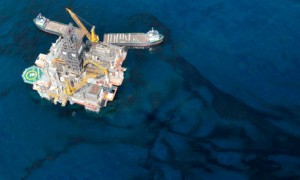
Oil floats around a rig at the site of the Deepwater Horizon oil spill in the Gulf of Mexico. Photograph: Jae C. Hong/AP

“It’s difficult to marshal resources to do a thorough job of charting what the impacts are,” Jeffrey Short, an environmental chemist who worked on the effects of the Exxon Valdez spill, told Nature magazine. “It’s especially difficult when weird things happen to catch the scientific community bysurprise. That’s clearly the case here.”

Louisiana, the nearest state to the leaking well, some 42 miles offshore, has been the most impacted. The state’s governor, Bobby Jindal, said more than 100 miles of its 400-mile coast had so far been polluted.

State officials have reported sheets of oil soiling wetlands and seeping into marine and bird nurseries, leaving a stain of sticky crude on cane that binds the marshes together. Billy Nungesser, president of Plaquemines parish, said he had seen dying cane and “no life” in parts of Pass-a-Loutre wildlife refuge.

Oil debris, in the form of tar balls and surface sheen, has also been reported ashore in outlying parts of coastal Mississippi and Alabama. Tar balls found on Florida beaches a fortnight ago did not come from the BP spill, tests showed.

A quarter of US waters in the Gulf of Mexico are closed to fishing, hitting the livelihoods of shrimpers, oyster-catchers and charter boat operators. “Every fish and invertebrate contacting the oil is probably dying. I have no doubt about that,” said Prosanta Chakrabarty, a Louisiana State University fish biologist.

In the six weeks since the explosion that killed 11 workers and started the leak, wildlife officials say at least 491 birds, 227 turtles and 27 mammals, including dolphins, have been found dead along the US Gulf coast. Many of these were not related to the spill; only 28 of the dead birds were covered in oil. More marine creatures, including birds and mammals will be affected by surface oil, and scientists are also concerned about possible underwater clouds of dispersed oil.

Researchers say they have found at least two sprawling underwater plumes of what appear to be oil or oil derivatives, each hundreds of metres deep and stretching for miles. A plume reported last week by a team from the University of South Florida was headed toward the continental shelf off the Alabama coastline, waters thick with fish and other marine life.

No major fish kills have yet been reported, but federal officials said the impacts could take years to unfold. “This is just a giant experiment going on and we’re trying to understand scientifically what this means,” said Roger Helm, a senior official with the US Fish and Wildlife Service.

David Hollander, an oceanographer at the University of South Florida who helped discover one of the plumes, said: “It may be due to the application of the dispersants that a portion of the petroleum has extracted itself from the crude and is now incorporated into the waters with solvents and detergents.”

He said there could be knock-on impacts on organisms further up the food chain. “We think there could be both short-term and long-term implications.”

Special thanks to Richard Charter