Category Archives: Uncategorized

New York Times: No Vacancies, but Some Reservations

Date: Sat, Jul 16, 2011 at 5:09 AM

By CAMPBELL ROBERTSON
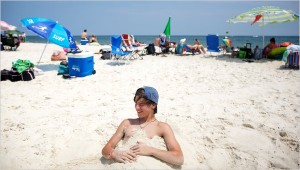
GULF SHORES, Ala. – It seems like old times here on the Gulf Coast. The Flora-Bama Lounge is hopping, there’s a two-hour wait for a table at the Original Oyster House, and the first complaints you hear among the charter boat operators are about the latest fishing limits – not oil slicks. The numbers tell a similar story, with many tourism-related businesses having their best summer in years. BP felt obliged to note this officially. Last week, in a court filing that included a detailed list of indicators of “the strength of the gulf economy,” BP argued that “there is no basis to assume that claimants, with very limited exceptions, will incur a future loss related to the spill.”

The response here: Hold on, it’s not that good.

Since the spill last year, messages from the coast have been somewhat mixed, with some businesses arguing that it is continuing to hurt the coast and that more assistance is needed, and others, often led by tourism officials, emphasizing the positive to entice visitors and consumers.

This is not necessarily contradictory, as the effects of the spill were infuriatingly uneven, and a business does not have to be empty to be hurting. But the summer of 2011, a strong one by a variety of measures, has made this balance harder to strike.
BP has long taken issue with the formula created by Kenneth R. Feinberg, who oversees the Gulf Coast Claims Facility, which is dispensing BP’s $20 billion compensation fund. Under the formula, settlements would generally be double the demonstrable losses from 2010, with money previously paid by the fund subtracted. BP has been arguing that this “future factor” is too generous. That argument is revisited in its 29-page filing, pointing out the strong revenue figures for lodging in coastal tourism areas in the fall and spring, most surpassing figures from comparable times in 2009 and early 2010.

BP makes the same argument in regard to the strong performance of much of the seafood industry, though the filing devotes less attention to it – possibly because unresolved questions about the long-term ecological effects of the spill, as well as a lingering nationwide skepticism about gulf seafood, have made its recovery more debatable.
Tourism, on the other hand, seems rather straightforward.

Taxable lodging revenues from rentals in Gulf Shores and its neighboring resort town, Orange Beach, fell by more than half last summer. After months of aggressive marketing, largely paid for with the tens of millions of dollars that BP sent to states for that very purpose, tourism officials are now boasting of record, or near-record, numbers: going in to the Fourth of July weekend, tourism officials here reported vacation rental occupancy rates that hovered near 100 percent, all above – and some far above – rates at comparable times in 2009.

These figures would seem to bear out BP’s assertion that the recovery has firmly set in, to the chagrin of some coastal residents.
“Our state and local leaders have been so quick to declare that the beaches, seafood and Gulf Coast are doing fine that we may have screwed up the chances of the remaining outstanding BP oil spill claims to be paid,” Rick Outzen, publisher of the Independent News, an alternative weekly in Pensacola, Fla., wrote on his blog. Business owners here acknowledge that it has been for the most part a good summer. But they are quick to add that the effects of the spill are more complicated than they may appear.

The tourism business is a lot like farming; it is seasonal and involves managing a financial cycle between fat and lean seasons.
Up to 90 percent of the income for many Gulf Shores businesses is made during June, July and August; by winter that money is largely gone and businesses usually take out lines of credit to prepare for summer. This was the case going into the summer of 2010, which was itself projected to be something of a recovery year after 2009, a down season of recession and high gas prices.

But in 2010, there was no summer. Hotels sat empty or filled rooms only by offering steep discounts. Smaller businesses like beach chair rentals went under; charter boat operators barely hung on. The whole spend-save-borrow cycle was thrown off.
“What happened last winter was a lot of lenders stopped the line of credit because they didn’t know the impact of what the spill was going to be,” said Sheila Hodges, owner of a real estate firm in Gulf Shores. “We barely survived the winter. Some didn’t survive the winter.”

While initial BP payments and a strong fall and winter helped, some business owners are still carrying around bad credit ratings from those lean days, or paying off loans, or working under franchise agreements that were renegotiated to their disadvantage.
Pedro Mandoki, the owner of Mandoki Hospitality, a management and development consulting firm, made another commonly heard argument: the effects of the recession, which made for a disappointing 2009, look to be fading. While the coast has returned to an upward trajectory, it is still further down than it would have been had this been the second good summer in a row.
The success of these arguments in negotiating settlements has been mixed at best, business owners and lawyers say.
But one concern about the future is raised more than any other.

It was the topic of another document sent out last week, this one to state and local officials from the command center of the spill cleanup operation in New Orleans. It is a draft version of a “decision matrix,” a list of several factors to consider in deciding when and when not to remove submerged mats of oil that are still being found, some even in recent days, sitting just offshore.

The prospect of not removing a mat for just about any reason is unacceptable to Taylor Kirschenfeld, an environmental officer for Escambia County, Fla. If a tropical storm or hurricane comes through and whips up those mats, sending tar patties onto the beach, “it could be the whole thing all over again.”

Thus the gamble that really keeps business owners here on edge: if this happened, it could be devastating, and a business’s final settlement with BP might fall far short. Then again, if it did not happen, then that same settlement – including a payment for future losses that never occurred – would turn out to have been a pretty good deal.Ms. Hodges, the real estate broker here, is mulling that same calculus right now. Her summer is good and business is strong, and she is tired of negotiating. Still, she is reluctant to agree to a final settlement. It could be a while, she says, before it is known what the summer of 2010 really means.

Special thanks to Richard Charter

Bloomberg Businessweek: 4 schools get $25M for oil spill health studies

http://www.businessweek.com/ap/financialnews/D9OBFR8O0.htm

This is good news and the results will be important for the communities within the oil spill zones. There have been far too many reports gone unnoticed by officials citing dangerous after-effects from the BP blowout, especially workers in contact with dispersants.
DeeVon

The Associated Press July 8, 2011, 8:52AM ET

By JANET McCONNAUGHEY
NEW ORLEANS

Studies at four Gulf Coast universities will focus on continuing fears that last year’s oil spill is making people sick, especially if they eat lots of fish. Two of the studies based in Louisiana will look at women, while one of them also will study children.

All of the $25 million set of studies funded by the National Institutes of Health will look at people’s mental or physical health over the next five years. Three will also look for oil- and dispersant-related chemicals in fish landed by people whose catch makes up a big part of their own food.

During and after the BP PLC oil spill, federal and state authorities stressed that no unsafe seafood was sold and that the entire Gulf is now safe for fishing. But many people who live in fishing communities just don’t believe that, Dr. J. Glenn Morris, lead researcher at the University of Florida, said Thursday.

“When you get back into these areas along the coast, what you get repeatedly is, `We really don’t trust BP and we don’t really trust the government, either,'” he said.

His studies include buying seafood from subsistence and sport fishermen in Mississippi, Alabama and Florida and testing it for contamination, including patterns of heavy metals associated with oil. He also plans to use GPS mapping data to see whether the fish or shellfish were taken from areas with natural oil seeps or other sources of oil.

BP’s Macondo well spewed more than 200 million gallons of oil over five months after the April 20, 2010, explosion that killed 11 workers on the Deepwater Horizon rig. The company provided about $3 million of the money being used to look for lingering physical and mental health effects, but is not involved in the program or any of the research, NIH and its National Institute of Environmental Health Sciences said.

Most of the physical illnesses reported during the spill were among cleanup workers and apparently the result of fumes. In June, the attorney overseeing the payments from a $20 billion compensation fund told a Louisiana legislative committee that he had not seen any claims for medical costs or scientific evidence linking cleanup measures such as chemical dispersants to health problems. Kenneth Feinberg also said that if such claims can be scientifically proven, they might not show up for years.

Tulane University’s School of Public Health and Tropical Medicine is getting $6.5 million for its work; the LSU Health Sciences Center New Orleans School of Public Health $3.5 million, the University of Texas Medical Branch in Galveston $7.8 million and the University of Florida at Gainesville about $7 million.

Most are doing multiple studies. All four consortiums will also work together and with community organizations — 20 just in Florida.

Those community groups helped decide what to investigate. They also will explain the results to the groups they represent, so people will understand — and, officials hope, accept and support — the findings, said Dr. Maureen Lichtveld, lead investigator of Tulane’s study of nearly 2,000 women who are pregnant or could become pregnant.

This round of research is looking at the general public. Cleanup workers and volunteers are the subjects of a separate, 10-year study planned to involve 55,000 people.

One of three studies at Tulane will check blood from 1,800 women for possible oil spill chemicals, levels of stress hormones and — if the budget allows — mercury, lead and cadmium. It will also see if those affect pregnancies and decisions about family planning, as well as anxiety and depression.

Researchers also will go out with Vietnamese fishermen, keep part of the catch to analyze, and check people in about 100 households for whatever contaminants are found in the fish.

Researchers in all three states will also be looking at just how much fish people eat in fishing communities, and whether they eat so much fish that contamination levels set for the average U.S. resident might leave them in danger.

LSU hopes to get 6,000 women and 2,000 children to agree to give two blood and urine samples as well as two phone interviews for psychological surveys. About two-thirds of the women would simply live in one of the seven parishes most affected by the spill, and 2,000 would be wives of men who worked to clean it up, lead researcher Edward Trapido said.

The Texas fish study will look at oysters, blue crabs, shrimp and speckled trout taken by members of the United Houma Nation in Terrebonne Parish, La., and by two different fishing communities in Biloxi, Miss.: Vietnamese Americans and African Americans.

If oil- or dispersant-related chemicals are found, the lab will look for chemical “fingerprints” of the Macondo well, lead researcher Cornelis “Case” Elferink said.

Special thanks to Gulf Restoration Network.

Oilies Freak Out over their Beloved Tax Breaks

http://www.prnewswire.com/news-releases/study-repealing-tax-deductions-on-us-energy-companies-exacerbates-federal-deficit-increases-us-debt-125407898.html

This is an example of a bioprostitute; someone who uses his degree to support industry, despite evidence to the contrary. It is ridiculous to say that if Big Oil doesn’t get special tax treatment, jobs will be cut and oil will stop pumping. This is the most lucrative business in the history of the world. This one untested presumption makes Dr. Mason’s findings flawed and his report invalid. If these tax breaks were extended to renewable energy, we wouldn’t still be using fossil fuels. DeeVon

STUDY: Repealing Tax Deductions on U.S. Energy Companies Exacerbates Federal Deficit, Increases U.S. Debt

LSU Economist Finds Administration’s Dual Capacity and Section 199 Proposals Would Reduce Federal Tax Revenue by More Than $53 Billion

WASHINGTON, July 12, 2011 /PRNewswire-USNewswire/ — Louisiana State University Endowed Chair of Banking and nationally-renowned economist Dr. Joseph R. Mason today released a just-completed study that finds the Administration’s proposal to carve out U.S. energy firms from receiving certain tax deductions would have a net negative impact on federal revenues. In his study, “Budget Impasse Hinges on Confusion among Deficit Reduction, Tax Increase and Tax Reform: An Economic Analysis of Dual Capacity and Section 199 Proposals for the U.S. Oil and Gas Industry,” Dr. Mason finds repealing tax deductions for American energy manufacturers would result in:

$30 billion in Federal tax revenue at the expense of some $341 billion in economic output;
Over 155,000 lost jobs, $68 billion in lost wages, and $83.5 billion in reduced tax revenues; and,
A net fiscal loss of $53.5 billion in tax revenues.

“The administration’s proposal to eliminate tax deductions on U.S. oil and gas companies is grossly counterproductive toward the goal of increasing federal revenues,” Dr. Mason said. “Such a move would have a net negative impact on revenue, thereby increasing federal deficits.

“If the goal is deficit reduction, a far more meaningful approach would be reforming federal tax and business policies that encourage economic growth. Expansion of oil and gas exploration and production on the Outer Continental Shelf, for example, would generate an estimated $11 billion annually in Federal tax revenue in the short run, and $55 billion annually in Federal tax revenue in the long run.

“Reform supports business development in both developing and developed countries, alike. The best reformers have several things in common. First, their reforms are part of a broad agenda of boosting global competitiveness and, second, they never stop. Even developing countries previously stung by fiscal imbalances and committed to business reform rarely retreat to increased taxes as a way to raise revenues. The U.S. should also step up to the challenge of reform.”

Dr. Mason’s conservative economic analysis employs the same government modeling – the U.S. Commerce Department’s RIMS II system.

Dr. Mason’s report was sponsored by the American Energy Alliance (“AEA”). To learn more and get exclusive information on upcoming projects, sign up for AEA’s In The Pipeline.

Thomas Pyle, president of the American Energy Alliance, issued the following statement in response to the study’s findings:
“This study confirms that President Obama’s insistence on imposing discriminatory tax changes on American oil and gas companies has nothing to do with deficit reduction – it has everything to do with satisfying his anti-energy agenda. The president’s insistence on these senseless tax hikes is further proof of his outright hostility to the oil and gas industry – an industry that provides over 9 million jobs and billions in revenue to the federal government.”

Founded in May, 2008, The American Energy Alliance (“AEA”) is a not-for-profit organization that engages in grassroots public policy advocacy and debate concerning energy and environmental policies. AEA is the advocacy arm of the Institute for Energy Research (IER), a not-for-profit organization – founded in 1989 – that conducts intensive research and analysis on the functions, operations, and government regulation of global energy markets.
SOURCE American Energy Alliance

Special thanks to Richard Charter

Gulf Restoration Network blog: Which Projects Will Make the Cut?

http://healthygulf.org/201107111694/blog/storm-protection-/-coastal-issues/which-projects-will-make-the-cut

I vote to research the effect of dispersants in the Gulf-since areas of the Gulf benthos is covered by it and it may be preventing the fragile thread of life from occurring at the planktonic level. I hope we learn enough to ban the cavalier widespread use of it in the ocean ever again. DeeVon

Blog – Storm Protection / Coastal Issues
Monday, 11 July 2011 13:10

The NRDA Early Restoration Project Selection is Underway –Which Candidates Will Make the Cut?

Our natural resource trustees are drafting a restoration plan for the Gulf Coast that will be paid for by BP and the other polluters through the Natural Resources Damages Assessment (NRDA) process. Many projects have been submitted, and many are posted online by NOAA, and Florida. For Louisiana, where much of the natural resource injury from BP’s disaster has occurred, and where there is a legacy of oil damage as well as restoration, there are over 400 projects listed.

NRDA money is separate from damages to property, damages to commercial enterprises, and other injuries to individuals as a result of oil spills. NRDA money is also separate from whatever Clean Water Act fines Congress allocates towards long-term ecosystem restoration, as determined by the president’s Gulf Task Force. NRDA money is supposed to go toward projects that restore natural resources to their pre-oil spill conditions, and to compensate the public for lost ecosystem services like shoreline protection, and to restore public access to nature for recreation. The NRDA process is lengthy because it involves a thorough assessment of all the damages caused by the oil spill, and is guided by the trustees (representatives from state and federal agencies), who have the ultimate authority to decide the course of restoration efforts. Right now, the trustees are working to select “early restoration” projects – those that can be implemented before the entire NRDA injury assessment process is complete.

Cracking Open the Black Box

Federal laws set general criteria for selecting projects; and Louisiana has additional criteria due the regularity of oil spills in the state. Beyond these guidelines, the trustees have not shared the specific criteria, like the Gulf Future or Oxfam guidelines (note: link to documents), that will be used to select projects .

Our worry is that the trustees won’t explain how they are going to evaluate restoration projects, and they’ll be free to choose projects that do not accomplish restoration goals, or worse – are bad for the Gulf coast.

The goal of early restoration projects is to stop damage and restore ecosystem services as soon as possible. An acre of saline marsh built in 2011 instead of 2021 not only restores ecosystem functions and provides habitat for wildlife, but staves off further damage to wildlife and coastal marshes that only become more difficult to counteract as time passes.

For the public, early restoration projects are good news, because it means that environmental damage can be minimized, without waiting for the full injury assessment. Although BP has allocated $1 billion to early restoration efforts, this funding is only a down payment. But each project will generate offsets against BP’s future payments, so there is a possibility the early restoration projects would be the only ones ever implemented with BP’s NRDA funding.

NOAA posted some recommendations on the website of the types of projects that would be appropriate, including marsh creation, seagrass restoration, hydrologic restoration, beach renourishment, land conservation, oyster reef restoration, and improvements to recreational infrastructure. Louisiana has stated that the implementation of its “early” projects should happen within 18 months, which would exclude all Diversion projects.

Scoping the Scoping List

We at Gulf Restoration Network have scanned the project ideas (Excel file) submitted for Natural Resource Damage Assessment (NRDA) funding, and found that several of them aren’t restoration projects at all. On the NOAA site alone, there are 153 projects (64%) that in some way restore or maintain ecosystem services, 36 that will bring people into nature for “recreation,” 30 projects that are just good ideas, and 20 projects (8%) that are actually purely destructive.

On the one hand, it’s great that a full two-thirds of the projects on the NOAA site actually look like restoration—on the other, we’ve got to stop the absurdity of spending restoration monies on projects that injure the Gulf Coast.

What restoration looks like –integrated ecosystem services

Restoration should involve projects that work, that work with coastal communities, and work together to repair different kinds of injury. For example, here are examples of projects that could be implemented quickly and work to restore the Mississippi Gulf Coast:

1. Create a Beneficial Use Trust Fund to use dredged sediments beneficially, to build

back Barrier Islands like Deer Island and Ship Island.

2. Oyster reef restoration: Restore historic upthrusting reefs or place designed reefs

for habitat in Mississippi Sound.

3. Seagrass restoration: Restore to historic levels Mississippi’s seagrass beds.

4. Create a Coastal Preserve Trust Fund to acquire private marshes and shorelines or to

manage public lands for preservation of their services.

What does it cost to plant a rock?

In Louisiana there are many projects that, rather than rebuilding ecosystem services themselves, “armor” the working marshes we have left with rocks and rip-rap. Although the best practices for shoreline protection build “Living Shorelines” that protect while providing habitat, carbon sequestration, and primary productivity, there are many projects that only provide the meager amount of protection that rocks give. For the tens of millions of dollars and years spent on the rock armoring of shorelines, the Trustees could build actual marshes and oyster reefs that would protect shores, provide habitat, and grow with the rising sea level, while the rocks sink.

If the trustees are scoring projects by the amount of ecosystem services they provide, a living shoreline project would rank above a rock armoring project. But we do not know the criteria for selecting projects.

Public service, but not ecosystem services

Some projects do nothing to restore ecosystem services or recreation, and even injure the natural resources further. The City of Mobile has proposed to construct a police headquarters and to rebuild fire stations. A number of projects on the list – proposals to improve drainage or to repair roads – also fall far off the mark. While these projects provide a public service, they certainly do not provide ecosystem services or clean water. If they are built in wetlands, these projects will only cause further injury.

Project Pastiches

More worrisome are the projects that seem to be restoration. One project combines a restoration project with road construction. Another in Mississippi calls for building a massive Aquarium that would intercept passing wild dolphins, temporarily detaining them for view by the visiting public. Although an aquarium would educate people about nature, it would do nothing for recreation, the footprint of the building could impair coastal wetlands, and the capture of wild dolphins will only further injure their natural population.

Without a specific statement of their evaluation criteria, the trustees are free to pick useless or even destructive projects.

The process of choosing among the hundreds of projects will be a difficult one. So it is critical that the trustees’ decisions are guided by specific criteria, and that these criteria are made available to the public. The trustees owe it to the public to make their selection process as transparent as possible, to do their best to restore the Gulf with limited NRDA funding.

Scott Eustis is the Coastal Wetland Specialist for the Gulf Restoration Network. Kara McQueen-Borden is a Healthy Waters Intern.

Energy Tribune.com:Drill, Cuba, Drill By Andres Cala

http://www.energytribune.com/articles.cfm/7910/Drill-Cuba-Drill#
Posted on Jul. 07, 2011
Drill, Cuba, Drill
By Andres Cala
Posted on Jul. 07, 2011

Drill, Cuba, Drill

A brand new, top of the line, Italian owned and Chinese-made semisubmersible rig is on its way to Cuba to start drilling several exploratory wells this year once hurricane season is over. Its target are deep waters in the Gulf of Mexico just a few dozen miles from Florida that could hold proven oil reserves believed to be at least as big as Oman’s and perhaps comparable to those of Brazil. The latter are massive.

Cuban drilling should be a US bipartisan no-brainer. Democrats want the embargo softened and Republicans want to give oil companies more access to offshore oil. And all will agree a lot of new production bordering the US would be welcome news, especially if American oil companies are eventually allowed to take a stake and if environmental safeguards against spills are improved in the process.

Yet there is a great deal of noise coming from Congress compounded by some White House acquiescence that threatens safe oil exploration in Cuban waters. The argument is the Castro regime will be propped up if oil is found and the US should impede anything that might make it more powerful.

Seriously? Will Cuban-American hawks with disproportional political clout impose their outdated Cold War mentality that has harmed US interests at least as much as the Castro regime? The vast majority of Americans, including Republicans, frankly stopped caring about Cuba decades ago and even a majority of the mostly Floridian Cuban community now favors more rapprochement to influence an unstoppable democratic transition in Cuba.

The US should be cheering, not just because any significant oil find will contribute directly and immediately to American energy security. Assuming lifting the embargo is still too politically risky (and it shouldn’t be), Congress should seize the imminent arrival of the rig, the Norwegian designed Scarabeo 9, to relax the embargo on the communist island to allow US energy companies to partake in Cuban exploration and production.

Forget the fact that being communist or anti-democratic is no deterrent to American energy industry elsewhere. The US already imports almost 10 percent of its oil from Cuba’s closest ally Venezuela. Should the US now also penalize all companies investing there, including American ones?

It makes no sense to thwart Cuban efforts to increase oil output perhaps in as little as three years, especially considering oil prices that will remain stubbornly high because demand growth is rising faster than supply growth.

Washington should prioritize the broader interest of Floridians and Americans over local political mavericks and sign all the necessary protocols to allow US companies and organizations to help out in case of any spill. It’s in America’s interest that Cuba get access to the best spill containment technology and knowhow, which is American, not surprisingly.

Besides, Cuba will proceed with exploration regardless of what the US does. Bills in Congress that will likely fail are calling for companies involved to be punished with the loss of US oil leased acreage if they go ahead with exploration. They might, best case scenario, delay production for some time, without scratching the Castro regime. It would simply serve no purpose.

The only company that would be affected would be Spanish Repsol, also an important player in deep offshore drilling and production in the Gulf of Mexico and Brazil. It will be the first to drill. No law is being broken as the rig was tailored made to make sure that less than 10 percent of the parts were American. And Repsol has offered to let US officials inspect it and has given assurances that its operations will follow American safety guidelines.

Repsol “has volunteered to comply with all United States regulations while drilling in the Gulf of Mexico,” said US Interior Secretary Ken Salazar in June in Madrid after meeting company executives. Salazar’s visit followed letters from Congress to Secretary of State Hillary Clinton demanding pressure on Spain to delay the drilling.

That in itself is unwelcome geopolitical meddling at any level and harms American efforts to get access to oil elsewhere. It also gives legitimacy to unfounded concerns over Cuba drilling. Even the Cuban government is cooperating with American officials. The International Association of Drilling Contractors met in Havana with Cuban energy officials drafting offshore regulation, which reportedly is based on US safety standards after the BP spill.

“They know what they’re doing, and they’re very credible about what they’re putting in place,” Lee Hunt, president of the IADC was quoted as saying. “They conducted in-depth research on both offshore drilling regulations and safety practices, and have gone largely to Northwest Europe, specifically Norway and the United Kingdom, as well as to IADC for the structure of their regulations.”

The Scarabeo 9 is designed to operate at more than twice the depth that Repsol and other oil companies waiting for their turn at the rig will drill. Other players include Norway’s StatoilHydro, India’s ONGC, Russia’s Gazprom, Malaysia’s Petronas, Venezuela’s PdVSA, Angola’s Sonagol, and apparently China’s CNPC.

The deepest planned exploratory well will be drilled below 5000 feet of water, at the same depth as the Macondo Deepwater Horizon accident. Companies are all well reputed companies that will not risk relations with the US over safety concerns. Repsol has been involved in off shore drilling in the Gulf of Mexico a lot deeper than the ones it’s planning.

Reason enough, one might believe, for the Obama administration to heed advice from the co-chairman of the panel that made a series of recommendation on offshore drilling after Macondo. Instead, his advice is being hushed.

“I have been causing grief to the State Department,” William Reilly, the former EPA chief under President George H.W. Bush. Cuba’s drilling is “something that’s very important to us, I think, given that they’re drilling 50 miles off Key West, so I’ve asked to be invited to Cuba to talk about the report and have had my wrist slapped by the administration for raising the sensitive Cuban issue. I had to say, ‘I don’t work for you.’

Also, any unilateral US punitive measures against investment in Cuba’s oil sector could risk reciprocal policies that undermine US companies’ interests in other countries. Worse yet, it would heighten risks of environmental damage off the Florida coasts and all but kill any hope of US companies getting a piece of what could be an oil bonanza.

There are anywhere between 5 and 20 billion barrels of recoverable oil in Cuba’s seabed, this according to both US and Cuban estimates. It will take years to develop this and Americans are on paper the best placed to profit from this oil bonanza, as producers and consumers.

I’m no fan of the Castro regime. But the embargo continues to be a useless firewall. And as exploratory drilling starts near Key West, Washington should be strategizing how to use this to America’s advantage.

This is probably the best chance the US has had since Fidel Castro took over in 1959 to influence Cuban policy and its democratic future.

And it’s also the best argument to finally overcome Florida’s banana republic politics to the benefit of American companies. Ending the embargo, at least gradually, would have bipartisan support, seconded by both environmental groups and oil companies.

Or would the Obama administration and Congress prefer waiting until international competitors have divvied up Cuban oil production and supplies?

Andres Cala is coauthoring a book with Michael Economides about US energy security in the American continent called “The Blind Spot: Chavez, Oil, and US Energy Security” that will be published this year.