The Ocean Foundation: Arctic Shipping is a Disaster Waiting to Happen by Richard Steiner

http://www.oceanfdn.org/blog/?p=1303

Posted on December 8, 2012

By Richard Steiner
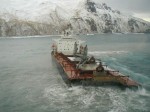
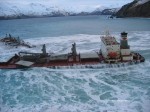
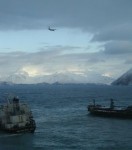
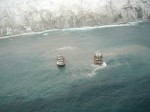
When the Malaysian freighter Selendang Ayu grounded in Alaska’s Aleutian Islands eight years ago this week, it was a tragic reminder of the growing risks of northern shipping. While in-route from Seattle to China, in a fierce Bering Sea winter storm with 70-knot winds and 25-foot seas, the ship’s engine failed. As it drifted toward shore, there were no adequate ocean tugs available to take it in-tow, and it grounded off Unalaska Island on December 8, 2004. Six crewmen were lost, the vessel broke in half, and its entire cargo and over 335,000 gallons of heavy fuel spilled oil into waters of the Alaska Maritime National Wildlife Refuge (Alaska Maritime National Wildlife Refuge). Like other large marine spills, this spill was not contained, and it killed thousands of seabirds and other marine wildlife, closed fisheries, and contaminated many miles of shoreline.

Like most industrial disasters, the Selendang Ayu tragedy was caused by a dangerous combination of human error, financial pressures, mechanical failure, lax and government oversight, ([PDF]Grounding of Malaysian-flag Bulk Carrier M/V Selendang Ayu on). For a time, the disaster focused attention the risk of northern shipping. But while some risk factors were addressed, complacency quickly returned. Today, the Selendang tragedy is all but forgotten, and with increasing ship traffic, the risk now is greater than ever.

Every day, some 10-20 large merchant ships – container ships, bulk carriers, car carriers, and tankers – travel the “great circle route” between Asia and North America along the 1,200-mile Aleutian chain. As trade rebounds from the recession, shipping along this route is steadily increasing. And as global warming continues to melt summer sea ice, ship traffic is also rapidly increasing across the Arctic Ocean. This past summer, a record 46 merchant ships transited the Northern Sea Route between Europe and Asia across the Russian arctic (Barents Observer), a ten-fold increase from just two years ago. Over 1 million tons of cargo was hauled on the route in both directions this summer (a 50% increase over 2011), and most of this was hazardous petroleum product such as diesel fuel, jet fuel, and gas condensate. And the first Liquefied Natural Gas (LNG) tanker in history traveled the route this year, carrying LNG from Norway to Japan in half the time it would have taken to travel the normal Suez route. The volume of oil and gas shipped on the Northern Sea Route is projected to reach 40 million tons annually by 2020. There is also increasing traffic of cruise ships (particularly around Greenland), fishing vessels, and ships servicing arctic oil and gas facilities and mines.

This is risky business. These are large vessels, carrying hazardous fuel and cargo, sailing treacherous seas along ecologically sensitive shorelines, operated by companies whose commercial imperatives often subvert safety, and with virtually no prevention or emergency response infrastructure along the way. Much of this traffic is foreign flagged and on “innocent passage,” under a Flag-of-Convenience

(What are Flags of Convenience?), with a Crew-of-Convenience, and with lower safety standards. And it all happens virtually out-of-sight, out-of-mind of the public and government regulators. Each of these ship transits puts at risk human life, economy, and environment, and the risk is growing every year. Shipping brings with it invasive species introductions, underwater noise, ship-strikes on marine mammals, and stack emissions. But as some of these vessels carry millions of gallons of heavy fuel, and tankers carry tens of millions of gallons of petroleum or chemicals, clearly the greatest fear is a catastrophic spill.

In response to the Selendang disaster, a coalition of non-governmental organizations, Alaska Natives, and commercial fishermen joined together in the Shipping Safety Partnership to advocate comprehensive safety improvements along the Aleutian and Arctic shipping routes (Alaska Oil Spill Motivates New Shipping Safety Coalition). In 2005, the Partnership called for real-time tracking of all ships, ocean rescue tugs, emergency tow packages, routing agreements, areas-to-be-avoided, increased financial liability, better aids-to-navigation, enhanced pilotage, mandatory communication protocols, better spill response equipment, increased cargo fees, and vessel traffic risk assessments. A few of these (the “low-hanging fruit”) have been implemented: additional tracking stations have been built, portable tow packages are pre-staged in Dutch Harbor, there is more funding and spill response equipment, an Arctic Marine Shipping Assessment was conducted (PUBLICATIONS > Related > AMSA – U.S. Arctic Research …), and an Aleutian shipping risk assessment is underway (Aleutian Islands Risk Assessment Project Home Page).

But in reducing the overall risk of Arctic and Aleutian shipping, the glass is still perhaps one-quarter full, three-quarters empty. The system is far from secure. For instance, ship-tracking remains inadequate, and still there are no powerful ocean rescue tugs stationed along the routes. By comparison, after Exxon Valdez, Prince William Sound now has eleven escort & response tugs on standby for its tankers (Alyeska Pipeline – TAPS – SERVS). In the Aleutians, a 2009 National Academy of Sciences report concluded: “None of the existing measures are adequate for responding to large vessels under severe weather conditions.”

Two areas of greatest concern, through which most of these ships travel, are Unimak Pass (between the Gulf of Alaska and Bering Sea in the eastern Aleutians), and Bering Strait (between the Bering Sea and Arctic Ocean). As these areas support more marine mammals, seabirds, fish, crab, and overall productivity than virtually any other ocean ecosystem in the world, the risk is clear. One wrong turn or loss of power of a loaded tanker or freighter in these passes could easily lead to a major spill disaster. Accordingly, both Unimak Pass and Bering Strait were recommended in 2009 for international designation as Particularly Sensitive Sea Areas, and Marine National Monuments or Sanctuaries, but the U.S. government has yet to act on this recommendation (Don’t Expect New Marine Sanctuaries Under … – Common Dreams).

Clearly, we need to get a handle on this now, before the next disaster. All of the Shipping Safety Partnership’s recommendations from 2005 (above) should immediately be implemented across the Aleutian and Arctic shipping routes, particularly continuous ship tracking and rescue tugs. Industry should pay for it all via cargo fees. And, governments should make mandatory the International Maritime Organization’s Guidelines for Ships Operating in Arctic ice-covered Waters (IMO | Polar Shipping Safety), enhance search and rescue capacity, and establish Regional Citizens’ Advisory Councils (Prince William Sound Regional Citizens’ Advisory Council) to oversee all offshore commercial activities.

Arctic shipping is a disaster waiting to happen. It’s not if, but when and where the next disaster will occur. It could be tonight or years from now; it could be in Unimak Pass, Bering Strait, Novaya Zemlya, Baffin Island, or Greenland. But it will happen. Arctic governments and the shipping industry need to get serious about reducing this risk as much as possible, and soon.

Richard Steiner conducts the Oasis Earth project – a global consultancy working with NGOs, governments, industry, and civil society to speed the transition to an environmentally sustainable society. Oasis Earth conducts Rapid Assessments for NGOs in developing nations on critical conservation challenges, reviews environmental assessments, and conducts fully developed studies.

Special thanks to Mark Spalding and The Ocean Foundation.
Truthout.org: BP to Shareholders: We’re Already Working With EPA to Lift Federal Contract Ban

http://truth-out.org/

Thursday, 29 November 2012 10:28 By Jason Leopold, Truthout | Report

Despite a long history of “egregious violations,” the behemoth oil company’s temporary suspension from obtaining lucrative government contracts may turn out to be much shorter than expected.

“BP is a serious serial corporate environmental criminal and a corporate serial killer…. [The company] always settles its cases with the government and promises to change its culture, but it continues to do the same thing over and over again.”
— Jeanne Pascal, former EPA debarment counsel
On Wednesday, the Environmental Protection Agency (EPA) made a surprise announcement stating that, effective immediately, the oil behemoth and more than a dozen of its subsidiary companies will be “ineligible” to “receive any federal contract or approved subcontract” as a result of BP’s agreement to plead guilty two weeks ago to a wide range of crimes directly related to the deadly April 2010 disaster in the Gulf.

“EPA is taking this action due to BP’s lack of business integrity as demonstrated by the company’s conduct with regard to the Deepwater Horizon blowout, explosion, oil spill and response as reflected by the filing [by the Justice Department] of a criminal information,” the EPA said in its statement.

The notice of suspension, sent to BP PLC chief executive Robert Dudley, states that on November 23 the EPA’s suspension and debarment division recommended that BP immediately be suspended from government contract work. The notice of suspension typically is preceded by a complaint document that lays out all of the reasons suspension and debarment is sought. The EPA did not provide Truthout with a copy of the complaint.

In a news release BP issued after it settled criminal charges related to the Gulf disaster, BP said the company “has not been advised of the intention of any federal agency to suspend or debar the company in connection with this plea agreement.”

The EPA’s announcement, which does not apply to BP’s existing federal contracts, was made the same day the Department of the Interior’s Bureau of Ocean Energy Management opened up for sale to oil companies more than 20 million acres in the Western Gulf of Mexico for oil and natural gas exploration and development. Also, on Wednesday, two BP supervisors who were aboard the Deepwater Horizon when it exploded were arraigned on manslaughter charges, and a former BP vice president was arraigned on false statements and obstruction of Congress. All three pleaded not guilty.

A BP spokeswoman said the company already had decided before the decision by the EPA to sit out Wednesday’s lease sale. But the EPA’s suspension would also have covered new drilling leases and so the timing of the agency’s announcement does not appear to be coincidental. BP was the high bidder in June for 43 leases to drill in the Central Gulf of Mexico, not far from the site of where the Macondo well ruptured and spewed millions of barrels of oil into the waters. BP is the largest deepwater leaseholder in the Gulf.

But after the EPA announced BP’s suspension, BP quickly issued a statement, downplaying the EPA’s action and attempting to reassure its shareholders, saying that the corporation “has been in regular dialogue with the EPA” and is already negotiating with federal regulators to lift the ban.

“The EPA has informed BP that it is preparing a proposed administrative agreement that, if agreed upon, would effectively resolve and lift this temporary suspension,” BP’s statement says. “The EPA notified BP that such a draft agreement would be available soon.”

BP noted that it has already provided “both a present responsibility statement of more than 100 pages and supplemental answers to the EPA’s questions based on that submission.”

“Moreover, in support of BP’s efforts to establish present responsibility, the US Department of Justice agreed, in the plea agreement, that it will advise any appropriate suspension or debarment authority that in the Department’s view, BP has accepted criminal responsibility for its conduct relating to the Deepwater Horizon blowout, explosion, oil spill and response,” BP’s statement said.

However, in a statement issued to Truthout, the EPA said that while the agency cannot specifically comment on BP’s claims about negotiations to lift the contracting ban, the plea agreement the company entered into “includes a remedial order that, if accepted by the court at sentencing, will specifically provide for BP to submit to the government a plan for addressing the conditions which gave rise to the statutory violations within 60 days.

“This plan must be approved by the government, at which time it becomes a condition of BP’s criminal probation,” the EPA statement said. “In addition, there are pending civil proceedings. The suspension could therefore continue until those proceedings are completed.”

Those civil proceedings could continue for at least another year.

Still, Scott Amey, general counsel with the watchdog organization Project on Government Oversight (POGO), which applauded the temporary suspension, said he is not surprised that “BP is doing its due diligence to convince the government that is a responsible company.

“However, the EPA should be watchful of promises, especially this late in the game,” Amey added. “A company’s culture can’t change overnight or over the course of a few days.”

Assistant Attorney General Lanny Breuer cited the company’s corporate culture, in which it puts profits ahead of the safety and integrity of its operations, during a news conference in New Orleans two weeks ago, where the Justice Department announced that it had reached a settlement with BP over crimes related to the Gulf disaster.

“The explosion of the [Deepwater Horizon] was a disaster that resulted from BP’s culture of privileging profit over prudence,” Breuer said.

BP’s corporate culture has resulted in more than $10 billion in civil and criminal penalties against the oil giant over the past 17 years, evidenced most significantly by more than 700 infractions and/or violations identified by federal regulators in 2010 at its refineries, and alleged neglect at its other drilling rig in the Gulf called Atlantis.

It was BP’s negligence at the company’s Texas City refinery and its pipelines in Alaska, along with its manipulation of the Midwest propane market, to cite just a few examples, that originally led former EPA debarment counsel Jeanne Pascal to recommend in 2010 that the company be stripped of receiving additional federal contracts.

Pascal made that recommendation just a couple of months before the Gulf disaster and her retirement from the agency. She said she had prepared a “suspension and debarment complaint” against BP, “with about 60 exhibits, but “the debarment action went nowhere, not even after the well blowout in the Gulf of Mexico.”
Pascal told Truthout the EPA should not be engaging in any settlement discussions with BP over their federal contracts. She said BP’s statement tells her that the EPA gave the company a “heads-up” about the suspension.

“BP is a serious serial corporate environmental criminal and a corporate serial killer,” Pascal said. “They killed eleven people in the Gulf and fifteen people in Texas City – 26 people in the span of five years. BP always settles its cases with the government and promises to change its culture but it continues to do the same thing over and over again. They need to be held to the same standard that other [suspension and debarment] respondents are held to.”

A passionate environmentalist, Pascal said she believes there are certain companies whose “egregious violations” don’t warrant settlement, and BP is one of them.
“BP has killed millions of fish and marine mammals; they have ruined the fisheries in the Gulf as well as the tourist industry. The paltry $4 billion settlement [BP entered into with the government earlier this month] is not nearly enough to rectify the damage BP has done to the Gulf and its people. It’s not in the public interest to settle with BP at this time,” she said. “The government should insist on a period of years in which BP proves its corrupt corporate culture has changed, and that is has stopped putting profit over American lives and the safety of the environment.”

Rep. Ed Markey (D-Massachusetts) agreed that BP’s conduct warranted suspension.
“After pleading guilty to such reckless behavior that killed men and constituted a crime against the environment, suspending BP’s access to contracts with our government is the right thing to do,” said Markey, the ranking member o f the Natural Resources Committee. “When someone recklessly crashes a car, their license and keys are taken away. The wreckage of BP’s recklessness is still sitting at the bottom of the ocean and this kind of time out is an appropriate element of the suite of criminal, civil and economic punishments that BP should pay for their disaster.”

Rena Steinzor, the president of the Center for Progressive Reform and a professor a the University of Maryland School of Law, made the case for permanently debarring BP from receiving federal contracts because of its poor safety record.

But Amey, the POGO attorney, said, “suspension of large contractors doesn’t last that long. In past cases, it has lasted mere days.”

Pascal said suspension and debarment is an action taken “because of an immediate need for the government to protect itself.”

“I can guarantee you the EPA coordinated this action with the Department of Interior and the Department of Defense,” Pascal said. “EPA normally suspends or debars a company guilty of environmental crimes in the wake of a criminal action because conduct rising to criminal conduct is not presently responsible. This suspension is clearly designed to prevent BP from bidding on leases. That was, in part, the immediate need that needed action.”

BP’s contracting work has been a financial boon for the corporation.

In September, while BP was engaged in settlement discussions with the government over its role in the Gulf disaster, the company was awarded hundreds of millions of dollars in new Pentagon fuel contracts.

BP PLC is one of the Pentagon’s main fuel suppliers and one of the government’s top 100 contractors, with $1.47 billion worth in Fiscal Year 2011, which represents 179 government contracts, according to the web site USASpending.gov. This year alone, BP has won $1.1 billion in federal contracts. In just two years, BP has earned from the government more than half the money it is obligated to pay in fines related to the Gulf disaster.

At the same time, according to POGO, BP has racked up more instances of misconduct – 61 since 1995 -than any of the other top 100 corporations that receive government contracts and has paid $10 billion in civil and criminal penalties.
In an interview in 2010, Pascal said she had to proceed with caution when she considered debarring the oil company from receiving government contracts because of its relationship with the Pentagon.

“If I had debarred BP while they were supplying 80 percent of the fuel to US forces it would have been almost certain that the Defense Department would have been forced to get an exception,” Pascal said.

She noted at the time that the 80 percent figure was provided by her “contact,” an attorney, who works at the Defense Energy Support Center, part of the Defense Logistics Agency, which is responsible for purchasing all of the fuel for the military.
A Defense Logistics Agency spokesperson did not respond to requests for comment.
Because the Pentagon is so heavily reliant on BP for fuel, top Pentagon officials can still seek to lift the ban for BP if they write a justification letter to Congress requesting permission to use the suspended contractor.

Pascal pointed to an executive order issued by Ronald Reagan in 1986 authorizing the federal government to use suspended, debarred or excluded contractors, in certain circumstances:
An agency may grant an exception permitting a debarred, suspended, or excluded party to participate in a particular transaction upon a written determination by the agency head or authorized designee stating the reason(s) for deviating from this Presidential policy. However, I intend that exceptions to this policy should be granted only infrequently.

BP has to convince the federal government that it’s now a responsible corporation in order to win back the government’s business. But Pascal rattled off a list of major violations dating back to 1999 that she said proves BP’s “promises and assurances” should not be “trusted as truth.”

“BP needs to prove they have changed,” she said. “The Deepwater Horizon disaster was too extensive to trust BP…. Promises from this company should be disregarded.”
Copyright, Truthout.

Jason Leopold
Jason Leopold is lead investigative reporter of Truthout. He is the author of the Los Angeles Times bestseller, News Junkie, a memoir. Visit jasonleopold.com for a preview. His most recent investigative report, “From Hopeful Immigrant to FBI Informant: The Inside Story of the Other Abu Zubaidah,” is now available as an ebook. Follow Jason on Twitter: @JasonLeopold.
Related Stories
BP Faces Fines of Up to $10 Billion, Plus Jail Time for Guilty Officials
By Alexander Cockburn, Truthout | Op-Ed
BP Is Messing With the Wrong Woman
By David Swanson, War is a Crime | Report
BP Blamed for Ongoing Health Problems
By Dahr Jamail, Al Jazeera English | Report and Video
BP Covered Up Blow-out Two Years Prior to Deadly Deepwater Horizon Spill
By Greg Palast, EcoWatch | News Analysis (Video)
BP Amnesia: Life and Death After the Spill
By Mike Ludwig, Truthout | News Analysis

Special thanks to Richard Charter

KUOW: Sea Trial Leaves Shell’s Arctic Oil-Spill Gear “Crushed Like A Beer Can”

http://www.kuow.org/post/sea-trial-leaves-shells-arctic-oil-spill-gear-crushed-beer-can

By JOHN RYAN

Credit BSEE
The Arctic Challenger’s containment dome, crumpled after a field test in Puget Sound

Shell Oil has been building and testing equipment designed for the Arctic Ocean here in Puget Sound. In September, a key test of underwater oil-spill equipment was a spectacular failure.

It forced the energy giant to postpone drilling into oil-bearing rocks beneath the Arctic Ocean until next summer. Shell and its federal regulators have been tight-lipped about the failed test.

But a freedom-of-information request reveals what happened beneath the surface of Puget Sound.

The final obstacle to Arctic drilling
Before Shell can drill for oil in the Arctic Ocean, it needs to prove to federal officials that it can clean up a massive oil spill there. That proof hinges on a barge being built in Bellingham called the Arctic Challenger.

The barge is only one component of Shell’s plans for handling oil spills off the remote north coast of Alaska. But the Obama Administration won’t let oil drilling get under way until the 36-year-old barge and its brand new oil-spill equipment are in place.

On board the Arctic Challenger is a massive steel “containment dome.” It’s a sort of giant underwater vacuum cleaner. If efforts to cap a blown-out well don’t work, the dome can capture spewing oil and funnel it to a tanker on the surface.

The Arctic Challenger passed several US Coast Guard tests for seaworthiness in September. But it was a different story when its oil-spill containment system was put to the test in 150-foot-deep water near Anacortes, Washington.

The federal Bureau of Safety and Environmental Enforcement required the test of the oil-spill system.

“Breached like a whale”
According to BSEE internal emails obtained by KUOW, the containment dome test was supposed to take about a day. That estimate proved to be wildly optimistic.

Day 1: The Arctic Challenger’s massive steel dome comes unhooked from some of the winches used to maneuver it underwater. The crew has to recover it and repair it.
Day 2: A remote-controlled submarine gets tangled in some anchor lines. It takes divers about 24 hours to rescue the submarine.

Day 5: The test has its worst accident. On that dead-calm Friday night, Mark Fesmire, the head of BSEE’s Alaska office, is on board the Challenger. He’s watching the underwater video feed from the remote-control submarine when, a little after midnight, the video screen suddenly fills with bubbles. The 20-foot-tall containment dome then shoots to the surface. The massive white dome “breached like a whale,” Fesmire e-mails a colleague at BSEE headquarters.

Then the dome sinks more than 120 feet. A safety buoy, basically a giant balloon, catches it before it hits bottom. About 12 hours later, the crew of the Challenger manages to get the dome back to the surface. “As bad as I thought,” Fesmire writes his BSEE colleague. “Basically the top half is crushed like a beer can.”

Representatives of Shell Oil and for BSEE declined to answer questions or allow interviews about the mishaps. In an email, Shell spokeswoman Kelly op de Weegh writes:
Our internal investigation determined the Arctic Challenger’s dome was damaged when it descended too quickly due to a faulty electrical connection, which improperly opened a valve. While safety systems ensured it did not hit the bottom, buoyancy chambers were damaged from the sudden pressure change.

Environmental groups say the Arctic Challenger’s multiple problems show that Shell isn’t prepared for an Arctic oil spill.

Environmentalist Todd Guiton lives on Sehome Hill in Bellingham. His condo overlooks the Bellingham Shipping Terminal, where the Arctic Challenger has been under construction for a year now.

“Just look out our window, and there it is,” Guiton says.

He says the steel dome came back from its sea trial with its top half crumpled like a piece of paper. In the two months since, Guiton says, he’s been watching Shell contractors rebuild the dome and reinforce it with more steel.
“This has to be a very beefy operation to do what they claim it’ll do,” Guiton says.

It failed under very calm, tranquil conditions in the best time of year up here in the Pacific Northwest. If it can’t handle the best we have here, I really have my doubts it can handle even a little adversity in the Arctic.

Spokeswoman op de Weegh wouldn’t say what Shell is doing to fix the dome or when it would be ready for testing again.

Earlier in November, the Obama administration called for more research into handling oil spills in the far North.

The Arctic Research Commission said oil-spill experiments and tests need to be done in the Arctic Ocean and that federal regulators need more staff or more time to properly vet proposals for offshore drilling at the top of the world.

Emails obtained by KUOW between Mark Fesmire, the head of BSEE’s Alaska office, and his colleague at BSEE.

Special thanks to Richard Charter

Cuba Standard: Russian oil company to invest $126m in offshore exploration

http://www.cubastandard.com/2012/11/17/russian-oil-company-to-invest-126m-in-offshore-exploration/

November 17, 2012

Russian state oil company Zarubezhneft will spend close to $126 million on near-shore exploration off north-central Cuba that will begin in December, a Russian official said during a visit to the island.

The Songa Mercur, a Soviet-built and Norwegian-owned semi-submersible, arrived Nov. 15 in Cuban waters, Russian Comptroller Sergei Stepashin confirmed. According to Russian news service rt.com, a delegation of Russian and Cuban officials visited the platform Thursday, after it arrived in Cuban waters from Trinidad & Tobago. The group included Stepashin, Zarubezhneft CEO Nikolay Brunich, and Russia’s ambassador to Havana, Mikhail Kamyshin.

Zarubezhneft chartered the semi-submersible for 325 days to drill in Block L, the easternmost of four blocks the company leased in 2009. Block L is located off the keys of Villa Clara province, near Cayo Santa María, a new beach tourism destination Cuba has been developing over the past 10 years.

The first exploration results, according to Stepashin, will be announced in May.

“It’s an important investment, but it’s an investment in the future,” Stepashin said, according to RIA Novosti, before meeting with Raúl Castro. Both expressed confidence, according to the Russian news service.

“We hope that in a fourth intent, following three failed ones, we will see ‘big oil’,” the Russian official said, referring to exploratory drilling this year by the Scarabeo 9 platform. “This would be of enormous help to the Cuban economy and a step ahead in our relations, as well as a response to the defenders of the [U.S. embargo].”

Zarubezhneft’s confidence is based on prospecting done by the Soviet predecessor company, he said.

The Songa Mercur is owned by Oslo-based Songa Offshore AS. The shallow-water rig, built in in a Soviet shipyard 1989 and updated in Galveston, Texas, in 2007, can drill in depths of up to 1,200 feet. In contrast, the Scarabeo 9 platform, used by Repsol, Petronas and PdVSA in Cuba, can drill in depths up to 12,000 feet; the Scarabeo was custom-built in China and Singapore with minimal U.S. content, to comply with U.S. sanctions.

Zarubezhneft subsidiary JSC RMNTK Nefteotdacha has also begun onshore prospecting in the Boca de Jaruco area near Havana and expects to begin drilling in March or April. Last year, the Russian oil company signed an agreement with CubaPetróleo about the use of experimental technology to maximize production in the mature oil field. If the technology is successful, Zarubezhneft and CubaPetróleo will expand their cooperation.

Before the visit to the oil rig, Stepashin and Cuban officials signed anti-corruption agreements in Havana that include training and professional enhancement courses for Cuban auditors.

Zarubezhneft is drilling in Block L, the easternmost of four blocks contracted in 2009

Special thanks to Richard Charter

"Be the change you want to see in the world." Mahatma Gandhi