Associated Press: Virtually all Alabama tar balls from BP oil spill, new study shows

http://blog.al.com/wire/2012/09/virtually_all_alabama_tar_ball.html
Published: Thursday, September 20, 2012, 9:55 PM

In this Sept. 5, 2012 aerial photo, a combination of alluvial clay and tar mats are seen on the shore of Elmer’s Island in the aftermath of Hurricane Isaac, in Jefferson Parish, La. (AP Photo/Gerald Herbert)

AUBURN, Ala. (AP) — A new chemical analysis shows that virtually all the tar balls washing onto the Alabama coast are directly linked to the BP oil spill more than two years ago.

The report released Thursday by Auburn University says that tar balls caused by the spill are hundreds to thousands of times more common than another type of asphalt-like tar deposit that’s been in the Gulf for years.

Researchers tested tar found after Hurricane Isaac last month. They found the material is from the BP well, and that certain chemicals in the tar have barely broken down since June 2010.

The work was funded by the city of Orange Beach, the National Science Foundation and others.

BP says it hasn’t seen the study. Spokesman Ray Melick says the tar balls are scattered and that BP is working to remove them.

Special thanks to Richard Charter

Dept of the Interior: Obama Administration Announces 38 Million-Acre Oil and Gas Lease Sale in the Central Gulf of Mexico

Department of the Interior
September 24, 2012

Date: September 24, 2012
Contact: Blake Androff (DOI) 202-208-6416
John Filostrat (BOEM) 504-731-7815

March Sale Part of Administration’s Plan Making Areas Containing 75% of Recoverable Offshore Oil, Gas Available for Exploration and Development

WASHINGTON – As part of President Obama’s all-of-the-above energy strategy to expand safe and responsible domestic energy production, Secretary of the Interior Ken Salazar and Bureau of Ocean Energy Management (BOEM) Director Tommy P. Beaudreau today announced that BOEM will offer 38 million acres in the Central Gulf of Mexico for oil and gas exploration and development. This sale will build on two major Gulf of Mexico lease sales in the last year – a 21 million acre sale held last December and a 39 million acre sale held in June – and supports the Administration’s goal of continuing to increase domestic oil and gas production which has grown each year the President has been in office, with domestic oil production in 2011 higher than any time in eight years.

Proposed Lease Sale 227, scheduled to take place in New Orleans on March 20, 2013, will offer all unleased areas in the Central Gulf of Mexico Planning Area, offshore Louisiana, Mississippi, and Alabama and could lead to the production of up to nearly a billion barrels of oil and nearly 4 trillion cubic feet of natural gas. This will be the second sale under the Administration’s new Outer Continental Shelf Oil and Gas Leasing Program for 2012-2017 and the first of five annual Central Gulf lease sales. Announced in June, the Five Year Program makes offshore areas with more than 75% of the technically recoverable oil and gas resources available for exploration and development, consistent with President Obama’s commitment to continue to expand domestic energy production and reduce America’s dependence on foreign oil.

“The Obama Administration is fully committed to developing our domestic energy resources to create jobs, foster economic opportunities, and reduce America’s dependence on foreign oil,” Secretary Salazar said. “We are moving full speed ahead on the President’s all-of-the-above energy strategy because the exploration and development of the Gulf of Mexico’s vital energy resources will continue to help power our nation and drive our economy.”

Since President Obama took office, domestic oil and gas production has increased each year, with domestic oil production at an eight-year high, natural gas production at an all-time high, and foreign oil imports now accounting for less than 50 percent of the oil consumed in America – the lowest level since 1995.

Lease Sale 227 encompasses about 7,250 unleased blocks covering approximately 38 million acres. The blocks are located from three to about 230 miles offshore, in water depths ranging from nine to more than 11,115 feet (three to 3,400 meters). BOEM estimates the proposed lease sale could result in the production of 0.46 billion to 0.89 billion barrels of oil and 1.9 trillion cubic feet to 3.9 trillion cubic feet of natural gas.

“This proposed sale is another important step to promote responsible domestic energy production through the safe, environmentally sound exploration and development of the Nation’s offshore energy resources,” said BOEM Director Tommy P. Beaudreau.

This sale will build on successful lease sales that BOEM has held within the past year. Western Gulf Lease Sale 218, held in December 2011, made 21 million acres available, and received high bids on tracts covering about one million acres, netting nearly $325 million. Central Gulf Lease Sale 216/222, held in June 2012, covered nearly 39 million acres, and attracted more than $1.7 billion in high bids for more than 2.4 million acres. The next sale, Western Gulf of Mexico Lease Sale 229, announced earlier this year, will take place in New Orleans on Nov. 28, 2012.

BOEM conducted an extensive environmental review and published a Final Environmental Impact Statement with analysis to support decision-making for proposed Lease Sale 227 and other Western and Central Gulf of Mexico lease sales scheduled under the new Five Year Program. The terms of this sale include conditions to ensure both orderly resource development and protection of the human, marine and coastal environments. These include stipulations to protect biologically sensitive resources, mitigate potential adverse effects on protected species, and avoid potential conflicts associated with oil and gas development in the region.

The proposed terms also continue to include a range of incentives to encourage diligent development and ensure a fair return to taxpayers. In addition, BOEM has implemented a new, streamlined format for sale notices, beginning with this sale, making the document more user-friendly and accessible to the public.

Proposed terms and conditions for the sale are available at: http://www.boem.gov/sale-227. The Notice of Availability of the Proposed Notice of Sale can be viewed today in the Federal Register at: https://www.federalregister.gov/public-inspection. Copies can also be requested from the Gulf of Mexico Region’s Public Information Office at 1201 Elmwood Park Boulevard, New Orleans, LA 70123, or at 800-200-GULF (4853). All terms and conditions for Lease Sale 227 will be finalized when the Final Notice of Sale is published at least 30 days prior to the Sale.

– BOEM –

About the Bureau of Ocean Energy Management
The Bureau of Ocean Energy Management (BOEM) manages the exploration and development of the nation’s offshore energy resources. The bureau seeks to balance economic development, energy independence, and environmental protection through responsible management of offshore conventional and renewable energy development based on the best available science. The bureau is within the Department of the Interior.

For More Information on Press Releases and Notes to Stakeholders:
Blossom Robinson
BOEM Office of Public Affairs (202) 208-6474
Please visit us at www.BOEM.gov

Special thanks to Richard Charter

SFGate.com: Chevron Bosses Investigated For Criminally Covering Up Toxic Releases-Ca Osha and Commission On Health And Safety And Workers Compensation MIA

Read more: http://www.sfgate.com/science/article/Criminal-investigation-at-Chevron-refinery-3886927.php#ixzz27JORnKeO
Criminal investigation at Richmond Chevron refinery

Jaxon Van Derbeken
Updated 11:29 p.m., Saturday, September 22, 2012
http://www.sfgate.com/science/article/Criminal-investigation-at-Chevron-refinery-3886927.php

628×471 3.jpg 2

Jack Broadbent, executive director of the Bay Area Air Quality Management District, says Chevron was “routing gas through that pipe to the flare that they were not monitoring.” Photo: Liz Hafalia, The Chronicle / SF

Federal authorities have opened a criminal investigation of Chevron after discovering that the company detoured pollutants around monitoring equipment at its Richmond refinery for four years and burned them off into the atmosphere, in possible violation of a federal court order, The Chroniclehas learned.

Air quality officials say Chevron fashioned a pipe inside its refinery that routed hydrocarbon gases around monitoring equipment and allowed them to be burned off without officials knowing about it. Some of the gases escaped into the air, but because the company didn’t record them, investigators have no way of being certain of the level of pollution exposure to thousands of people who live downwind from the plant.

“They were routing gas through that pipe to the flare that they were not monitoring,” said Jack Broadbent, executive director of the Bay Area Air Quality Management District, whose inspectors uncovered what Chevron was doing and ordered the bypass pipe removed.

The U.S. Environmental Protection Agency’s criminal enforcement unit opened an investigation in early 2012, more than two years after the local inspectors made their discovery, according to air-quality officials and others familiar with the probe. The investigation is still open, and Chevron employees have been interviewed.
Who knew what
Federal criminal investigators are trying to determine who at Chevron was aware of the bypass pipe and whether the company used it intentionally to deceive air-pollution regulators. Chevron says its use was inadvertent and that it estimates that the amount of released sulfur dioxide – one of the major components of flaring gas pollution – was minimal.

In a statement, Chevron said it was informed in March of a federal investigation “that appears to be related to flaring at the Richmond refinery.” It said it was cooperating with the probe.
The chairman of the Bay Area air-quality district’s board, Contra Costa County Supervisor John Gioia, said that if Chevron intended to deceive regulators, its actions raised “extremely serious” questions about the company’s credibility.

“That’s a criminal act, intentionally bypassing the monitoring,” Gioia said. “The rule is designed to reduce flaring, and refineries are supposed have a responsibility to abide by it.”

The criminal probe came to light after The Chronicle obtained citation data from the air-quality district under a state Public Records Act request, following the Aug. 6 fire that destroyed part of the Richmond refinery. The probe is unrelated to that blaze.
Health risks
The federal investigation centers on Chevron’s burning, or flaring, of gases created during the superheating needed to generate fuels from crude oil. Although flaring burns most gases, environmental groups have long maintained that residual gases blowing away from the refinery pose a risk of cancer and respiratory ailments.

Under a 2005 settlement of a lawsuit filed against it by the Environmental Protection Agency, claiming that Chevron violated federal environmental rules, the company agreed to limit flaring at Richmond and its other refineries and account for each flaring event.

The Bay Area air-quality district, which enforces federal air standards, ordered Chevron to install monitors at the Richmond refinery to measure pollutants in the gases burned off during flaring, and to report all instances of flaring.

Spotted by inspectors
Wayne Kino, an enforcement manager for the air-quality district, said two inspectors with the agency became suspicious Aug. 17, 2009, when they saw steam from a flare coming from a high-pressure, high-temperature hydrocracking complex in Richmond called the Isomax unit, where 62,000 barrels of oil a day are converted into gasoline and jet fuel.

The inspectors asked to see Chevron’s pollution-monitoring equipment, and discovered “it wasn’t recording anything,” Kino said.

Chevron had installed more than 100 feet of 3-inch pipe, linking the vessel where oil is processed to the flare tower, and bypassing two sets of monitoring equipment, Kino said. When an operator activated the bypass pipe, the gases were sent up the flare stack without being recorded.

Chevron said the pipe was designed to balance pressure in the refining process, but investigators could find no legitimate use for it, Kino said.
Bypassed 27 times
During a two-year investigation that involved examination of refinery surveillance tapes, Kino said, the air-quality district determined that Chevron used the pipe bypass 27 times from April 2005 to August 2009. He called the violations “very serious.”

In August 2011, Chevron agreed to a settlement with the agency in which it paid a $170,000 fine for two violations. That same month, the air-quality agency renewed Chevron’s permit for operating the Richmond refinery for five years.

In September 2010 – a year into the agency’s investigation – Environmental Protection Agency officials expressed concerns that Chevron was flaring at the Richmond refinery as a matter of routine. The air-quality district, however, dismissed the suggestion.

“There is no evidence that the flares at the Chevron refinery are being used as control devices,” the district said. It cited “flaring reports from this refinery covering the period from 2004 to the present show no instances of ‘routine’ flaring.”

Kino said the agency official who wrote the response hadn’t known about the investigation. He said the federal agency was ultimately notified of the violations in May 2011.

The environmental agency issued a statement saying it “does not comment on ongoing investigations.”
Workers interviewed
Officials of the union that represents workers at the refinery said Chevron employees had been questioned by the environmental agency investigators.

“The union is aware that there is an ongoing investigation,” said Jeff Clark, a field representative with the United Steelworkers Local 5. “Our members have been interviewed as part of it, and we cannot comment further at this time.”

The investigators have also questioned air-quality agency officials about what they knew about the bypass system. Kino said his inspectors have cooperated with the criminal probe.

Gioia, the air-quality board chairman, said he was upset that the agency’s staff didn’t tell him and other district directors about the $170,000 fine before it was issued. The fine was the most Chevron has paid in the past decade for air-quality violations at the Richmond refinery.

“It’s serious under any circumstances for a refinery to bypass the collection monitors,” Gioia said. “It’s a pretty large fine, and that means it’s a large incident.”

He added, “We have gone around as a district declaring that the flare-monitoring rule has been a success and has reduced emissions. But if we are not capturing all the emissions, it’s hard to judge how effective it has been.”

Jaxon Van Derbeken is a San Francisco Chronicle staff writer. E-mail: jvanderbeken@sfchronicle.com

Special thanks to Richard Charter
Nola.com: Hurricane Isaac showed that BP oil-spill woes remain

http://www.nola.com/sports/index.ssf/2012/09/hurricane_isaac_showed_that_bp.html

Times-Picayune

Published: Sunday, September 23, 2012, 7:53 PM Updated: Sunday, September 23, 2012, 8:56 PM

By Bob Marshall, The Times-Picayune

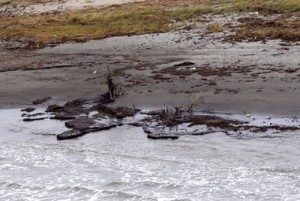
It’s been three weeks since Hurricane Isaac punched up the region, but a 12-mile section of our coast from Caminada Pass to Pass Fourchon remains closed to fishing — and any other activities.

That’s because clean-up crews are still trying to collect massive mats of weathered oil from the 2010 Deepwater Horizon spill the storm unearthed near the shore.

That news reminded me of a story back in May 2010, just weeks into the Deepwater Horizon disaster. The first patches of sticky oil had begun to reach the coast, and the world’s media was flashing pictures of men in hazmat suits scooping the toxic black goo or collecting dead fish and oiled pelicans.

The first paragraph read: “For those saddened by the scenes of thick oil washing into Louisiana’s coastal wetlands a month after the BP oil disaster, experts on oil spills and the coastal ecosystem have some advice: Get used to it.”

One of those experts was Robert Barham, Secretary of the Louisiana Department of Wildlife and Fisheries, a man who has proven not to play politics with the truth when it comes to protecting our natural resources. So while BP was leading a chorus from the oil industry that “we’ll make it right”, Barham gave this blunt assessment:

“I think we’re looking at many months of intense activity, but then years of follow-up work. I’ve been told by the ocean experts this stuff could hang out there on the bottom of the Gulf for more than 100 years. And as long as it’s out there, it can come ashore.

“We might not see big black waves, but we may be seeing a smaller, but serious problem, for years and years to come.”

There was a lot of pushback on those statements from the oil industry and its supporters, many of whom are in state government. Most people remember the odd spectacle of our politicians demanding the coast be repaired at the same time they were throwing President Obama under the bus for his temporary drilling moratorium. They made that timeout for safety sound like a bigger disaster than the spill. You probably remember the claims: economic ruin for the state, a wholesale exodus of drilling rigs from the Gulf.

Well, here we are two years later, and the oil industry now has more rigs drilling in the Gulf than it did before Deepwater Horizon. And oil industry profits continue to be world-wide leaders, high enough that the sector could afford to spend $71.2 million lobbying congress so far this year, adding to the $1.2 billion it has spent since 1998. And its view of Obama’s effort to prevent another disaster can be reflected in its contributions during the presidential campaign: Mitt Romney has received $4.5 million, Obama $1.5 million. (All those figures are from OpenSecrets.org)

But while the oil industry has recovered quickly and quite nicely from the disaster it caused, our coastal wetlands — the ecosystem that makes living here not just enjoyable but possible — still suffers from that assault, as Hurricane Isaac made quite clear.

Barham said the clean-up crews told him the job of collecting this latest wave of BP’s oil would take about a month. Even then, the long stretch of coast valuable to the fishing industry would still not be reopened. It must first pass federal muster.

“The protocol we’ve agreed to with the Food and Drug Administration is that when oil resurfaces in an area, we keep it closed until there are no visible signs of oil left Ñ however long that takes,” Barham said. “During that time, we’re collecting samples of seafood and having (analysis done) on tissue to check for any contamination.

“There’s never been any sign of (contamination causing) human health issues, and we don’t expect any.”

Of course, Barham knows better than most that this isn’t the last time he’ll be explaining the protocol.

The lesson of this episode: If the local fishing industry — including commercial seafood dealers having trouble getting America to accept the safety of their products — are shocked at the site of more oil from that one spill still popping up, causing closures and generating negative headlines around the nation, experts on oil spills and the coastal ecosystem have some advice: Get used to it.

Oil spills may result in only temporary disruption to the company and industries that cause them, but they are permanent injuries for the rest of us.

Special thanks to Richard Charter

"Be the change you want to see in the world." Mahatma Gandhi