Riki Ott: An Open Letter to US EPA, Region 6

http://www.huffingtonpost.com/riki-ott/an-open-letter-to-us-epa_b_697376.html

Riki Ott is a Marine toxicologist and Exxon Valdez survivor –see RikiOtt.com
She’s also dead on in this assessment of illegal dispersant use and my hero for saying this. I wonder if the EPA ever replied to her. This is one of the most damning elements of the entire Gulf blowout incident.
DV

Posted: August 27, 2010 03:27 PM

U.S. EPA, Region 6
1445 Ross Ave.
Dallas, TX 75202-2733 Via email: coleman.sam@epa.gov

August 27, 2010

Re: Documentation of continued dispersant spraying in near shore and inland waters from Florida to Louisiana (despite contrary claims by USCG and BP) and documentation that dispersants made oil sink

Dear Mr. Coleman,

During the August 25 Dockside Chat in Jean Lafitte, LA, it came to our attention that the federal agencies were unaware — or lacking proof — of the continued spraying of dispersants from Louisiana to Florida. Further, the federal agencies were woefully ignorant of the presence of subsurface oil-dispersant plumes and sunken oil on ocean and estuary water bottoms. We offer evidence to support our statements, including a recently declassified subsurface assessment plan from the Incident Command Post.

But first, you mentioned that such activities (continued spraying of dispersants and sinking oil) — if proven — would be “illegal.” As you stated, sinking agents are not allowed in oil spill response under the National Contingency Plan Subpart J §300.910 (e): “Sinking agents shall not be authorized for application to oil discharges.”

We would like to know under what laws (not regulations) such activities are illegal and what federal agency or entity has the authority to hold BP accountable, if indeed, such activity is illegal. It is not clear that the EPA has this authority.

For example, on May 19, the EPA told BP that it had 24 hours to choose a less toxic form of chemical dispersants and must apply the new form of dispersants within 72 hours of submitting the list of alternatives. Spraying of the Corexit dispersants continued unabated. On May 26, the EPA and Coast Guard told BP to eliminate the use of surface dispersants except in rare cases where there may have to be an exemption and to reduce use of dispersants by 75 percent. Yet in a letter dated July 30, the congressional Subcommittee on Energy and the Environment reported the USCG on-scene commander (OSC) had approved 74 exemption requests to spray dispersants between May 28 and July 14.

Under the National Contingency Plan Subpart J, the authorization of use §300.910 (d) gives the OSC the final authority on dispersant use: “The OSC may authorize the use of any dispersant… without obtaining the concurrence of he EPA representative… when, in the judgment of the OSC, the use of the product is necessary to prevent or substantially reduce a hazard to human life.”

Given this history of events and the NCP regulation, we would like to know what federal entity actually has the final authority to: order BP to stop spraying of dispersant; declare that spraying of dispersant after issuance of a cease and desist order is illegal; and prosecute BP for using product to sink oil.

The documentation of dispersant spraying in nearshore and inland waters includes:
√ claims by USCG and BP
√ eyewitness accounts
√ fish kills in areas of eyewitness accounts
√ photos of white foam bubbles and dispersant on boat docks in areas of eyewitness accounts
√ sick people in areas of eyewitness accounts

Claims by USCG and BP – and Counter Evidence

July 30-31: Lt. Cmdr. of USCG confirms, “Dispersants are only being used over the wellhead in Louisiana.”

•When reached for comment, Lt. Cmdr. Dale Vogelsang, liaison officer with the United State Coast Guard, told The (Destin) Log he had contacted Unified Command and they had “confirmed” that dispersants were not being used in Florida waters.

•”Dispersants are only being used over the wellhead in Louisiana,” Vogelsang said. “We are working with Eglin and Hurlburt to confirm what the flight pattern may be. But right now, it appears to be a normal flight.”

•Vogelsang also said Unified Command confirmed to him that C-130s have never been used to distribute dispersants, as they “typically use smaller aircraft.”

Contradicted by evidence in same Destin The Log article and posted on websites:

•But according to an article by the 910th Airlift Wing Public Affairs Office, based in Youngstown, OH., C-130H Hercules aircraft started aerial spray operations Saturday, May 1, under the direction of the president of the United States and Secretary of Defense. “The objective of the aerial spray operation is to neutralize the oil spill with oil dispersing agents,” the article states.

•A Lockheed Martin July newsletter states that “Lockheed Martin aircraft, including C-130s and P-3s, have been deployed to the Gulf region by the Air Force, Coast Guard and other government customers to perform a variety of tasks, such as monitoring, mapping and dispersant spraying.”

•Further: “Throughout the effort, Lockheed Martin employees have been recognized for their contributions in a wide range of roles. IS&GS senior network engineer Lawrence Walker, for example, developed a solution to a critical networking issue involving two C-130’s that arrived from the Air Force Reserve Command’s 910th Airlift Wing at Youngstown, Ohio, as part of the cleanup mission.”

May 11: USCG and BP claims of no dispersant spraying activities are further contradicted by intentional mislabeling of flight plans:

•Aerial dispersant operations – Houma Status Report, Dispersant Application Guidance, p. 4, point 8: “Use discreet IFF codes as provided on separate correspondence. This removes need to file DVFR flight plans.”

Destin – Fort Walton, FL
July 30-31: Destin Mayor Sam Seevers investigating claims of dispersant spraying:

•Resident and former VOO worker Joe Yerkes testified that he witnessed a military C-130 “flying from the north to the south, dropping to low levels of elevation then obviously spraying or releasing an unknown substance from the rear of the plane.”

•The unknown substance, Yerkes wrote, “was not smoke, for the residue fell to the water, where smoke would have lingered.”

Austin Norwood, whose boat is contracted by Florida Fish and Wildlife, also provided a written account of a “strange incident.”

•While Norwood was observing wildlife offshore, he had received a call from his site supervisor at Joe’s Bayou. After telling the supervisor that he and his crewmember were not feeling well, the supervisor had the two men come in “to get checked out because a plane had been reported in our area spraying a substance on the water about 10- 20 minutes before.”

•Norwoord complained of a bad headache, nasal congestion while his crewmember said he had a metallic taste in his mouth.

•After filling out an incident report, both Norwood and his crewmember were directed to go to the hospital. The following day, the two men were once again “asked to go to the hospital for blood tests.”

Aug. 2: Joe Yerkes reported sludgy brown oil and foamy white dispersant bubbles in Destin and 40 miles east in St. Joe Bay, just days before a fish kill of croaker, flounder, trout, and baitfish on August 5.

Perdido Pass, AL
Aug. 24: Received report of oil debris from anchor chain while weighing anchor at position 30*15.6 N 87*32.7 W, 0.6 nm east of Perdido Pass sea buoy. Samples taken.

Dauphin Island, AL
Aug. 21: Fisherman Chris Bryant documents Corexit 9500 use

Aug. 24: Washington’s Blog interview with chemist Bob Naman

•Bob Naman is the analytical chemist who performed the tests featured in WKRG’s broadcast. He was interviewed by or an August 24 report. Highlights include:

•Naman found 2-butoxyethanol in the Cotton Bayou sample. [Ingredient in ‘discontinued’ Corexit 9527.]

•Naman said found no propylene glycol, the main ingredient of Corexit 9500.

•Naman said he went to Dauphin Island, Alabama last night and while there observed many 250-500 gallon barrels which were labeled Corexit 9527. Naman took pictures that he will soon be sharing.

•Naman said he saw men applying the Corexit 9527 while he was in Dauphin Island and also in Bayou La Batre, Alabama.

•Naman said the Corexit 9527 is being haphazardly sprayed at night and is impacting beach sands in a highly concentrated form.

Bayou La Batre, AL
Aug. 4: Fisherman Chris Byrant documents oil-dispersant in Mississippi Sound, northwest of Katrina Cut, in an area open to fishing in state waters between Dauphin Island and Bayou La Batre

Aug. 19, Aug. 21: Rocky Kistner with NRDC documents use of Corexit 9527a and Corexit 9500 and oil-dispersant visible sheen in area open to fishing in state waters

Aug. 23: Natural Resources Defense Council Switchboard posting
We spotted huge plastic containers marked with Corexit warning labels on the dock public docks near Bayou La Batre. …

The next day at a town hall meeting in Buras, LA, BP Mobile Incident Commander Keith Seilhan was asked about the use of chemical dispersants. “We are not using dispersants and haven’t been for some time,” he said. But when asked whether contractors who operate in state waters could be, he said he could not be certain. “We have lots of contractors, but no one should be using them. If they are, we need to know about it and stop it.”

Long Beach, MS
Aug. 8: Fisherman James “Catfish” Miller sampled the subsurface oil plume (VIDEO)

Miller tied an oil absorbent pad onto a pole and lowered it 8-12 feet down into deceptively clear ocean water. When he pulled it up, the pad was soaked in oil, much to the startled amazement of his guests, including Dr. Timothy Davis with the Department of Health and Human Services National Disaster Medical System. Repeated samples produced the same result. Three weeks earlier, there had been a massive fish kill along the same shoreline from Gulfport to Pass Christian.

Aug. 23: The methods for sampling subsurface oil used by Mr. Miller are also being used by Incident Command for the Deepwater Horizon as evidenced in a declassified document (p. 3).

Hancock County, MS
Aug. 23: Dispersant container found in Bayou Caddy Hancock County marsh. White foam indicative of dispersant use in marsh. Samples taken and being analyzed.

Barataria, LA
July 31: Documentation of oil in Barataria Bay.

Venice, LA
Aug. 11 (reported): Contractor sick from dispersant spraying

Summary: Based on these documents, and more, we believe that dispersant spraying in inland and near shore waters across the Gulf of Mexico from Louisiana to the western Florida panhandle is occurring now and has continued unabated (before) and since July 19, the date that the seafood safety panel proclaimed was the last day dispersants were sprayed. Based on these documents, and more, we believe that the dispersant spraying in inland and near shore waters is being conducted for the sole purpose of sinking the visible oil, an activity that is supposedly illegal. According to the University of South Florida, dispersed oil micro-droplets have been documented throughout the Gulf water column and are likely to affect the entire ecosystem.

The inability of the federal and state agents who attended the Dockside Chat in Jean Lafitte, LA, on Aug. 25 to find recent subsurface oil and ocean bottom oil or dispersant spraying activity in inland or near shore waters gives us zero confidence in these same agencies’ declaration that they can find no oil or dispersant in Gulf seafood product.

Sincerely,

Riki Ott, PhD
Ultimate Civics Project
Earth Island Institute
POB 1460
Cordova, AK 99574
970-903-6818
www.RikiOtt.com
Mother Nature Network: Congress: Did anyone think about the environment?

http://www.mnn.com/earth-matters/politics/stories/congress-did-anyone-think-about-the-environment

Oil spill commission probes the Obama administration’s fickle stance on offshore oil drilling.
By Andrew Schenkel, Guest Columnist
Thu, Aug 26 2010 at 11:42 AM EST
Comments

NOT BUYING IT: Bob Graham had a tough time getting his head around the testimony during day one of the oil spill commission hearings. (Photo: Pablo Martinez Monsivais/AP)

Remember March? The Gulf oil spill hadn’t happened. President Obama was calling for increased offshore oil production. Well, the White House’s National Commission on the BP Deepwater Horizon Spill and Offshore Drilling remembers March, and its wants to know more.

During round one of the commission’s hearings, its chairmen probed the Obama administration on its focus on the environment while it pushed for increased offshore drilling prior to the Gulf oil spill.

The head of the White House’s Council on Environmental Quality, Nancy Sutley, testified that the Obama administration did not consult her agency about the potential environmental impacts of the president’s plans.

“We weren’t asked and wouldn’t expect to be asked ahead of time whether they should [drill],” said Sutley. She added that she didn’t expect her organization to be consulted on “what level of environmental analysis is appropriate for the kinds of planning and decisions that result from that March announcement.”

So the chairwoman of the White House’s Council on Environmental Quality not only wasn’t asked, but wasn’t planning on being asked. At least everyone is on the same page here.

Oil spill commission co-chair, former senator and former Florida Gov. Bob Graham, couldn’t believe his ears. “If you are developing a policy to expand offshore oil and gas exploration to the extent that the president announced,” Graham began, “consultation with the agency with responsibility for oceans management and regulation and your overall umbrella agency, the Council for Environmental Quality, should be two of the people on the consultation list.”

The commission’s other co-chairman, William Reilly, seemed equally surprised and perplexed that the Obama administration rushed to judgment. “I’m disappointed that CEQ particularly, which is in the heart of the executive office of the president, was not involved, which seems to go directly to the heart of its responsibility,” said Reilly.

Special thanks to Richard Charter

CNN: Defender of the deep: The oil’s not gone

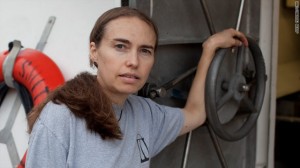
Samantha Joye, an oceanographer at the University of Georgia, has emerged as a spokeswoman for the deep ocean.

By John D. Sutter,
August 24, 2010 — Updated 1356 GMT (2156 HKT)

STORY HIGHLIGHTS
* Samantha Joye is an oceanographer who speaks out in defense of the deep ocean
* She says we know little about what the Gulf oil spill is doing to the deep parts
* has been largely ignored as part of the disaster, she says

The 45-year-old grew up on a farm; she walked on to the UNC basketball team
Athens, Georgia (CNN) — Samantha Joye’s office is littered with otherworldly artifacts from the deep ocean: a mussel the size of a football; a vase filled with tube worms, which look like grissini breadsticks; a photo of the world’s biggest bacteria.

Above her cabinets, the University of Georgia oceanographer has posted two images of lunar landscapes. They’re bizarrely similar, she says, to the topography on the floor of the Gulf of Mexico, the body of water that has captivated her attention for 15 years.

Joye doesn’t just work in the Gulf. She lives for it. She stays up at night thinking about what makes it tick. And, like a close friend, she’s become fiercely protective of it.

Four months after the BP oil spill, the wiry 45-year-old — who looks like the librarian version of Angelina Jolie — has been thrust into the uncomfortable position of defending this battered ocean against the perception that the environmental disaster is over.

Based on available evidence, she says, that’s simply not true.

“I’m not trying to be a ‘doom and gloom’ pusher, but I am trying to be realistic — and we don’t have all the answers,” she said. “We’re trying to pretend we do, but we don’t.”

Last week, Joye and another scientist published a memo saying that three-quarters of the oil spilled into the Gulf — about 3 million barrels — remains in the ecosystem. It’s out of sight and perhaps out of mind, she says, but it’s not gone.

This contradicts an earlier report from the National Oceanic and Atmospheric Administration. The government’s “oil budget,” which was based on observations and calculated estimates, was interpreted as saying as much as three-quarters of the oil is essentially gone.

“The vast majority of the oil from the BP oil spill has either evaporated or been burned, skimmed, recovered from the wellhead or dispersed using chemicals — much of which is in the process of being degraded,” said a government news release on August 4.

Joye’s defense of lingering questions about the oil spill has inspired hate as well as praise.

Her phones have been ringing nonstop. Last Tuesday, her office voicemail filled up three times before she yanked the plug on the phone in frustration.

The e-mails rolled in, too, many hitting on this theme:

“You WANTED an ecological disaster and when it didn’t happen you are literally willing to do or say anything to make it look like there was,” one person wrote.

Joye tries not to let these comments bother her, but they do.

Still, she says she can’t back down. It’s not in her nature.

The “shrimp” fights back

Growing up on a tobacco farm in North Carolina, Joye was a self-described “shrimp” — she was short, shy, scrawny as a tube worm and hopelessly nerdy.

She was the type of kid who read the encyclopedia for fun.

But there was an intensity to her, too.

She was so competitive in basketball, for instance, that she walked on to the University of North Carolina-Chapel Hill team her freshman year.

“I could shoot the lights out,” she said.

As a young girl, she found herself the butt of many jokes, in part, she said, because she had no problem telling teachers about the transgressions of her peers. On several occasions, Joye recalls ratting out classmates for picking on each other or fighting.

In one such incident in middle school, Joye confronted one of her male classmates who she thought was harassing another girl.

It backfired. Joye found herself backed into a corner, both the bully and the victim now yelling at her for meddling in their business.

That incident had a curious effect on Joye: It helped bring her out of her shell.

The shy, nervous girl stopped caring as much about what people thought.

She would stand up for what she believed in.

Hooked by the deep ocean

In 1994, when Joye took her first voyage to the bottom of the Gulf, she fell in love.

“The [submersible] dive was about three or four hours long, and I spent the entire time with my jaw on the floor, my eyes bugging out of my head and just going, ‘Wow!’ ” she said.

Partly because of the wow factor and partly because it was so scientifically perplexing, Joye started to develop an emotional attachment to the deep ocean in the Gulf.

That attachment made it all the more painful for her to watch the oil disaster unfold.

“It is much more than an oil spill,” she said. “It’s kind of like an insult to your best friend, and you want to help her figure out how to make this insult go away.”

Called back to the sea

Joye rushed to the Gulf’s defense.

It wasn’t easy. She never had left her 2-year-old daughter, Sophie, at home without her. She considered staying behind, but decided in May that she had to go.

“I feel like I owe [the Gulf] a debt because it’s taught me so much,” she said. “I feel like I owe it to the system to be out there.”

The research trip made headlines and Joye became one of the first scientists to track an underwater “plume” of oil.

On Saturday, Joye left again for the Gulf — this time aboard the Oceanus on a monthlong research trip.

Again, the decision to leave was difficult. Sophie had been throwing fits in the days leading up to the trip, even though Joye had tried to hide it from her.

“I pack when she’s asleep, and I hide the suitcases in the car,” Joye said.

Christof Meile, Joye’s husband, also works in the marine sciences department at UGA. He stays home with Sophie while Joye is away. Meile supports Joye’s commitment to research, especially in such a rare circumstance as the Gulf oil disaster.

He celebrated his 40th birthday on Friday, the day Joye left home at 6 a.m. to fly to Gulfport, Mississippi, where she met the research ship. But he wasn’t bothered.

“I don’t think my life is defined by how I celebrate my birthdays,” he said.

Sophie also takes an interest in her mom’s research.

“She always asks me, ‘Did you fix the ocean yet?’ ” Joye recalled.

“And I say, ‘No, but I’m trying.’ ”

Defender of the deep

Joye won’t return from the ocean until late September.

On the voyage, she and a team of researchers are looking for answers to what Joye sees as a number of lingering questions about the oil’s effects.

Among the greatest unknowns, she says:

— What happened to the methane? It wasn’t just oil that spewed out of a pipe at the bottom of the Gulf after a BP-leased oil rig exploded and sank in April. As much as 30 to 40 percent of the fossil fuels released in the disaster were gases, Joye says, but they’ve largely been ignored in the accounting so far. Joye is interested in what liquid methane is doing to the deep ocean.

— How fast is the oil being degraded? Joye says scientists have not reported the rate at which the oil is being chewed up by micro-organisms. Without that key number, it’s difficult to say how much oil has left the system for sure, she said.

— What’s happening to the oxygen? Ocean microbes have emerged as heroes of the oil spill because they chew up and digest the oil. That’s a good thing, but they also use oxygen in the process, and that element is vital to life in the sea. Joye said not enough is known about how much oxygen has been depleted from the Gulf, particularly in the deep water, where it can take years or decades for the water to replenish its oxygen supply naturally.

Overall, Joye says federal officials have been too quick to jump to conclusions about what an unprecedented amount of oil will do to an ocean environment.

And they haven’t done enough to learn about what’s actually happening to the environment, she said.

“It’s being treated like ‘Oh, I scraped my knee and I need a Band-Aid,’ ” she said. “This needs much more than a Band-Aid.”

In a news conference on August 18, NOAA Administrator Jane Lubchenco said her agency is taking the situation seriously.

“NOAA, along with our partners in the academic and private research institutions and other federal agencies, remain vigilant in our efforts to track and monitor the oil from the marshes to the open ocean, from the surface to the bottom of the Gulf,” she said. “And we will remain in the Gulf for as long as it takes to assess the damage and restore the ecosystems.”

Joye said her biggest fear is that a lack of concern on the part of the public will mean we never devote the recourses necessary to study the oil disaster.

“It’s like truth by repetition,” she said. “You can paint a rosy picture, and that rosy picture is going to become a reality.”

Other scientists are more tempered in their observations.

Ed Overton, a professor of environmental sciences at Louisiana State University, said scientists such as Joye should be praised for their dedication to collecting as much data as possible about the oil spill and for fostering debate about how much is known about the long-term effects.

“In general, I think [Joye’s point of view] is a healthy part of the debate,” he said. “I don’t call it criticism; I call it discussion. I don’t know why people are taking such offense at this discussion. None of us are god, for god’s sake.”

But he said much of the early evidence shows damage in the Gulf is not nearly as bad as was initially thought.

“What we’ve got is a patient that’s been in a horrible accident,” he said of the environmental damage to the Gulf, adding: “As it looks right now, we don’t have a broken back; we might have some broken arms.”

Joye’s mother and sister said they are surprised by the attention she’s drawn, but not by her willingness to voice what may be an unpopular opinion.

“She was sort of blindsided by the attention,” said her sister, Jenn Epperson, a geologist in California. “It’s different. A lot of people who trumpet about things are doing it for the attention. She was doing it just because she is the way she is.

“She is fierce when it comes to something she cares about.”

Special thanks to Linda Young

Houston Chronicle: DISASTER IN THE GULF Engineer says he clashed with BP over cement job

August 25, 2010

http://www.chron.com/disp/story.mpl/business/7170050.html

He tells hearing he did good work but his ideas to cut risk were ignored
By BRETT CLANTON
Aug. 24, 2010, 9:31PM

The Halliburton Co. engineer who designed the cement job used in BP’s blown-out Macondo well defended his work Tuesday, saying if he had it to do over he would do it much the same way.

But in testimony at an investigative hearing, he also attempted to distance Halliburton from the accident, stressing that BP did not follow key recommendations of his that could have reduced the risk of a dangerous gas influx into the well.

Jesse Gagliano, a Halliburton technical sales adviser, testified that he first warned BP engineers in Houston five days before the April 20 explosion of potentially severe gas flow problems in the well if BP didn’t take corrective action.

The same warnings, he said, were in an April 18 report showing that the risks could be reduced if BP added 15 devices called centralizers to the six it had in the well to secure a section of pipe-like casing in the middle and ensure cement could be poured evenly around it.

“I never did change my recommendation of 21 centralizers,”îGagliano told a joint investigative panel of the Coast Guard and Bureau of Ocean Energy Management Regulation and Enforcement, which is holding public hearings in Houston this week.

Decisions about the centralizers and other aspects of the cement job have been cited as possible factors in the deadly blowout that killed 11 workers and launched the worst oil spill in U.S. history.

Gagliano stopped short of saying a faulty cement job was to blame for the blowout.

In a statement responding to the testimony, BP said Halliburton was aware of the key elements of the well’s design.

“If Halliburton had significant concerns about its ability to provide a safe and high-quality cement job in the Macondo well, then it had the responsibility and obligation to refuse to perform the job,” BP said. “To do otherwise would have been morally repugnant.”

Idea shot down

Tuesday’s session was the first time Halliburton officials with firsthand knowledge of the situation gave federal investigators their version of events. Gagliano was one of two Halliburton workers who testified Tuesday at the Coast Guard-BOEMRE hearings.

Gagliano said when he first raised alarms about the well on April 15, BP initially treated it with urgency. He and two BP engineers worked late into the night on possible solutions. BP even had a helicopter deliver the additional centralizers to the Deepwater Horizon the following day.

But Brian Morel, a BP drilling engineer, had by that point already shot down the idea.

“As far as changes, it’s too late to get any more product to the rig,”îhe wrote in an April 15 e-mail to Gagliano and several senior BP drilling officials. “Our only option is to rearrange placement of these centralizers.”

Morel, through his attorney, declined to testify at the hearing, invoking his Fifth Amendment right against self-incrimination.

Testimony challenged

Gagliano, however, was challenged by a BP attorney, Richard Godfrey, who accused Halliburton of overstating warnings it provided about the cement job prior to the accident.

Godfrey said nowhere in his April 18 report did Gagliano explicitly say the Macondo well should not have cement poured down it. He noted that a separate report the same day, prepared and signed by Gagliano, called for only seven centralizers.

“You sent BP a job recommendation that you thought would fail?” Godfrey asked.

Gagliano said that the recommendation was based on procedure decisions that came from officials on the rig, which included Halliburton engineers and BP officials.

“This was not my procedure. This procedure came from the rig,” Gagliano said. “My best engineering analysis would be to run 21 centralizers.”

But Godfrey noted that despite those apparent concerns, Gagliano sent a post-job report to BP three days after the accident saying that the cement job was performed as planned and again failed to bring up previous warnings about gas flow potential or other problems.

‘Some confusion’

Earlier Tuesday, Daun Winslow, a Transocean executive who was on board the Deepwater Horizon at the time of the blowout, testified he observed confusion among rig personnel about an important well test just hours before the accident. Transocean owned and operated the rig, under contract with BP.

Winslow, a performance division manager, said he overheard a conversation in the rig’s drill shack late in the afternoon about the results of a procedure called a negative pressure test.

“It appeared there was some confusion about some pressures or volumes circulated,” he said.

During a negative test, the fluid pressure inside the well is reduced and the well is observed to see whether any gas leaks into it through the cement or casing.

Winslow’s account lines up with information BP provided investigators about well tests before the blast at about 10 p.m. The company has said a first negative pressure test around 5 p.m. failed because it showed major pressure discrepancies. A later test also showed elevated pressures in the drill pipe, BP has said. The results could suggest gas had seeped into the well bore.

Sharon Hong contributed to this story.

brett.clanton@chron.com

xxxxxxxxxxxxxxxxxxxxx

http://www.chron.com/disp/story.mpl/business/7170114.html

Former top drilling regulator set to testify
She resigned under pressure in aftermath of April 20 blowout
By JENNIFER A. DLOUHY
Aug. 24, 2010, 10:25PM

WASHINGTON When the presidential commission investigating the Deepwater Horizon disaster convenes its second hearing today, the panel plans to examine regulatory lapses that may have paved the way for the Gulf of Mexico oil spill.

Witnesses before the seven-member panel include Elizabeth Birnbaum, formerly the nation’s top drilling regulator, who will be speaking publicly for the first time since she resigned under pressure five weeks after the April 20 blowout at BP’s Macondo well. Two other previous drilling overseers are scheduled to join Birnbaum in fielding questions about whether the government has been too lax in regulating the industry.

But the panel’s attention instead could be diverted to debate over the administration’s six-month moratorium on deep-water drilling, which has been challenged by oil industry leaders and Gulf Coast officials, who say the ban will devastate the region’s already hard-hit economy.

Environmentalists and the Obama administration contend that the ban – set to expire Nov. 30 – is a necessary timeout while the industry and government boost drilling safety standards, improve spill containment techniques, and ensure there is enough available cleanup equipment in case of another spill.

The drilling ban dominated the commission’s first round of meetings in New Orleans last month, as rig workers and offshore service industry representatives complained that the policy has idled roughly two dozen floating rigs in the Gulf of Mexico.

The commission’s co- chairmen, former Environmental Protection Agency head William Reilly, and former Florida Gov. Bob Graham, also have raised concerns about the ban and questioned whether the moratorium could be lifted for some operations that pass rigorous new safety inspections.

“We are particularly interested in whether individual rigs – or categories of rigs – subject to the moratorium are sufficiently safe to allow the moratorium to be lifted with respect to those rigs,” the commission’s executive director, Richard Lazarus, said in an Aug. 6 letter to Michael Bromwich, the head of the Bureau of Offshore Energy Management, Regulation and Enforcement.

Interior Secretary Ken Salazar created that bureau in June as part of a broad overhaul of the now-disbanded Mineral Management Service, the unit formerly headed by Birnbaum.

Low-risk operations

Although Bromwich opposes a rig-based approach to lifting the ban, he told the commission in a letter Monday that the moratorium could be partially lifted before its scheduled expiration for certain low-risk operations.

The national commission, which President Barack Obama authorized in May, is tasked with pinpointing the causes of the explosion at the Deepwater Horizon drilling rig and suggesting new regulations and other changes that could prevent a repeat. The panel is expected to detail its findings in January.

Its work dovetails with a series of other oil spill investigations under way – including a joint inquiry by the U.S. Coast Guard and Bromwich’s bureau that is conducting hearings this week in Houston.

Broader issues

So far, the national commission has dealt publicly with broader issues surrounding offshore drilling. For example, today’s hearing will include an 80-minute primer on the history of the industry by a Shell Exploration and Production manager, an energy consultant and the head of the World Wildlife Fund. The panel is also scheduled to hear from University of Houston business professor Tyler Priest, and officials with the American Petroleum Institute.

But the commission now is building the framework for a more focused examination about what went wrong on the Deepwater Horizon rig, spokesman Dave Cohen said. It has hired 40 researchers to investigate the disaster.

At the helm of the investigative team is Fred Bartlit, a trial lawyer who represented former President George W. Bush in the legal battles in Florida over the disputed 2000 election. Bartlit also is a veteran of another oil disaster investigation – he was chief counsel during a yearlong probe of the 1988 explosion of the Piper Alpha oil platform in the North Sea that killed 167.

Lacks subpoena power

So far, the panel has been operating without the power to subpoena documents and compel testimony from reluctant witnesses.

Lawmakers, led by Rep. Lois Capps, D-Calif., and Ed Markey, D-Mass., have pushed legislation to give subpoena power to the commission, but their proposal has stalled on Capitol Hill amid other disputes over energy policy and how to boost companies’ liability for oil spills.

The panel’s findings could dictate the future of oil and gas drilling off the nation’s shores for decades. Interior Department officials also have signaled the commission’s work could help influence whether the department will modify its deep-water drilling ban in coming months.

jennifer.dlouhy@chron.com
Special thanks to Richard Charter

"Be the change you want to see in the world." Mahatma Gandhi