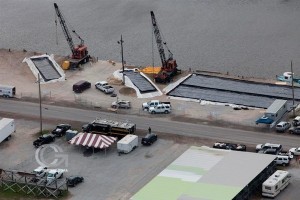
Whale disposal
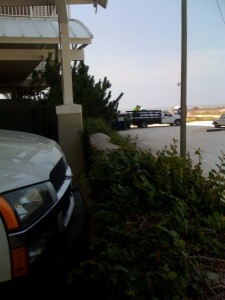
White truck hauling away dead marinelife. Photo by Robyn Hill
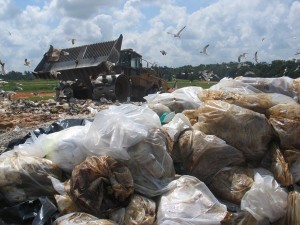
Magnolia landfill during initial cleanup, courtesy of Press-Register, Connie Baggett
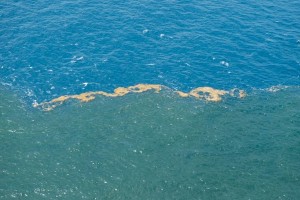
The ocean covered in Corexit is green, and a line of crude being dispersed
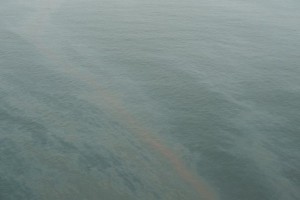
Corexit and a thin line of orangish crude dispersing on the surface
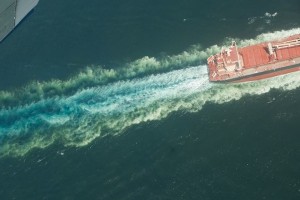
Wake of vessel near the Source through the toxic dispersant Corexit
http://www.huffingtonpost.com/jerry-cope/the-crime-of-the-century_b_662971.html
This is really really horrible. The reality of so loss of marinelife and the awful truth that our gov’t is in cahoots with the perpertrator. DV
by Jerry Cope and Charles Hambleton.Posted: August 4, 2010 11:46 AM
The unprecedented disaster caused by the BP oil spill at the Deepwater Horizon Mississippi Canyon 252 site continues to expand even as National Incident Commander Thad Allen and BP assert that the situation is improving, the blown-out source capped and holding steady, the situation well in hand and cleanup operations are being scaled back. The New York Times declared on the front page this past week that the oil was disolving more rapidly than anticipated. Time magazine reported that environmental anti-advocate Rush Limbaugh had a point when he said the spill was a “leak”. Thad Allen pointed out in a press conference that boats are still skimming on the surface, a futile gesture when the dispersant Corexit is being used to break down oil on the surface. As the oil is broken down, it mixes with the dispersant and flows under or over any booming operations.
To judge from most media coverage, the beaches are open, the fishing restrictions being lifted and the Gulf resorts open for business in a healthy, safe environment. We, along with Pierre LeBlanc, spent the last few weeks along the Gulf coast from Louisiana to Florida, and the reality is distinctly different. The coastal communities of Louisiana, Mississippi, Alabama, and Florida have been inundated by the oil and toxic dispersant Corexit 9500, and the entire region is contaminated. The once pristine white beaches that have been subject to intense cleaning operations now contain the oil/dispersant contamination to an unknown depth. The economic impacts potentially exceed even the devastation of a major hurricane like Katrina, the adverse impacts on health and welfare of human populations are increasing every minute of every day and the long-term effects are potentially life threatening.
Over the Gulf from the Source (official term for the Deepwater Horizon spill site) in to shore there is virtually no sign of life anywhere in the vast areas covered by the dispersed oil and Corexit. This in a region previously abundant with life above and below the ocean’s surface in all its diversity. For months now, scientists and environmental organizations have been asking where all the animals are. The reported numbers of marine animals lost from BP fall far short of the observed loss. The water has a heavy appearance and the slightly iridescent greenish yellow color that extends as far as the eye can see.
On two, unrestricted day-long flights, on July 22nd and 23rd, we were fortunate enough to be on with official clearance. We saw a total of four distressed dolphins and three schools of rays on the surface. As the bottom of the ocean is covered with crude and only the oil on the surface broken up by dispersant, the rays are forced up to the surface in a futile attempt to find food and oxygen. Birds are scarce where one would usually find thousands upon thousands. The Gulf of Mexico from the Source into the shore is a giant kill zone.
Rays near the Source
In May, Mother Nature Network blogger Karl Burkart received a tip from an anonymous fisherman-turned-BP contractor in the form of a distressed text message, describing a near-apocalyptic sight near the location of the sunken Deepwater Horizon — fish, dolphins, rays, squid, whales, and thousands of birds — “as far as the eye can see,” dead and dying. According to his statement, which was later confirmed by another report from an individual working in the Gulf, whale carcasses were being shipped to a highly guarded location where they were processed for disposal.
CitizenGlobal Gulf News Desk received photos that matched the report and are being published on Karl’s blog today. Local fisherman in Alabama report sighting tremendous numbers of dolphins, sharks, and fish moving in towards shore as the initial waves of oil and dispersant approached in June. Many third- and fourth-generation fisherman declared emphatically that they had never seen or heard of any similar event in the past. Scores of animals were fleeing the leading edge of toxic dispersant mixed with oil. Those not either caught in the toxic mixture and killed out at sea, or fortunate enough to be out in safe water beyond the Source, died as the water closed in, and they were left no safe harbor. The numbers of birds, fish, turtles, and mammals killed by the use of Corexit will never be known as the evidence strongly suggests that BP worked with the Coast Guard, the Department of Homeland Security, the FAA, private security contractors, and local law enforcement, all of which cooperated to conceal the operations disposing of the animals from the media and the public.
The majority of the disposal operations were carried out under cover of darkness. The areas along the beaches and coastal Islands where the dead animals were collected were closed off by the U.S. Coast Guard. On shore, private contractors and local law enforcement officials kept off limits the areas where the remains of the dead animals were dumped, mainly at the Magnolia Springs landfill by Waste Management where armed guards controlled access. The nearby weigh station where the Waste Management trucks passed through with their cargoes was also restricted by at least one sheriff’s deputies in a patrol car, 24/7.
Robyn Hill, who was Beach Ambassador for the City of Gulf Shores until she became so ill she collapsed on the job one morning, was at a residential condominium property adjacent to the Gulf Shores beach when she smelled an overwhelming stench. She went to see where the odor was coming from and witnessed two contract workers dumping plastic bags full of dead birds and fish in a residential Waste Management dumpster, which was then protected by a security guard. Within five minutes, a Waste Management collection truck emptied the contents and the guard departed.
The oceans are empty, the skies tinged yellow by evaporating oil and toxic dispersant devoid of birds, dogs mysteriously have no fleas, and in an area usually besieged by mosquitoes, there is little need for repellent, and the usual trucks spraying are nowhere to be seen.
Shell Beach, in Hopedale, Louisiana, was one of the sites where carcasses of sperm whales were suspected of being destroyed. The operational end of the island was closed to unauthorized personnel and the airspace closed. The U.S. Coast Guard closed off all access from the Gulf. This picture shows the area as it was prepped to receive what were suspected to be whale carcasses for disposal.
Riki Ott, PhD, has been in the region for the past three months. A veteran of the Exxon Valdez spill and renowned marine toxicologist, Ott has documented numerous accounts of the devastating results from BP and the government’s use of Corexit in the gulf. We spoke at length last week:
JC: There has been a great deal of discussion about the disappearance of the animals and the life in the ocean which seem to have vanished since this incident has occurred. What do you know about this?
RO: Well I have been down in the Gulf since May 3rd. It’s pretty consistent what I have heard. First I heard from the offshore workers and the boat captains that were coming in and they would see windrows of dead things piled up on the barrier islands; turtles and birds and dolphins… whales…
JC: Whales?
RO: And whales. There would be stories from boat captains of offshore, we started calling death gyres, where the rips all the different currents sweep the oceans surface, that would be the collection points for hundreds of dolphins and sea turtles and birds and even whales floating. So we got four different times latitudes/longitude coordinates where (this was happening) but by the time we got to these lat/longs which is always a couple of days later there was nothing there. There was boom put around these areas to collect the animals and we know this happened at Exxon Valdez too. The rips are where the dead things collect. We also know from Exxon Valdez that only 1% in our case of the carcasses that floated off to sea actually made landfall in the Gulf of Alaska. I don’t believe there have been any carcass drift studies down here that would give us some indication that when something does wash up on the beach what percentage it is of the whole. But we know that offshore there was an attempt by BP and the government to keep the animals from coming onshore in great numbers. The excuse was this was a health problem — we don’t want to create a health hazard. That would only be a good excuse if they kept tallies of all the numbers because all the numbers – all the animals – are evidence for federal court. We the people own these animals and they become evidence for damages to charge for BP. In Exxon Valdez the carcasses were kept under triple lock and key security until the natural resource damage assessment study was completed and that was 2 1/2 years after the spill. Then all the animals were burned but not until then.
So people offshore were reporting this first and then carcasses started making it onshore. Then I started hearing from people in Alabama a lot and the western half of Florida – a little bit in Mississippi – but mostly what was going on then there was an attempt to keep people off the beaches, cameras off the beaches. I was literally flying in a plane and the FAA boundary changed. It was offshore first with the barrier islands and all of a sudden it just hopped right to shore to Alabama that’s where we were flying over and the pilot was just like – he couldn’t believe it – he was like look at that and I didn’t know what he was looking but then he points at the little red line which had all of sudden grown and he just looked at me and said the only reason that they have done this is so people can’t see what is going on. And what that little red line meant was no cameras on shore and three days later the oil came onshore and the carcasses came onshore into Alabama.
WATCH Jerry’s interview with Ott:
JC: That immediately preceded the first wave coming onshore?
RO: Pretty much. That preceded the first wave. It was June 2nd when the line changed and the FAA boundaries increased. Then people would — I mean you walk beaches here at night it’s hot so people walk beaches — and they would see carcasses like sea turtles, a bird, a little baby dolphin, and immediately they would go over to it and immediately people would approach them, don’t touch that if you touch it you will be arrested and within fifteen minutes there would be a white unmarked van that would just come out of nowhere and in would go the carcass and off it would go.
They were white unmarked vans at first. We’ve since heard many other stories from truckers who are trucking carcasses in refrigerated vans to Mexico. Carcasses are just not showing up where they need to which is as body counts for essentially this war on the gulf.
JC: It sounds like the federal government and agencies that have been involved in this one way or another are working on behalf of BP and not the American people.
RO: What’s going on on the beaches where people can at least get glimpses of what’s happening — I mean I’ve talked to people who have seen boats coming in towing dolphin carcasses and the boats have jockeyed to try to prevent the person with the camera from getting a picture. I’ve had people tell me they were walking the beach actually trying to deploy boom but along comes a BP rep and the Coast Guard in a boat, and the Coast Guard guy yells at the people to stop deploying — particularly if it was alternative boom — and then he goes away and comes back a few minutes later without the BP person and apologizes for behaving that way but he had to because there was a BP person on board.
JC: A Coast Guard official?
RO: A Coast Guard official apologized for his behavior because he had to a since BP person was on board. So it’s pretty clear to the American, the people in the Gulf, that somehow it’s turned not into our country anymore. That’s the question. People are just stunned. We thought this was America. We didn’t think we had to know exactly what our rights were, we just though we all lived them. Suddenly they’re finding that unless they can site chapter and verse they are getting intimidated and backing down from these encounters with BP and/or the Coast Guard.
Drew Wheelan, with the American Birding Association, was on Grand Isle on the first of June. Drew said:
There were definitely dead birds washing up on the beach at that point. General contractors, not Fish and Wildlife officials, I contacted them and they said they were not conducting operations at that time. These contractors were cruising the high tide. On at least three occasions I saw these gators, 4-seat ATVs, going along the beach with hand-held spotlights looking for dead animals in the middle of the night. When I spoke with Felix Lopez at the US Fish and Wildlife Service, he told me they knew they were disappearing birds.
Dead Northern Gannet, reported but uncollected. Photo by Drew Wheelan
Karen Harvey is a local who regularly walks the beaches along the Alabama Gulf shore.
JC: In the course of walking the beaches since this incident happened, how many dead animals, birds did you find?
KH: Before they got the hazmat crews trained and before official people showed up with their vans I was finding — within a seven-mile stretch — and that’s not a very long beach area, I was finding at least two turtles a day, mostly Ridleys. There was one logger head that was very large. My daughter’s friends would call me and say, Miss Karen there’s a turtle on the beach, you should come down and take a picture. People were aware they were dying, but we were being told that they were possibly hit by a fishing boat or pulled up with fish from the fishing boats but after the fishing boats were completely stopped the turtles were still on the beach. Now the beach is immaculate, no crabs, no birds — nothing.
JC: Why do you think that is?
KH: Dispersant. It’s the dispersant. And also when you clean a beach the way they clean our beach with — I mean our beach never looked this pristine as far as junk and so forth — when you clean a beach like that, you take away all the things that birds eat, and we did have some big fish kill areas where bunches of little tiny fish and so forth would wash up. And it makes you wonder.
JC: When was that?
KH: The last one as probably about a month ago.
JC: When you say a lot, quantify that.
KH: Thousands of little tiny fish, but they were cleaning the beach so they just cleaned the beach up, the hazmat workers.
WATCH Jerry’s interview with Harvey:
The reason BP has gone to such great lengths to hide the devastation caused by the irresponsible drilling operations and blow out at Mississippi Canyon 252 is financial. Every death that results from the oil spill has a cash value, whether animal or human. Images of dead animals are difficult to spin in the media, and they resonate across all demographics. BP also has a strong interest in maintaining a business-as-usual model for the beach resort communities along the Gulf Coast that have been economically devastated and lost the majority of their annual revenue during the summer season of 2010. The only sharks circling the Gulf waters now are based on land.
Coming Soon; Part II. Corexit and Human Health.
Follow Jerry Cope on Twitter: www.twitter.com/jercope