Climate Progress: House To Vote On Bill That Would Impose $5,000 Fee For Protesting Drilling Projects

http://thinkprogress.org/climate/2013/11/18/2962431/house-vote-protesting-drilling-projects/

BY EMILY ATKIN ON NOVEMBER 18, 2013 AT 3:05 PM

The House is likely to vote on a number of GOP bills this week related to the oil and gas industry, arguably the most sweeping of which is the Federal Lands Jobs and Energy Security Act.

The bill, introduced by Rep. Doug Lamborn (R-CO), is broad legislation designed to make it much easier for oil and gas companies to obtain permission to drill on public lands. If signed into law, the legislation would automatically approve onshore drilling permits if the U.S. Department of Interior (DOI) failed to act on them in 60 days.

If an individual does not like a proposed drilling project and wanted to oppose it, he or she would have to pay a $5,000 fee to file an official protest.

In addition, Lamborn’s proposed bill would direct the DOI to begin commercial leasing for the development of oil shale, a controversial type of production that has been largely banned by the United States since President Herbert Hoover prohibited the leasing of federal lands for oil shale. Oil shale – which should not be confused with the more common “shale oil” – is a type of rock that needs to be heated to nearly 1,000 degrees Fahrenheit to produce crude oil, which then has to be refined.

Jessica Goad, research manager of the Center for American Progress’ Public Lands Project has said the process of producing oil shale “takes a large amount of energy and money, as well as 3-5 barrels of water per barrel of oil produced, a dangerous issue in the parched West.” The Natural Resources Defense Council calls it “the dirtiest fuel on the planet.”

Nonetheless, the largest deposits of oil shale in the world are in the United States in Colorado, Utah, and Wyoming – 70 percent of which is on land owned by the federal government. Under Lamborn’s bill, the government would be required to offer 10 leases on federal lands in 2014 for oil shale research and demonstration projects. And before 2016, the government must hold at least 5 commercial lease sales of federal lands for oil shale development, each no less than 25,000 acres.

The oil produced from the oil shale could provide the United States with energy for the next 200 years, the bill says, and create an estimated 350,000 jobs. But according to the NRDC, oil shale production would emit four times more carbon pollution than producing conventional gasoline, credited to the amount of energy it takes to get hydrocarbons out of the rock.

“This bill is not simply anachronistic; it is dangerous,” a group of Democratic Representatives said in their dissent of the bill. “It would harm the environment, short-circuit critical reviews, and establish barriers to people wishing to challenge decisions on oil and gas development in their backyards.”

The entire bill, along with amendment votes and dissents, can be read here.

Special thanks to Richard Charter

WWLTV: Black Elk, contractors issued 41 violations following report & Forbes: Fail, Fine, Repeat: Business As Usual For Some Offshore Drillers

http://www.wwltv.com/news/eyewitness/davidhammer/Black-Elk-issued-41-violations-following-report-231808061.html
black elk

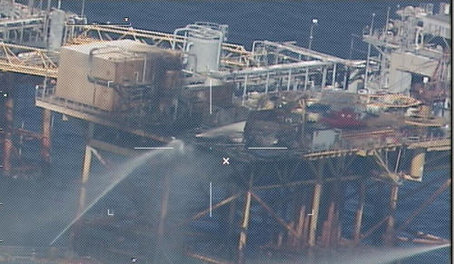
GULF OF MEXICO – Commercial vessels spray water to extinguish a platform fire on board West Delta 32 approximately 20 miles offshore Grand Isle, La., in the Gulf of Mexico. First responders medevaced nine of the platform’s 22 personnel to nearby rigs. U.S. Coast Guard photo.

wwltv.com
Posted on November 13, 2013 at 4:34 PM
Updated yesterday at 6:00 PM

David Hammer / Eyewitness News
Email: dhammer@wwltv.com | Twitter: @davidhammerWWL

PLAQUEMINES, La. — Following up on a damning investigation report last week, federal offshore regulators issued 41 formal violations against Black Elk Energy and its contractors for their role in causing an explosion last year that killed three welders on a platform off Plaquemines Parish.

Three Filipino nationals – Ellroy Corporal, Jerome Malagapo and Avelino Tajonera – were killed by the explosion on Black Elk’s West Delta 32 E Platform on Nov. 16, 2012. The federal Bureau of Safety and Environmental Enforcement issued its investigation report Nov. 4, finding that Black Elk and contractors Compass Engineering and Consultants, Grand Isle Shipyards/DNR and Wood Group PSN failed to follow their own basic safety plans.

The investigation concluded that Black Elk failed in its supervisory role and its contractors communicated poorly about whether flammable gas had been properly purged from tanks and pipes before the workers started cutting with blow torches.

The report states that Wood Group’s supervisor left a lower-level employee without proper training to sign and approve a welding permit to cover the entire platform, rather than each welding location as rules require. Then, that employee turned the job over to a Grand Isle Shipyards supervisor based on a faulty understanding from a Compass consultant that all areas had been purged and were ready for hot work.

In fact, nobody had cleared the areas for hot work. The report describes how gas detectors that were supposed to be used to check the hot-work areas were not functioning properly and were left in their charging stations, but when workers complained, their Grand Isle supervisor told workers not to forget about it.

“According to the DNR workers, the GIS/DNR supervisor instructed the construction workers to hang the non-functioning gas detector up like a ‘decoration’ so everyone could at least see that they had one,” the report says.

The most serious violations still were issued to Black Elk, which is the lease-holder and ultimately responsible. Black Elk got 12 violations, or Incidents of Non-Compliance. Wood Group received 11 INCs and Compass and Grand Isle Shipyards got nine each.

________________

http://www.forbes.com/sites/lorensteffy/2013/11/14/fail-fine-repeat-business-as-usual-for-some-offshore-drillers/

Forbes

ENERGY | 11/14/2013 @ 9:53AM |456 views
Fail, Fine, Repeat: Business As Usual For Some Offshore Drillers
300px-Deepwater_Horizon_offshore_drilling_unit_on_fire_20101
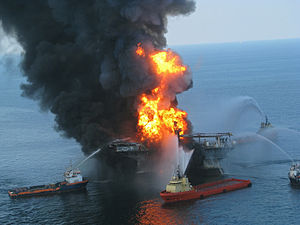
In the Gulf, an operator’s safety track record doesn’t seem to matter (Photo credit: Wikipedia)

Every oil company operating in the Gulf of Mexico must be terrified today after the harsh crackdown on Black Elk Energy by federal regulators. The feds hit the Houston-based offshore oil producer and three of its contractors with 41 citations related to a rig explosion last year that killed three workers. The companies could face – that’s right could face – civil penalties. Don’t worry, though, Black Elk and its contractors have 60 days to appeal the citations for “incidents of noncompliance.” Such fines often are negotiated down.

Black Elk has plenty of experience dealing with these types of citations. While 41 may seem like a lot, at the time of last year’s fatal accident, Black Elk already had been cited 315 times in the previous two years for rules violations and risky procedures. As recently as one month before that accident, regulators found that Black Elk “showed a disregard for the safety of personnel” in another accident that sent six workers to the hospital.

In addition to Black Elk, the latest round of citations included its contractors, Grand Isle Shipyard of Galliano, La., which employed the workers who were killed, Compass Engineering & Consultants of Lafayette, La., and Wood Group PSN of Aberdeen, Scotland.

The Bureau of Safety and Environmental Enforcement found that the contractors didn’t clear pipes of flammable hydrocarbons before they began welding. As the operator, though, Black Elk is responsible for the overall safety on its rigs, and BSEE found that Black Elk’s safety procedures were lacking. One regulator described Black Elk as having “the antithesis of the type of safety culture that should guide decision-making” in offshore operations. The feds also told Black Elk to come up with a safety plan.

Shortly after the accident, Black Elk chief executive John Hoffman told me that BSEE’s investigation would vindicate his company and “shed light where it needs to be.” Clearly, he was wrong about the first part, but the BSEE investigation certainly sheds light on one of the dark realities of offshore safety – lax accountability. Federal regulators largely ignore the role of recidivism in safety violations. For all the talk of creating a “safety culture” the only consequences for not having one is being told to get one and, perhaps, some civil fines.

Even for small companies like Black Elk, the size of those fines is minimal. In 2011, for example, the average fine levied by BSEE for offshore safety violations was about $62,000. Black Elk, by comparison, had a fine last year that topped $307,000 after an inspection found a gas leak on one of its platforms that the company didn’t fix for more than 100 days. Black Elk has had three more civil penalties so far this year totaling more than $250,000.

The citations pile up like traffic tickets on the windshield of an abandoned car while lives continue to be lost.

Nuisance fines allow lax safety to persist in the Gulf because operators can engage in their usual tactics of denial – blaming contractors and complaining about burdensome regulations. What we have seen, though, both in shallow water operations like Black Elk’s, and deepwater disasters like BP’s Deepwater Horizon accident in 2010, is a steadfast refusal of regulators to consider an operator’s safety track record in allowing them continued access to the Gulf. That’s the one thing they care about most.

Until there’s stiffer consequences for major safety violations, business as usual will continue in the Gulf: fail, fine, repeat.

Special thanks to Richard Charter

Greenpeace: Absolute must-read from the Philippines

Greenpeace

As I was watching the tragic scenes of destruction from the Philippines and wondering how I could help, I received this email from the Executive Director of Greenpeace Southeast Asia, Von Hernandez.

It was such powerful reminder of why we do what we do that I asked if I could share it with you. He agreed.

Sincerely,

Phil Radford
Greenpeace USA Executive Director

P.S. For more on the aftermath of Typhoon Haiyan in the Philippines, visit our blog.

———-

From: Von Hernandez, Greenpeace Southeast Asia Executive Director
To: Phil Radford, Greenpeace USA Executive Director
Subject: Philippine Climate Disaster update

Dear friends,

Destruction in the Philippines

Click here for more on the aftermath of Typhoon Haiyan in the Philippines.

It is impossible to put into words the despair that millions of Filipinos are going through right now.

Days after Haiyan (Yolanda) sliced through the central islands of the Philippines, it has become horrifyingly clear that the damage wrought by the super typhoon has been colossal, the devastation absolute.

As of this writing, almost a thousand people have been officially confirmed to have lost their lives. The number of dead, however, is expected to exceed 10,000 — as more reports continue to filter in from other cities, islands and villages that were flattened by the apocalyptic winds and enormous walls of sea water that came rushing ashore.

More than 10 million people are estimated to have been displaced by this single event. Hunger, sickness and despair now stalk the most hard hit of areas, even as aid from both local and international sources started to trickle in. The President has already declared a state of national calamity.

It will probably take a few more days, maybe weeks before the total extent of this disaster can be confirmed. But for sure, this is now considered the worst natural calamity that the country has ever experienced.

While storms and typhoons are indeed natural occurrences, the ferocious strength and destructive power delivered by this typhoon have been characterized as off the charts and beyond normal.

This is also not the first time.

Last year, there was Bopha, which resulted in more than 600 fatalities, and before that a number of other weather aberrations too freakish even for a nation that has grown accustomed to getting more than 20 of these howlers in any given year. As if on cue, and following the template of Bopha in Doha, Haiyan also came at a time when the climate COP is taking place, this time in Warsaw.

Some of you would have already heard about the emotional opening speech delivered by the head of the Philippine delegation at the climate summit yesterday, bewailing the absence of responsible climate action at the global level and refusing to accept that the fate of Filipinos may now be irretrievably linked to a future where people are served super typhoons for breakfast, lunch and dinner.

Once again, a disaster such as this one, underscores the urgency of the work we do as a global organization on climate change.

It is in fearful anticipation of tragic scenarios such as these why our staff and activists go through great lengths, putting their life and liberty at risk, to take action at the frontlines of climate destruction — whether that’s in the forests of Sumatra or the hostile waters of the Arctic.

I would like to believe this is part of the larger narrative why 30 of our colleagues remain in detention in Russia. And it is our hope that they find courage and inspiration to endure the injustice they are going through, moving the planet away from the clear and present danger posed by runaway climate change.

We thank you all for the messages of solidarity and support you have sent our way at this time.

More importantly, I would urge you to use this moment to remind your governments that every investment in fossil fuels is an investment in death and destruction.

The impact of new coal plants being built or new oil fields being developed — do not remain in their immediate vicinities — they translate into epic humanitarian disasters and tragedies, as we continue to witness in the Philippines.

Regards,

Von Hernandez
Greenpeace Southeast Asia Executive

Chron.com: Study: Tar balls found in Gulf teeming with ‘flesh-eating’ bacteria

http://www.chron.com/

By Carol Christian | November 12, 2013 | Updated: November 12, 2013 4:31pm

Half-dollar size tar balls found washed ashore, Monday, May 20, 2013, at Bermuda Beach. Small, thick, wet oil masses were also visible in the seaweed over a roughly 2.5-mile span. (AP Photo/The Galveston County Daily News, Chris Paschenko)

The number of people contracting the warm-water bacteria that can cause illnesses ranging from tummy upsets to potentially fatal skin lesions has increased in recent years, according to federal data. Records kept by the U.S. Centers for Disease Control and Prevention show that the number of cases of Vibriosis nearly doubled between 2008 and 2012 – rising from 588 to 1,111. Vibriosis includes “Vibrio vulnificus,” the bacteria commonly dubbed “flesh-eating.” It’s rare but tends to be underreported, the CDC says on its website.

The CDC data on vibriosis includes all vibrio species except cholera, so it’s unclear how much of the increase in the past five years is due to infection by the flesh-eating bacteria that can cause death. One researcher who studies Vibrio vulnificus found it highly concentrated in tar balls that appeared along the Gulf Coast after the 2010 BP Deepwater Horizon oil spill. Covadonga Arias, a professor of microbial genomics at Auburn University in Alabama, found that Vibrio vulnificus was 10 times higher in tar balls than in sand and up to 10 times higher than in seawater.

Her research, conducted with colleagues Zhen Tao and Stephen Bullard, was published Nov. 23, 2011, in EcoHealth. It marked the first analysis of bacteria found on the large amounts of “weathered oil” (such as tar balls) from the BP Deepwater Horizon spill that ended up on the shoreline, the researchers said. For the study, samples of sand, seawater and tar balls were collected from July through October, 2010, from a beach in Alabama and two beaches in Mississippi. The authors said their findings have epidemological relevance since many people have stepped on tar balls or picked them up on the beach.

However, in a June 2012 letter to BP, Dr. Thomas Miller, the deputy director for medical affairs at the Alabama Department of Public Health stated, “There is no epidemiological evidence to indicate increased rates of Vv (Vibriosis vulnificus) infections. Analysis of current and previous years’ Vv case numbers indicates there is no increase in the number of cases for years 2010 – 2012.”

BP spokesman Jason Ryan said in an emailed statement: “The Auburn study does not support a conclusion that tar balls may represent a new or important route of human exposure for Vibrio infection, or that the detection of Vibrio in tar balls would impact the overall public health risk, since there are other far more common sources of Vibrio, such as seawater and oysters.
“This is a naturally occurring bacteria found in the Gulf of Mexico. Neither the Alabama Department of Health nor the Centers for Disease Control have reported any significant increase in cases in the last three years and no individual case of vibrio infection has been linked to tar ball exposure.”

While there is no proof that tar balls can infect humans, Arias said it’s a concern because the bacteria concentration is so high in the samples her team studied. “At a concentration as high as 1 million Vibrio vulnificus cells/g (per gram) of tar ball, I think the potential risk is there,” she said by email. Concentrations in oysters and seawater are typically much lower, she said. To prove that tar balls can infect humans will require more study, which takes a lot of money, she said.

Houma Today: Coast Guard suspends search for missing oilfield worker

http://www.houmatoday.com/article/20131111/HURBLOG/131119990

John Harper
Staff Writer
Published: Monday, November 11, 2013 at 8:04 a.m.
The U.S. Coast Guard said Monday it has suspended the search for a crewman missing from an offshore oilfield supply boat in the Gulf of Mexico pending further developments. During its three-day effort, the Coast Guard conducted 12 separate search missions, covering 2,734 square nautical miles of sea without finding the missing man.

The Coast Guard said it had deployed numerous cutters, helicopters and a C-130 aircraft to search for the crewman who fell overboard from the Dustin Danos, which is operated by Raceland-based Gulf Offshore Logistics. The man went overboard Saturday in the Gulf, 60 miles southwest of Port Fourchon. The man, who has not been identified, was last seen wearing gray long johns and a white T-shirt. Gulf Offshore Logistics did not returned requests for comment Monday. This was the second case of an oilfield worker falling into the Gulf in the past two weeks.

On Oct. 28, divers recovered the body of Peter Voces, 38, a Filipino national who worked for Offshore Specialty Fabricators in Houma. He fell off a platform in Vermilion Lease Block 200, about 75 miles southeast of Lake Charles, the day before. An official of Houston-based Talos Energy told officials with the Philippine Embassy in Washington that Voces was a member of a derrick barge crew that was contracted by its subsidiary, Energy Resource Technology, to dismantle the platform. The wells serving the platform had all been plugged and abandoned since 2012, and no oil was spilled in the accident, the Coast Guard said.
Voces was knocked off the platform by an empty storage tank that fell with him into the water, about 100 feet deep, embassy officials said. They were informed by the Coast Guard that divers found Voces’ body pinned amid the wreckage beneath the platform.

Special thanks to Richard Charter

"Be the change you want to see in the world." Mahatma Gandhi