Common Dreams: Humanity Wholly Unprepared for Abrupt Climate Impacts, Warns NAS Report

http://www.commondreams.org/headline/2013/12/04-1

Published on Wednesday, December 4, 2013 by climatechange

‘The pace of change is orders of magnitude higher than what species have experienced in the last tens of millions of years.’
– Jon Queally, staff writer

washed-out-bridge-sept-21-2009-apress

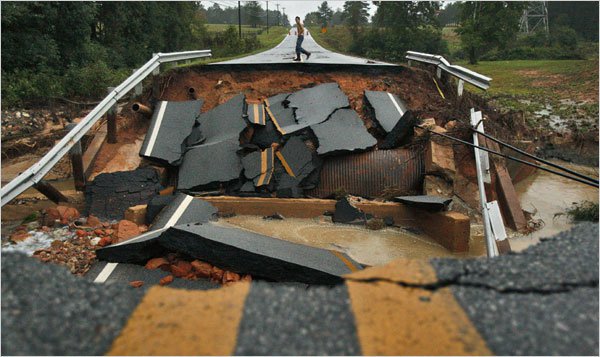
A washed out bridge is shown Monday, Sept. 21, 2009 in Douglasville, Ga. Heavy rain caused flooding in and around the Atlanta area. (AP Photo/John Bazemore)Hang on. Get Ready.

Those are at least two of the takeaways from a new report released by scientists in the National Academy of Sciences on Tuesday which says the sudden impacts of climate change this century and beyond are inevitable but warn that far too little has been done to prepare for them.

“If you think about gradual change, you can see where the road is and where you’re going. With abrupt changes and effects, the road suddenly drops out from under you.” –Prof. Tony Barnosky

The report, Abrupt Impacts of Climate Change, looks at the issue of abrupt changes in climate, weather patterns, and the impacts that can occur in a matter of years or decades, not the lengthier scenarios that climate scientists sometimes focus on. (The full report can be read online here).

“The most challenging changes are the abrupt ones,” said James White, professor of geological sciences at the University of Colorado in Boulder and chair of the report committee, at a press conference on Tuesday.

“The planet is going to be warmer than most species living on Earth today have seen it, including humans,” added Tony Barnosky, a professor in the Department of Integrative Biology at the University of California, Berkeley. “The pace of change is orders of magnitude higher than what species have experienced in the last tens of millions of years.”

As journalist Kate Sheppard reports:

Other, more gradually occurring changes can still have abrupt impacts on the ecosystem and human systems, such as the loss of fisheries or shifts in where certain crops can be cultivated. Rapid loss of ice, for example, would mean that sea levels rise at a much faster rate than the current trend, which would have a significant effect on coastal regions. A 3-foot rise in the seas is easier to prepare for if it happens on a 100-year horizon than if it happens within 30 years.

“If you think about gradual change, you can see where the road is and where you’re going,” said Barnosky. “With abrupt changes and effects, the road suddenly drops out from under you.”

These abrupt impacts, according to the report, have “the potential to severely affect the physical climate system, natural systems, or human systems.” Additionally, it is the way that these system changes are interconnected that the report focuses on.

“The reality is that the climate is changing,” said James W. C. White, a paleoclimatologist at the University of Colorado Boulder, who also contributed to the report. “It’s going to continue to happen, and it’s going to be part of everyday life for centuries to come — perhaps longer than that.”

As the New York Times reports, the report’s authors specifically warn of the “possible collapse of polar sea ice, the potential for a mass extinction of plant and animal life and the threat of immense dead zones in the ocean.”

Among its key recommendations, the scientific panel said that better early warning systems should be put in place to monitor geographic areas or essential natural systems. According to the report summary:

Because of the substantial risks to society and nature posed by abrupt changes, this report recommends the development of an Abrupt Change Early Warning System that would allow for the prediction and possible mitigation of such changes before their societal impacts are severe. Identifying key vulnerabilities can help guide efforts to increase resiliency and avoid large damages from abrupt change in the climate system, or in abrupt impacts of gradual changes in the climate system, and facilitate more informed decisions on the proper balance between mitigation and adaptation.

Although there is still much to learn about abrupt climate change and abrupt climate impacts, to willfully ignore the threat of abrupt change could lead to more costs, loss of life, suffering, and environmental degradation. Abrupt Impacts of Climate Change makes the case that the time is here to be serious about the threat of tipping points so as to better anticipate and prepare ourselves for the inevitable surprises.

And the Times adds:

The document the panel released Tuesday is the latest in a string of reports to consider whether some changes could occur so suddenly as to produce profound social or environmental stress, even collapse. Like previous reports, the new one considers many potential possibilities and dismisses most of them as unlikely — at least in the near term.

But some of the risks are real, the panel found, and in several cases have happened already.

It cited the outbreak of mountain pine beetles in the American West and in Canada. The disappearance of bitterly cold winter nights that used to kill off the beetles has allowed them to ravage tens of millions of acres of forests, damage so severe it can be seen from space.

Likewise, a drastic decline of summer sea ice in the Arctic has occurred much faster than scientists expected. The panel warned that Arctic sea ice could disappear in the summer within several decades, with severe impacts on wildlife and human communities in the region, and unknown effects on the world’s weather patterns.

Among the greatest risks in coming years, the panel said, is that climate change could greatly increase the extinction rate of plants and animals, essentially provoking the sixth mass extinction in the earth’s history. The panel said many of the world’s coral reefs, a vital source of fish that feed millions of people, already seemed fated to die within decades.

____________________________________________

Marine Link: BOEM Proposes Eastern Gulf of Mexico Lease Sale

http://www.marinelink.com/news/proposes-eastern-mexico361653.aspx

Posted by Eric Haun
Wednesday, December 04, 2013, 9:29 AM
As part of President Obama’s all-of-the-above energy strategy to continue to expand safe and responsible domestic energy production, the Bureau of Ocean Energy Management (BOEM) today announced that it will hold Gulf of Mexico Eastern Planning Area oil and gas lease sale 225 in New Orleans on March 19, 2014, immediately following the proposed Central Planning Area (CPA) Sale 231.

Proposed Sale 225 is the first lease sale proposed for the Eastern Planning Area under the 2012 – 2017 Outer Continental Shelf Oil and Natural Gas Leasing Program, and the first sale offering acreage in that area since Sale 224, held in March of 2008.

“This proposed sale is another important step to promote responsible domestic energy production through the safe, environmentally sound exploration and development of the Nation’s offshore energy resources,” said BOEM Director Tommy Beaudreau.

The proposed sale encompasses 134 whole or partial unleased blocks covering approximately 465,200 acres in the Eastern Planning Area. The blocks are located at least 125 statute miles offshore in water depths ranging from 2,657 feet (810 meters) to 10,213 feet (3,113 meters). The area is bordered by the Central Planning Area boundary on the West and the Military Mission Line (86º 41’W) on the East. It is south of eastern Alabama and western Florida; the nearest point of land is 125 miles northwest in Louisiana.

Of the 134 blocks available in this sale, 93 are located in the same area offered in 2008’s Eastern Planning Area Sale 224 and are subject to revenue sharing under the Gulf of Mexico Energy Security Act of 2006 (GOMESA), which provides that the states of Alabama, Mississippi, Louisiana and Texas share in 37.5% of the bonus payments. These four Gulf producing states will also share in 37.5% of all future revenues generated from those leases. Additionally, 12.5% of revenues from those leases are allocated to the Land and Water Conservation Fund. The remaining 41 blocks, located just south of that area, are not subject to revenue sharing under GOMESA.

BOEM estimates the proposed lease sale could result in the production of 71 million barrels of oil and 162 billion cubic feet of natural gas.

The decision to move forward with plans for this lease sale follows extensive environmental analysis, public comment, and consideration of the best scientific information available. In October, BOEM published a Final Environmental Impact Statement (EIS) for proposed Eastern Planning Area Sales 225 and 226. The Final EIS updated information gathered in three previous EIS’s. EPA Sale 226, scheduled for 2016, is the only other Eastern Gulf of Mexico lease sale proposed under the current Five Year Program.

The proposed terms of this sale include conditions to ensure both orderly resource development and protection of the human, marine and coastal environments. These include stipulations to protect biologically sensitive resources, mitigate potential adverse effects on protected species, and avoid potential conflicts associated with oil and gas development in the region.

All proposed terms and conditions for Lease Sale 225 will be finalized when the Final Notice of Sale is published at least 30 days prior to the Sale.

The Notice of Availability of the Proposed Notice of Sale can be viewed today in the Federal Register at: www.archives.gov/federal-register/public-inspection/index.html. Proposed terms and conditions for the sale are fully explained in a new streamlined format, available at: www.boem.gov/Sale-225/.
CD’s of the sale package as well as hard copies of the maps can be requested from the Gulf of Mexico Region’s Public Information Office at 1201 Elmwood Park Boulevard, New Orleans, LA 70123, or at 800-200-GULF (4853).

The Gulf of Mexico contributes about 25% of U.S. domestic oil and 11% of domestic gas production, providing the bulk of the $14.2 billion in mineral revenue disbursed to Federal, state and American Indian accounts from onshore and offshore energy revenue collections in Fiscal Year 2013. That was a 17% increase over FY 2012 disbursements of $12.15 billion, due primarily to $2.77 billion in bonus bids received for new oil and gas leases in the Gulf of Mexico
The 2012-2017 Five Year Program offers nearly 219 million acres on the U.S. Outer Continental Shelf for lease, making all areas of the OCS with the highest oil and gas resource potential available for exploration and development. The plan includes up to 15 lease sales in the Gulf of Mexico and Alaska. The first three sales under the Five Year Program offered more than 79 million acres for development and garnered $1.4 billion in high bids.

boem.gov

ENN: Massachusetts Legislature moves on fracking moratorium

http://www.enn.com/top_stories/article/46741

Environmental News Network

Published December 1, 2013 09:16 AM

The Massachusetts Legislature’s Joint Committee on Environment, Natural Resources and Agriculture has approved a 10-year moratorium on hydraulic fracturing – better known as fracking. The committee’s approval of a bill introduced by Reps. Peter Kocot, D-Northampton, and Denise Provost, D-Somerville, came after Environment Massachusetts and its allies presented the committee with documented cases of water contamination, illness and other damage from fracking operations elsewhere.

“From Pennsylvania to Colorado, fracking has contaminated water, threatened residents’ health and turned rural landscapes into industrial zones” said Ben Hellerstein, field associate for Environment Massachusetts. “Thanks to the leadership of Chairs Anne Gobi and Mark Pacheco, we are now one step closer to protecting the Pioneer Valley from dirty drilling.”

Concern over fracking in the Bay State has been growing since last year, when an industry-affiliated organization met with landowners in western Massachusetts to discuss the prospects for fracking there. Moreover, as New York mulls over large-scale fracking, drilling operators could soon view western Massachusetts as a convenient dumping ground for toxic fracking wastewater.

“All you have to do is look at the overlap of shale and water resources in the Pioneer Valley, and you know we cannot allow fracking – or its toxic waste – to come to Massachusetts,” Provost said.

“Our state government must do everything it can to protect our drinking water supplies,” Kocot said. “This bill will help to ensure that the health and prosperity of our communities is maintained.”

Special thanks to Richard Charter

Public Herald: New Aerial Video of Alabama Oil Spill Questions Cleanup

amazing moonscape video at:
http://www.publicherald.org/archives/18602/investigative-reports/energy-investigations/oil-2/

Shared by Melissa Troutman on December 2, 2013
http://www.publicherald.org/archives/18602/investigative-reports/energy-investigations/oil-2/

Every year, we hear about the latest oil spills, pipeline explosions and pollution but we rarely see how people and environment are impacted over time. Public Herald is embarking on a new series to investigate the environmental legacy of fossil fuel in America and solutions for cleaning it up. We begin in Aliceville, Alabama.

Ongoing efforts to clean up an Alabama oil spill are under scrutiny after a train carrying 2.7 million gallons of North Dakota Bakken crude oil exploded, spilling into wetlands just outside the town of Aliceville. Photojournalist John Wathen captured video of cleanup efforts one week after the November 7th derailment, and the footage prompts questions about the efficacy of methods being used.
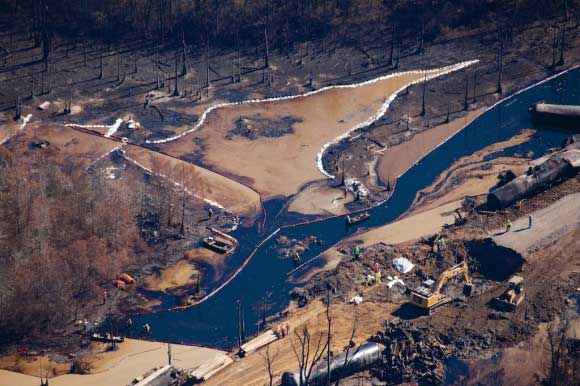
oil wreck
Train carrying crude oil from North Dakota wrecks and spills into wetlands near Aliceville, Alabama. Photo: John Wathen.

Wathen wasn’t the only citizen responder in Aliceville. He was joined by Scott Smith, who’s visited major oil spills across the globe to deploy his biodegradable technology, OPFLEX, that can absorb oil and other toxins from polluted water. Wathen and Smith tried to reach the wetland to assess the damage and help stop the oil from moving downstream. But they no sooner were turned away by railroad personnel and threatened with the FBI. Railroad spokesperson Michael Williams wouldn’t confirm or deny the FBI’s involvement and redirected Public Herald to the Bureau.

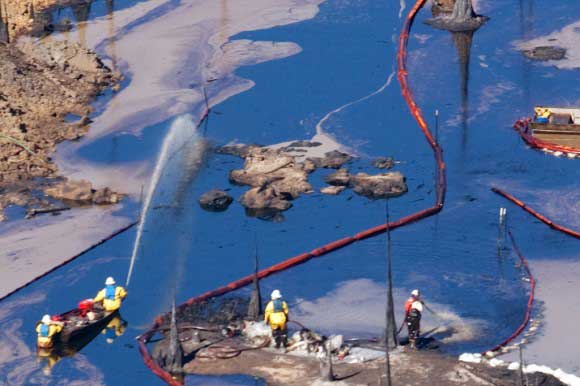
The footage captured by Wathen shows clean up workers spraying what appears to be water into the oil spill.

After seeing Wathen’s footage, Smith wrote to the railroad company, Genesee & Wyoming, to express his concerns about the methods being used to clean up the spill:vvIt appears from the photos sent to me that water is being used to spray down the oil in the wetlands surrounding Aliceville, AL. There are much better options to remove the oil and help prevent further damage to the wetlands. If it rains anytime soon, there is little doubt that the oil in the water will spread downstream and things can be done now to prevent this.

Smith believes his own technology may be one better way. After the 2010 Deepwater Horizon disaster in the Gulf of Mexico, Smith sold BP over 2 million square feet of OPFLEX for cleanup. OPFLEX is an open-celled, sponge-like material modeled after the human lung and sometimes takes the shape of eelgrass to absorb oil and other toxins from polluted water both on and below the surface.
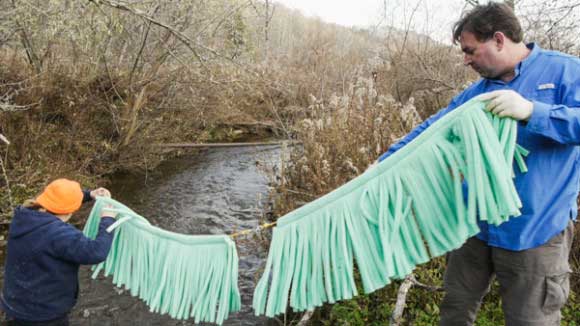
ellgrass
Scott Smith, inventor of OPFLEX, deploys his “eel grass” boom into an oily creek. Photo: Joshua Pribanic.

According to Genesee & Wyoming spokesperson Michael Williams, the spray method revealed in Wathen’s footage is “a process used to corral the oil within the containment booms prior to skimming.” However, workers appear to be spraying away from booms in some instances and towards unprotected shorelines. Smith believes the workers are actually using an outdated, defunct “dilution is the solution to pollution” method.
U.S. EPA Region IV, who responded to the spill, was not available for initial comment about the spraying.
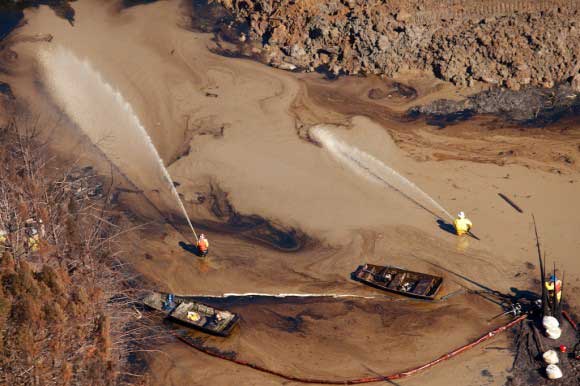
workers spraying
Workers spraying oil at the train wreck and crude spill near Aliceville. Photo: John Wathen.

According to Smith, when water is sprayed onto a shale oil spill, some toxins mixed with the oil dissolve below the surface of the water. Some of these toxins are naturally-occurring and some are byproducts of the drilling process used to extract Bakken crude, called hydraulic fracturing or fracking, which involves hundreds of chemicals that return to the surface with recovered oil.
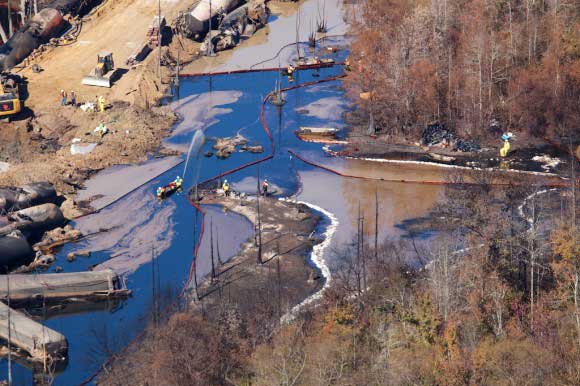
4th image aerial view
Aerial view of cleanup after a Genesee & Wyoming train exploded its crude oil contents into wetlands. Photo: John Wathen.
5th aerial view
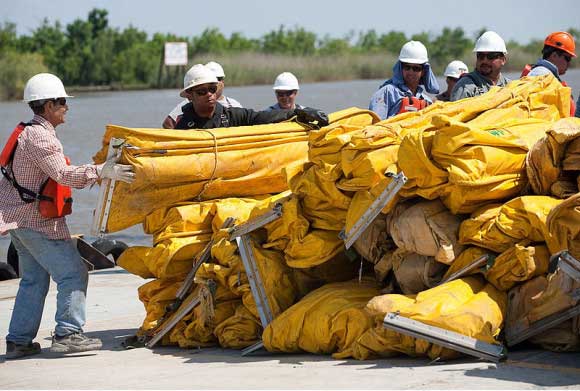
Cleanup efforts were led by United States Environmental Services (USES) and US EPA, according to a Genesee & Wyoming railroad spokesperson. Photo: John Wathen.

So how are oil spills cleaned up, exactly?
In nearly all oil spills, containment booms are used as floating buffers to try and corral oil resting on the surface of water for skimming. Preventing oil from reaching shore is a major concern, given that oil is virtually impossible to remove from soil. U.S. EPA and industry alike also use absorbent padding at waters edge in order to try and keep the oil off the shore.

When asked about the railroad’s cleanup efforts, Williams wrote to Public Herald that “air and water monitoring began on the morning of the derailment, and the site will be remediated.”

The railroad has a top oil-cleanup contractor on site that is experienced with crude oil responses for pipelines, exploration companies, railroads and shipping companies and which has an established working relationship with EPA Region IV and the State of Alabama. The railroad is working closely with the EPA who are on site daily.

Williams later added their “top oil-cleanup contractor” is United States Environmental Services (USES), the same company involved in cleanup efforts of the 2010 BP Deepwater Horizon oil disaster in the Gulf of Mexico and others.
6  contracted workers
Of course, part of remediation involves knowing precisely what’s been spilled and how. Though the cleanup and investigation of how the train derailed and exploded in Alabama is ongoing, Williams informed Public Herald that the railway was up and running ten days after the incident and trains carrying Bakken crude are being diverted around Aliceville.

Series of Spills Reveals Crude Trend
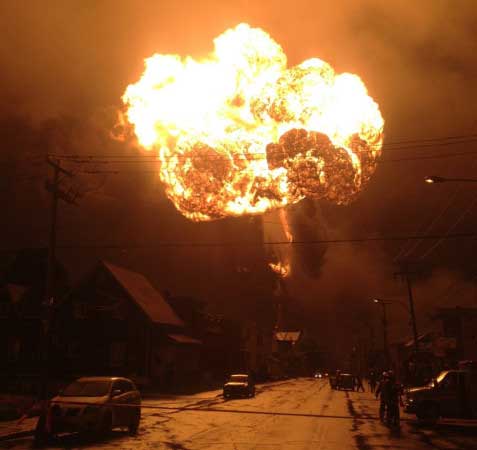
Four months before the Alabama spill, Smith visited another oil train disaster in Lac-Mégantic, Quebec, where railcars, also carrying Bakken crude oil, derailed and exploded killing over 40 people and decimating half the town.
7 blast
CBC News Montreal reported in August that the “U.S. Department of Transportation authorities were worried prior to the Lac-Mégantic disaster about the transport of oil from North Dakota on trains.” Another CBC News report states that Lac-Megantic investigators found it “unusual for crude oil to burn so fiercely.”

Smith has sampled and tested Bakken crude. According to him, not only is Bakken crude lighter and more volatile than other oils, but no one is testing or “fingerprinting” each shipment before placing it in railcars or pipelines for transport. “The objective is to pump it and load it,” Smith told CBCNews Montreal.

Smith offered his test results to help with Genesee & Wyoming’s ongoing investigation. “I have done baseline fingerprinting of Bakken crude oil in its ‘pure form’ This data might help Genesee & Wyoming assess exactly what was in the tankers that exploded.”
Bakken crude is extracted using a controversial drilling process called hydraulic fracturing, or fracking. A Bakken wellhead during fracking. Photo: Joshua Doubek (2011) Wikimedia Commons.

CBC News also reported tests of Bakken crude by one oil company which showed ten times the amount of benzene in Bakken oil as compared with others, as well as hydrogen sulfide, leading some experts to wonder about the crude’s propensity to easily ignite.

Spills Not Uncommon
Like Smith, John Wathen has responded to many environmental disasters. As Hurricane Creekkeeper of the international Waterkeeper Alliance, Wathen responded to the 2008 Kingston coal ash disaster in Tennessee and the BP Gulf of Mexico spill in 2010, which won him the honor of being named 2012 River Hero. His documentation of these incidents gives a close-up look at how spills are handled.

Aliceville is just the latest in a series of spill disasters in North America, topping (for now) a growing list of incidents related to fossil fuel’s production, transport, distribution, and waste disposal. Setting aside natural gas facility explosions and coal ash spills, here’s a list of some of the oil spill disasters in the United States, or involving U.S. companies, in just the last three years:

January 11, 2010 – Aleutian Islands, Alaska – Adak Petroleum tank spill
January 23, 2010 – Port Arthur, Texas – ExxonMobil tanker ship hit by barge, spill
April 7, 2010 – Delta National Wildlife Refuge, Louisiana – ExxonMobil pipeline contractor spill
April 20, 2010 – Gulf of Mexico, US – BP Deepwater Horizon explosion, spill
May 1, 2010 – Niger Delta, Nigeria – ExxonMobil spill
May 25, 2010 – Anchorage, Alaska – BP Trans-Alaska pipeline spill
June 11, 2010 – Salt Lake City, Utah – Chevron Red Butte Creek oil spill
July 26, 2010 – Kalamazoo, Michigan – Enbridge pipeline rupture into Kalamazoo River
July 27, 2010 – Barataria Bay, Louisiana – Boat struck a Cedyco Corp. abandoned wellhead, 5-day spill
December 1, 2010 – Salt Lake City, Utah – Chevron Red Butte Creek oil spill, part II
March 18, 2011 – Gulf coast, Louisiana – Oil spill, unknown origin
July 1, 2011 – Billings, Montana – ExxonMobil Yellowstone River oil spill
July 13, 2011 – Prudhoe Bay, Alaska – BP pipeline leak, spill
November 8, 2011 – Campos Basin, Brazil – Chevron offshore rig oil spill
December 21, 2011 – Niger Delta, Nigeria – Shell offshore oil spill
April 28, 2012 – Torbert, Louisiana – Exxon Mobile pipeline spill
October 29, 2012 – Sewaren, New Jersey – Arthur Kill oil spill after Hurricane Sandy
December 21, 2012 – McKenzie County, North Dakota – Newfield well blowout, spill
March 9, 2013 – Magnolia, Arkansas – Lion Oil refinery leak
March 26, 2013 – Willard Bay, Utah – Chevron pipeline rupture, spill, groundwater contamination
March 30, 2013 – Mayflower, Arkansas – ExxonMobil Pegasus pipeline rupture, spill
May 7, 2013 – Milner, North Dakota – TransCanada pipeline leak, spill
May 9, 2013 – Indianapolis, Indiana – Marathon Oil pipeline leak, spill
May 18, 2013 – Cushing, Oklahoma – Enbridge storage terminal leak, spill
September 25, 2013 – Tioga, North Dakota – Tesaro Logistics pipeline rupture, spill
November 7, 2013 – Aliceville, Alabama – Genesee & Wyoming crude train explosion, spill

This is not a comprehensive list. According to an analysis by EnergyWire, over 17,000 spills were reported between 2010-2012 in the U.S.

‘Best’ Method of Transporting Oil
Due to a surge in American fossil fuel production in recent years, oil-by-rail has become an alternative for many companies at a time when pipelines are taboo, crowned in controversy by the Keystone XL. The L.A. Times reported in September that railroads are carrying 25 times more crude oil than they were five years ago.

Genesee & Wyoming’s Michael Williams wrote to Public Herald, “Rail is the safest means of ground-freight transportationŠAs a common carrier, the railroad has a legal obligation to transport these materials.

Both railways and pipelines can be ‘common carriers’ which are legally required to carry all freight, if space allows and fees are paid, and may not refuse unless reasonable grounds exist. Under international law, a common carrier is liable for damage to freight as well, with four exceptions: “An act of nature, an act of the public enemies, fault or fraud by the shipper, [or] an inherent defect in the goods.”

Whether pipelines or railways are ‘safer’ for transport of hazardous materials like crude oil is debatable, but writer Russ Blinch gives an interesting analogy:

Looking at pipelines versus rail tankers is really like asking, “Should I drive the car with bad brakes or the one with bad tires?

For those living along routes for transporting hazardous materials, whether by pipe or by rail, it’s unlikely anyone’s taken time to ask which methods or cleanup technology communities prefer industry use.

About Melissa Troutman
Melissa Troutman is a Public Herald co-founder. She has experience as a traditional print and multimedia journalist and has a passion for photography, teaching, songwriting, and dance. As Managing Editor for Public Herald, Melissa strives to unearth, or sometimes dust off and reorganize, stories that are valuable to all readers. You can email her at melissa@publicherald.org. Follow on twitter: @melissat22 View all posts by Melissa Troutman »
Government Accountability Project: Corexit: Deadly Dispersant in Oil Spill Cleanup

http://www.whistleblower.org/program-areas/public-health/corexit

On April 19, 2013, GAP released Deadly Dispersants in the Gulf: Are Public Health and Environmental Tragedies the New Norm for Oil Spill Cleanups? The report details the devastating long-term effects on human health and the Gulf of Mexico ecosystem stemming from BP and the federal government’s widespread use of the dispersant Corexit, in response to the 2010 Deepwater Horizon oil spill.

GAP teamed up with the nonprofit Louisiana Environmental Action Network (LEAN) to launch this effort in August 2011 after repeatedly hearing from Gulf residents and cleanup workers that official statements from representatives of BP and the federal government were false and misleading in the wake of the Deepwater Horizon disaster. Over the next 20 months, GAP collected data and evidence from over two dozen employee and citizen whistleblowers who experienced the cleanup’s effects firsthand, and GAP studied data from extensive Freedom of Information Act (FOIA) requests. Taken together, the documents and the witnesses’ testimony belie repeated corporate and government rhetoric that Corexit is not dangerous. Worse than this, evidence suggests that the cleanup effort has been more destructive to human health and the environment than the spill itself.

Conclusions from the report strongly suggest that the dispersant Corexit was widely applied in the aftermath of the Deepwater Horizon explosion because it caused the false impression that the oil disappeared. In reality, the oil/Corexit mixture became less visible, yet much more toxic than the oil alone. Nonetheless, indications are that both BP and the government were pleased with what Corexit accomplished.

The report is available here:
Part One, Corexit_Report_Part1_041913
Part Two, part2
Part Three _part3
You can download an Executive Summary of the report here.Executive_Summary_Corexit
Additional report exhibits are on file with GAP.

To produce the report, GAP investigators interviewed 25 whistleblowers who provided firsthand accounts of Corexit’s impact. While many chose to remain anonymous – including government officials – 16 whistleblowers provided full affidavits about their experiences, made publicly available in the report (excerpts from these affidavits can be found below).

Witnesses interviewed include cleanup workers, professionals (doctors, industry leaders), divers contracted by the federal government, and Gulf residents. The interviewees represent different geographic areas and are diverse in terms of age and gender. LEAN was instrumental in supporting this investigation. Further, one of GAP’s key whistleblowers, Dr. Wilma Subra, is a technical advisor for LEAN/Louisiana Mississippi Riverkeeper.

GAP has also teamed up with TakePart to tell the EPA: Ban Corexit! Sign our petition today!

Read the joint letter that LEAN, GAP and Gulf partners sent to the federal government, calling on various agencies to address the health crisis in the Gulf.

Read the in-depth Newsweek/The Daily Beast story on GAP’s report here.
Read the TakePart coverage here.
Read the New Orleans Times-Picayune coverage here.
Read the Mother Jones coverage here.
Watch the Al Jazeera coverage here.
Select Report Findings

Existing Health Problems

Eventually coined “BP Syndrome” or “Gulf Coast Syndrome,” all GAP witnesses experienced spill-related health problems. Some of these effects include: blood in urine; heart palpitations; kidney damage; liver damage; migraines; multiple chemical sensitivity; neurological damage resulting in memory loss; rapid weight loss; respiratory system and nervous system damage; seizures; skin irritation, burning and lesions; and temporary paralysis.
Interviewees are also extremely concerned about recognized long-term health effects from chemical exposure (from those specific chemicals found in Corexit/oil mixtures), which may not have manifested yet. These include reproductive damage (such as genetic mutations), endocrine disruption, and cancer.
Blood test results from a majority of GAP interviewees showed alarmingly high levels of chemical exposure – to Corexit and oil – that correlated with experienced health effects. These chemicals include known carcinogens.

The Failure to Protect Cleanup Workers

Contrary to warnings in BP’s own internal manual, BP and the government misrepresented known risks by asserting that Corexit was low in toxicity.
Despite the fact that the Occupational Safety and Health Administration has developed a highly-lauded safety training program for cleanup workers, the workers interviewed reported that they either did not receive any training or did not receive the federally required training.
Federally required worker resource manuals detailing Corexit health hazards (according to a confidential whistleblower) were not delivered or were removed from BP worksites early in the cleanup, as health problems began.
A FOIA request found that government agency regulations prohibited diving during the spill due to health risks. Yet, divers contracted by National Oceanic and Atmospheric Administration and interviewed by GAP dove after assurances that it was safe and additional protective equipment was unnecessary.
BP and the federal government, through their own medical monitoring programs, each publicly denied that any significant chemical exposure to humans was occurring. Of the workers GAP interviewed, 87% reported contact with Corexit while on the job and blood test results revealed high levels of chemical exposure.
BP and the federal government believed that allowing workers to wear respirators would not create a positive public image. The federal government permitted BP’s retaliation against workers who insisted on wearing this protection. Nearly half of the cleanup workers interviewed by GAP reported that they were threatened with termination when they tried to wear respirators or additional safety equipment on the job. Many received early termination notices after raising safety concerns on the job.
All workers interviewed reported that they were provided minimal or no personal protective equipment on the job.

Ecological Problems & Food Safety Issues

A majority of GAP witnesses reported that they found evidence of oil or oil debris after BP and the Coast Guard announced that cleanup operations were complete.
BP and the federal government reported that Corexit was last used in July 2010. A majority of GAP witnesses cited indications that Corexit was used after that time.
The oil-Corexit mixture coated the Gulf seafloor and permeated the Gulf’s rich ecological web. GAP witnesses have revealed underwater footage of an oil-covered barren seafloor, documenting widespread damage to coral reefs.
The FDA grossly misrepresented the results of its analysis of Gulf seafood safety. Of GAP’s witnesses, a majority expressed concern over the quality of government seafood testing, and reported seeing new seafood deformities firsthand. A majority of fishermen reported that their catch has decreased significantly since the spill.

Inadequate Compensation

BP’s Gulf Coast Claims Fund (GCCF) denied all health claims during its 18 months of existence. Although a significant precedent, the subsequent medical class action suit excluded countless sick individuals, bypassed the worst health effects resulting from exposure to dispersant and oil, offered grossly inadequate maximum awards compared to medical costs, and did not include medical treatment.

Recommendations

The BP spill was the worst environmental disaster in American history, but the government’s consent to BP’s use of Corexit has caused long-term human and ecological tragedies that may be worse than the original spill. As deepwater drilling expands off U.S. coasts, it is inevitable that other incidents will occur. Renewed reliance on Corexit is planned for future oil spills, and BP has declared it will continue to use the deadly dispersant as long as the government permits doing so.

GAP’s report illustrates that both BP and the government must take corrective action to mitigate ongoing suffering and to prevent the future use of this toxic substance. The report makes recommendations for:

A federal ban on the use of Corexit, which is already banned in the United Kingdom (BP’s home country) and Sweden.
Congressional hearings on the link between the current public health crisis in the Gulf and Corexit exposure.
The immediate reform of EPA dispersant policy, specifically requiring the agency to determine whether such products are safe for humans and the environment prior to granting approval under the National Contingency Plan (NCP).
The establishment of effective medical treatment programs ­– by medical experts specializing in chemical exposure – for Gulf residents and workers.
The federal government’s funding of third-party, independent assessments of both the spill’s health impact on Gulf residents and workers, and such treatment programs when established.

Early, preliminary finding of this GAP investigation was reported in April 2012 by a cover story in The Nation magazine. On April 19, 2013, on the eve of the third anniversary of the Deepwater Horizon disaster, noted journalist Mark Hertsgaard published many of the full report’s findings in Newsweek/The Daily Beast.
Select Excerpts from Whistleblower Affidavits & Report Statements

As an environmental scientist, I look at the way the government and BP are handling, describing and discussing the spill … [T]he government did not account for the increased toxicity of the combined oil and Corexit.
– Scott Porter, Diver, Marine Biologist

[W]hen a BP representative came up on the speedboat and asked if we need anything, I again explained my concerns about breathing in the Corexit and asked him for a respirator … He explained ‘If you wear a respirator, it is bringing attention to yourself because no one else is wearing respirators, and you can get fired for that.’
– Jorey Danos, Cleanup Worker

What brought all of these individuals into the same pool was the fact that their symptoms were almost identical, and were different from anything that I had ever observed in my 40 plus years as a physician … However, until people are educated about the symptoms associated with exposure to toxic waste from the spill, we cannot assume they will make the connection. I continue to witness this disconnect and these symptoms on a daily basis.
– Dr. Michael Robichaux, Physician

When [the national director of The Children’s Health Fund] went to Boothville Elementary in Plaquemines Parish and they opened the medical closet, it was full of nebulizers … Where’s the red flag? What is causing that many breathing problems with that number of kids? That is abnormal. At Boothville Elementary we have sick kids all over the place who are suffering from upper respiratory infections, severe asthma, skin infections, blisters in between their fingers and arms and on their legs and their feet. Some kids have blisters all around their mouths and their noses. These kids were perfectly fine before the spill and the spraying of Corexit began.
– Kindra Arnesen, Louisiana Resident

The MSDS [federally required chemical labeling and safety information] for Corexit list several of the health problems I am now having, and they still used … it throughout the Gulf … When I lived on the barge, for 24-hours a day I was exposed. I would be outside too, breathing in what they were burning, without a respirator or a Tyvek suit. I had an apron, a hairnet, a spatula and some rubber gloves, and they told me to go in the midst of this dangerous chemical environment. Yet they were willing to tell me that the dispersant mixed in with the oil I was cleaning was as safe as touching Dawn dishwashing soap? Then a year later I have health problems that I have never had before working on the barge…
– Jamie Griffin, Cook & Cleaner on Bunkhouse for Cleanup Workers

They hired people from all over who didn’t know about the conditions and real safety hazards, but you did what you had to do; you had to take the job and deal with it because you didn’t have money to go home … There was a safety culture of, ‘hush hush, it didn’t happen.’
– Anonymous Cleanup Worker

EPA and BP knew of the health impacts associated with [Corexit and oil] … The issue was responding to an oil spill of this magnitude, with unprecedented quantities of Corexit, including novel subsurface application. Gulf coastal communities, and individuals who consume gulf seafood or recreate in the gulf, are the guinea pigs left to deal with the consequences and will be feeling the full effect in years to come.
– Dr. Wilma Subra, Chemist, MacArthur Genius Award Recipient

As part of an impromptu meeting to provide feedback from the shrimping industry to EPA and NOAA, I met with EPA Administrator Lisa Jackson in Venice on June 1, 2010. By that point, already 800,000 to 900,000 gallons of Corexit 9527A had been sprayed. I was sitting across the table from Ms. Jackson and I asked her, ‘Why is it that when you have all of this going on and three air monitors from Venice, Louisiana, EPA’s reports are not showing any high levels of chemicals?’ Ms. Jackson responded, ‘Well the levels were a little high, but we didn’t want to create a public panic.’
– Clint Guidry, President, Louisiana Shrimp Association

It’s been really hard to get an accurate diagnosis or treatment, because none of the local doctors will even admit there is a problem … There’s one friend of mine who happens to be a doctor, and he’s very well aware of what’s going on but is afraid to take a hard stand on it.
– Shirley Tillman, Mississippi Resident, Cleanup Worker

Most of our members right now who are sick are in litigation … They aren’t going to sufficiently pay our medical bills to demonstrate that they were responsible for the actions they took, just as they didn’t give us respirators to demonstrate that our working environment was unsafe.
– A.C. Cooper, Vice President, Louisiana Shrimp Association

Every time I check, there is still oil on the beaches and in the estuary systems and in the wetlands and the marshes. People go to the beaches and swim in the gulf, and report to me that they still come up stained with a brownish tan color that they believe is oil.
– Dr. Wilma Subra, Chemist, MacArthur Genius Award Recipient

"Be the change you want to see in the world." Mahatma Gandhi